|
September means back to school for most young people and represents a time of both excitement and apprehension for many children and their families. As children have spent more time at home over the last 18 months, you may have concerns about your child’s physical and emotional wellbeing as they go back to school this term. There are a number of tips to help make the transition from home to school as smooth and as safe as possible.

Online Safeguarding
Each year, UK parents collectively share approximately 1.3 billion images of their children on social media including first day photos. These pictures, while well-intended, give away a lot of information including which school a child or young person is attending, how old they are, and sometimes even where you live (many of these photos are taken outside of the front door with the house number and street name visible). This is all private information, and the photo could be seen by more people than you intended to share it with, depending on your safety settings and who you tag into the photo.
In the future, sharing these privately with family and friends via more secure means, such as encrypted email or messaging, helps to keep your personal information and your child safe.
If you do want to post online, follow these digital safety tips:
-
Disable geo-tagging. Many social networks will tag a user’s location when a photo is uploaded. Ensure this feature is turned off to avoid disclosing your location.
-
Maximise privacy settings on social media. Only share photos and other social media posts with your intended audience – never share images of your children on public forums and pages.
-
Set ground rules with friends, family and children. Be clear with friends and family about guidelines when posting images. These rules can help avoid awkward situations where a family member has shared photos without explicit permission.
-
Ask for consent. Request your child’s consent before you post any photos of them and be prepared for them to say no. Ask yourself “Would my child feel embarrassed by the image I’ve shared?” If you have any doubts, do not share it on social media. There have been cases of children being targeted by bullies due to images shared publicly without their permission.
If your child has a new smartphone or tablet ready for the start of term, spending some time with them familiarising yourself with the apps they are using can help ensure they have appropriate privacy settings and relevant restrictions and digital safeguards in place to keep them safe. Get Safe Online and the UK Safer Internet Centre have a range of guidance to help you, or you can arrange for a Barclays Digital Eagle or O2 Guru to help you online or instore.
Other useful tips include reminding them to charge their device before leaving the house and making sure they have all your contact numbers saved.
It’s also a good idea to help your child learn their address and your telephone number by heart, in case they get lost or need to contact you when they don’t have their phone with them.
|

Emotional Wellbeing
Whether it was the first day at ‘big’ school for your little one, a move to high school or college or a transition between classes; the new school term can be daunting for many children and young people. Added to this, the effects of the pandemic and the increased amount of time spent at home in recent months, some children and parents might not feel ready for school to start again.
For others, school may present challenges both academic and emotional with changes in friendship or issues such as bullying or peer on peer abuse. You can help prepare your child for the school year ahead by talking to them about their experiences at school and letting them know you are there for them if they need you. Don’t be afraid to have ‘tricky conversations’ especially if they are going through puberty or you suspect your child may be experiencing problems affecting their emotional wellbeing. You can find help and support on this from the NSPCC, Action for Children and Common Sense Media.
The Association of Child & Adolescent Mental Health produced a short YouTube video to help prepare primary aged children for the return to school following lockdown which has plenty of handy tips that you might find useful to watch and consider for your own child(ren).
|
Physical Health Safety
Schools are continuing to work tirelessly to keep pupils and staff safe and well. As Covid-19 becomes a virus that we all learn to live with, there is now an imperative to reduce the disruption to children and young people’s education. Children are at very low risk of becoming seriously unwell from Covid-19 and the benefits of attending school and early years settings significantly outweigh the Covid-19 health risk for them.
You can help prepare your child for school by ensuring they are well rested with sleep routines back in place after the summer break, and by ensuring children continue to wash their hands and socially distance where possible.
Start the new term afresh with healthy eating and exercise as a family and don’t forget to talk to your child about other important safety messages such as road and cycle safety, not talking to or accepting lifts from strangers and how they can access support if they need it.
For more information, visit Ineqe’s Back to School Guide or the Anna Freud Back to School Blog for Parents
|

ACT Early
It can be difficult to know what to do if you’re worried someone close is expressing extreme views or hatred, which could lead to them harming themselves or others. Prevent is a Home Office programme that looks to protect vulnerable people from being exploited by extremists. ACT Early is a programme that advises on signs to look out for, and how to raise any concerns you have in confidence. You can learn more about this programme on the ACT Early website.
|

UK Anti-Slavery Day 2021
Anti-Slavery Day is on Monday 18 October and provides an opportunity to raise awareness of human trafficking and modern slavery, and encourage government, local authorities, companies, charities and individuals to do what they can to address the problem.
It is so important and relevant that for this year we all play a role in identifying this exploitation which is often ‘hidden in plain sight’ in our communities.
As lockdown eases and international borders reopen, it is anticipated that the fallout from the coronavirus pandemic will lead to many more people, both British nationals and people trafficked from overseas, being exploited in the UK.
A worldwide economic downturn linked to Coronavirus will leave many more people in poverty. This will result in them becoming susceptible to criminals wanting to exploit demand for cheap labour or prey on young or vulnerable people to exploit in County Lines networks, smuggling drugs into local areas.
A surge in operational activity focusing on labour and sexual exploitation, co-ordinated by the National Crime Agency, led to 111 arrests in the UK and some 130 people being encountered who may be considered as victims.
Additionally, the number of people being referred into the National Referral Mechanism (NRM) as potential victims of modern slavery continues to rise. In response, the NCA has launched a new campaign focused on sexual and labour exploitation, explaining how the public can help stop it. Over the next six months the campaign will highlight the signs of modern slavery which people may encounter in their everyday lives and encourages them to report it.
This is a crime which affects all types of communities across every part of the United Kingdom. It is difficult to spot because often victims don’t even know they are being exploited. Nevertheless, we need our communities to be our eyes and ears.
Spot the signs Modern Slavery Its closer than you think and if you have suspicions you can call Sussex Police on 101 or the Modern Slavery Helpline 08000 121 700. Always dial 999 in an emergency.
|

Fearless
Witnessing a crime can be a worrying time, especially if you're not sure what to do. Fearless is a dedicated young person's charity where you can get information and give information about crime 100% anonymously. This means you don't have to give them any personal details. Their website also has an A-Z of crime which allows you to learn about different crimes and their consequences.
|

Buying or selling a vehicle online can be risky. Let’s work together to make it safer.
There have always been risks associated with buying or selling a vehicle online. But recent increases in used car prices, limited availability of some models and restrictions to travel and accompanied test drives have created additional risks, giving fraudsters new excuses to deceive both buyers and sellers.
Now that things are returning to normal, it’s easier for you to exercise more care when buying or selling your vehicle.
Follow these top tips from Get Safe Online before you go online to buy or sell:
- If a deposit is requested or agreed, don’t pay more than you are willing to lose and confirm with the seller that they will refund the deposit if you don’t purchase the vehicle.
- Always view the vehicle before paying the full amount.
- Check that the price of the vehicle is in line with the market value.
- Take the vehicle for a test drive. This should always be done from the seller’s premises or their home; never let the person meet you by the roadside or any other random location.
- Carry out a vehicle history check and inspection.
For more advice about selling a vehicle, visit the Get Safe Online auto fraud page.
|
Safe Against Scams free webinars
The Safe Digital Life team continue to run their Safe Against Scams webinars. Please share the information about these sessions with your friends and family so we can prevent as many people as possible from becoming a victim of fraud.
Criminals have exploited and used our increased digital lives to their advantage. The pandemic has seen a rise in scams including telephone, courier and romance fraud which have all become an increased concern in West Sussex. Not only is there the financial impact on victims but the emotional impact can be even more significant.
To help raise awareness of these different types of scams, how to spot them, and what to do if you or your family become a victim, the West Sussex Community Safety & Wellbeing Team alongside Trading Standards have been running free scams awareness webinars for you to attend. To find out more and book you free place visit Eventbrite.
For support with accessing the webinars from your own device, or for the opportunity to view the webinars on a library iPad at your local library – call for support or register your interest by contacting the Remote Digital Support Service via 03302223455.
|
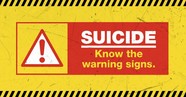
World Suicide Prevention Day 2021
World Suicide Prevention Day takes place every year on the 10 September and promotes open, honest, and genuine conversations about suicide. The theme this year was: ‘Creating Hope Through Action’.
Suicidal thoughts are confusing and complex, and there is not always a clear cause or explanation for them. Collectively, we can all act by looking out for those around us who are struggling, check in regularly with the people close to us, and listen compassionately, empathically, and non-judgementally if someone is struggling. You do not have to have all the answers or worry about saying the wrong thing. Just ask and listen. Whether you, or someone you know is struggling, support is available:
-
Samaritans are available 24/7 on 116 123. Their volunteers are trained to provide emotional support to anyone in emotional distress, struggling to cope, or at risk of suicide.
- The Preventing Suicide in Sussex website is for anyone who is feeling overwhelmed or suicidal, or those who may be concerned about someone who may be struggling.
- The Sussex Mental Healthline offers support to those who may be in crisis, distressed and in urgent need of help with their own mental health, or if they are concerned about a relative, friend, or colleague. For telephone support and information 24/7, call 0800 0309 500.
|

Sexual Health Week 13 to 19 September
This year’s theme is “Consent: Do You Get It?”. Consent is integral in all parts of our lives and is the key to healthy relationships and happy sex lives. That's why we're joining in the conversation around consent this #SHW21. Find out more about consent on the Brooks website.
|
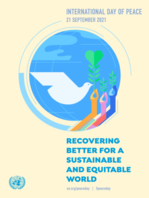
International Day of Peace 21 September
This day is devoted to strengthening the ideals of peace, with the theme this year being ‘Recovering better for an equitable and sustainable world’. As we look to heal from the Covid-19 pandemic, the day looks to inspire creative thinking and also how we can collectively help everyone recover better, how to build resilience, and how to transform our world into one that is more equal, more just, equitable, inclusive, sustainable, and healthier. More information can be found on the United Nations website.
|
Community Hub
The Community Hub is still open and is there to support vulnerable residents, children and families during the pandemic. The Community Hub is open 8am to 8pm, 7 days a week. To find out more please visit our webpage.
|