
It has been
a busy time for the supporting lives teams as they continue on their innovation
journey, with the new addition of ‘business as usual’ cases from the community
teams.
This will
give us the opportunity to test how this work affects their ability to continue
to innovate, and support us in our recommendations to be made to cabinet
members later this year. We are already beginning to see the impact that this
is having on their ability to continue with their innovation work, but is being
monitored closely.
Part of
this monitoring is the introduction of the ‘making it happen’ meetings,
allowing teams to discuss where they have had successes and where they have
experienced difficulties. The aim is so that they can learn from each other and
share similarities/differences between each other, as well as think ahead as to
how a new operating model may work in practice.
We
are continuing to seek feedback from staff in these making it happen meetings,
their weekly/fortnightly reflective meetings within the innovation sites, and
through focus groups and questionnaires. As always, we continue to value direct
feedback through the use of the contact details at the end of this newsletter.
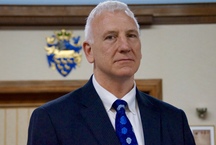
Mark Howell, Director of
Adult Operations
|
Content
News
* Experiences * Case study *
Timeline * Contact Us
 |
|
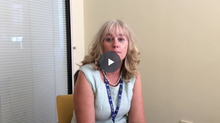
We talked with Debbie Medlock, Adults Operations Transformation lead about how Supporting Lives East Grinstead has been able to link their work with the day centre services at their venue of Glen Vue.
In her video she talks about some of the innovative work they have been doing with the day centre, and what opportunities are available as they continue to find new ways of working, and supporting the people that contact them.
|
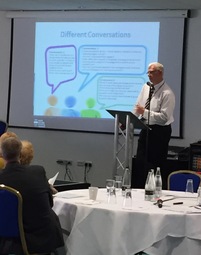
Our Shared Future: Stakeholder
events in April and May
Together with our Clinical Commissioning Group
(CCG) partners we hosted two half-day events for voluntary
and community sector organisations. Both events
were organised in partnership with voluntary and community sector representatives.
Both events were well-attended with around 80
delegates at each. There was lively debate at both events and feedback indicated that attendees appreciated the
opportunity for networking and for dialogue with senior managers from the WSCC and
the CCGs. Some key points raised by
delegates were:
- The need for clarity about the expectations of the sector from the County Council and the CCGs.
- The need to engage with the voluntary and community sector at an early stage about any new developments which might impact on their organisations.
- To review statutory sector commissioning processes which they felt are too complex – involve the sector in discussions about the changes.
- The need for additional funding to support increased delivery of services
- Value the expertise of the sector.
- Hold market-place events for networking and sharing information.
The findings from these events,
together with feedback from focus groups and a public survey will inform the
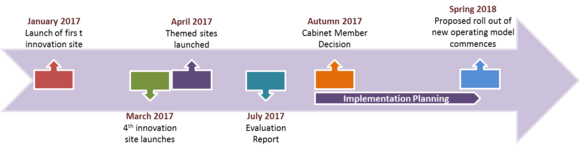
Cabinet Member decision in the autumn about our proposed new approach.
Focus Groups and Public Survey
A
series of focus groups and workshops have been held across the county during June
and July to gather people’s views about our proposed approach to delivering
adult social care in the future. A range
of community groups have been invited to participate with an emphasis on
ensuring that feedback is captured from under-represented groups so that we can
also hear about challenges and barriers to inclusion.
In
addition, a short survey for residents and stakeholders is running until 11 August 2017. The
survey will ensure that the wider population is provided with an opportunity to
comment on our proposed new operating model.
This
is a public survey and staff can participate at https://haveyoursay.westsussex.gov.uk/legal-democratic-services/supporting-lives-connecting-people/.
|

Tamsyn Hicks - Supporting Lives Chichester
I am an Occupational Therapy Assistant working in the
Chichester Rural Innovation site where working in the Innovation Site has been
an exciting opportunity.
The working day is very different to working in our community
teams. Working in a multi-disciplinary team enables us to have direct access to
colleagues from other disciplines and we have really been able to work as a
team to offer people the best possible outcomes. We have been able to learn
from each other, and develop our practice in order to work in new ways that
offer a strengths based approach.
We are using the 3 Conversation Model, and for all of us
this is a shift from working in a very process led way. I think we have
all been challenged both personally and professionally to learn new ways of
recording, learn how to integrate with other team members, and to change our
approach to practice. The early weeks were not an
easy time, but 12 weeks into the project I think we all feeling more confident in
working using the model. It is starting to feel easier, and has
been a really positive way to support people.
Having no waiting list, and being enabled to reduce
paperwork, be innovative, and be preventative has been a real positive change, and
I think we all feel that the early interventions we are able to offer really
make a difference to the long term outcomes of the people we are supporting.
We have been based in a GP surgery in the area, and this has
had both advantages and disadvantages. We have been able to make really
positive links with local health teams and colleagues (eg. Proactive Care) and
although aligning with their services will be a long process, we will continue
to work to build these relationships.
Working in the rural area has been really empowering and
enabled us to learn about the local community, what is available and what our
service can provide for the local residents. This is also a piece of work that
will be ongoing and we are just starting to get the word out about the proposed
changes to Adult Social Care.
In summary, we have come on a long journey since we started
together 12 weeks ago. Through daily and weekly team meetings and support from
the management team we have been able to overcome challenges, and I feel that
we have been able to have a real influence over the future of Adult Social Care
in West Sussex from a front line perspective.
|
Sarah Taylor - Supporting Lives Chichester
I’m a
social worker previously based in the Chichester community team. The majority
of my cases were usually in the rural Chichester area and I attended some of
the Pro-active Care multi-disciplinary team meetings.
With
hindsight, I can see that I was resistant to the Three Conversations approach;
I felt that the model was similar to how things had been managed prior to
Carepoint, and I was unhappy at the suggestion that this was a new way of
working. I was also dubious about how the approach would work within the
geographical site we would be covering having previously been working in it; I
was aware of the potential challenges we would have and I do not think that
these were properly acknowledged in the workshops that were held prior to the
innovation site starting.
I started
to feel positively about the approach around 6-7 weeks in, where I could see
the benefit of a more flexible, multi-disciplinary approach with one of my
cases; I could see how they were getting a better service because of coming to
the innovation site than if they had the usual referral route.
I think
that the biggest challenge was in being able to accept how I had previously
been working in a very structured and task focussed way; being allocated cases
with clear instruction as to what was being expected as opposed to working out
what may be needed alongside a person not previously known to Adult Services
was a big change and it took me some time to embrace this as a different and
better way of working. I think that my 12 weeks on the innovation site have
been hugely beneficial to my development as a worker and I am really pleased
that I took the opportunity to be part of it.
|
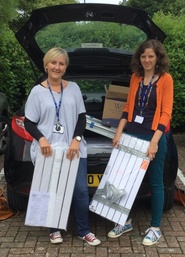
Lisa Connor and Clare Davies - Supporting Lives Adur.
Since joining the Innovation
site, the four Occupational Therapy team members within Supporting Lives Adur have
regularly discussed how we can be innovative. With the aim of improving the
overall experience for the person and being more time efficient, we sat down
early on and discussed how we could
streamline the service we would be providing.
It was agreed we would
prioritise how we addressed bathing needs within the home environment. The team decided to trial
dedicated Home Bathing Assessment Express days. The idea being we would visit six people
in one day with bathing needs only. The visit would be attended by two team
members and we would take basic bathing equipment with us on the visit. This
would enable equipment to be trialled there and then. We would discuss the
option of privately purchasing equipment or equipment being provided on loan
from the Community Equipment Service. If appropriate, the equipment could then
be ordered at the visit using the team iPad.
To date we have carried out four
Home Bathing Assessment Days and two Home Assessment days, which cover
non-complex needs other than bathing. We
have made minor adjustments each time and now feel we have a process in place
that achieves the original aim. The visits are carried out by 2 OTA’s. as it was felt that having two workers speeds up
both clinical reasoning and the overall process. Whist one person is gathering
information, the other is fitting equipment or taking measurements for an adaptation. Each case is
carefully triaged prior to the visit to make sure it is suitable for a Home
Assessment Express Day.
The day after the Home
Assessment Express Day is dedicated to completing the Conversation paperwork and
adaptation recommendations. Completing six visits and all the required paperwork
in two days, is extremely efficient compared to the previous process.
We feel we have devised a
process that works for the geographical area we are working within. It is also
clear that the Home Assessment Express Day process is very much in keeping with the
innovation site intended outcomes. This means we are seeing people quickly,
efficiently and focusing on the issues important to them and therefore avoiding
a lengthy process.
|

Debbie Blunden - Worthing Review and Reassessment Innovation Site
Mrs P is in her early sixties and has a left sided hemiplegia following a brain injury and then a stroke. She has a council managed budget for carers to assist with a shower and personal care in the mornings, as well as to assist with managing and maintaining her nutritional and toileting needs. Until recently her other needs were being managed by her family. Her son was managing the laundry, shopping and the hygiene of living areas and her daughter was making her meals once a week which were placed in the freezer for her to microwave in the evenings. Her son has now moved out and is
living with his girlfriend, and following a disagreement she is now estranged
from her daughter.
Mrs P has a dog and approximately 4 cats. These are very important to her and are her main priority. She was in hospital recently and her daughter moved in to look after the animals. Due to the estrangement she is now worried that they will not be looked after if she becomes ill.
What was the previous approach?
Potentially the morning call would be extended by 15 minutes to allow for maintenance of the hygiene of living areas and the provision of an evening call to support her nutritional needs. Assistance with laundry would have been required, or for Mrs P to outsource this privately.
What was the new approach?
The new approach was to look at Mrs P’s strengths, what she wanted to achieve, how much of this was possible and how much she would need assistance with. The OT asked a lot of open questions to enable Mrs P to determine what she wanted to achieve, rather than the solution being the opinion of the professional. It was established that she has high levels of motivation to remain as independent as possible and that she did not want care workers in her home any more that was necessary. Due to this she was very keen to not have an evening call, and to prepare all her meals herself. She admitted that she has become reliant upon her family and is now wishing to take back the tasks that she can manage. Local services were looked at such as supermarket delivery services, meal delivery services, and services that can assist with the care of the animals.
What were the outcomes?
With regards to the animals, the OT has provided Mrs P with details on how to purchase an emergency alert card and key fob that advises emergency services that she has animals at home and provides details of who to contact, which she has since purchased. The OT has also advised her of the Cinnamon Trust who will assist with animals if someone is taken into hospital, Mrs P is to contact them directly.
The OT worked with Mrs P to look at internet shopping for her heavy goods. The OT worked with Mrs P to enable her to maintain her own nutritional needs, trialling a mesh basket with saucepans to enable food to be lifted out easily to be served on the plate. In order to assist with a balanced and varied diet, the OT provided Mrs P with details on food preparation workstations that will allow her to do this. When the correct one is identified, this will be purchased via a P card and the OT will spend time with Mrs P working on kitchen tasks. It is hoped that provision of this equipment and confidence building will enable Mrs P to not only cook her evening meals but also prepare her lunch. It is hoped that no increase in her personal budget will be required.
The OT asked for the ramped area in the garden to include a turning circle at the end to allow Mrs P access to her rotary washing line. To achieve independence in this task she will require the support of the carers to just lift the basket for her but this then removes the need for an outside laundry service or for the whole task to be completed by carers.
Being able to complete these tasks independently will not only save money, but will also increase Mrs P’s confidence, wellbeing, and feeling of control over her own life.
|
|