|
This is a special edition on top of your regular weekly newsletter, which will arrive on Thursday (10 September) as usual.
 Working hard and smart to keep you moving
We know roadworks are frustrating and can add time and uncertainty to your journeys - and we work hard in lots of ways to reduce this where we can.
That includes coordinating, scaling back or even challenging the need for works with utility firms, who submit the majority of requests, and giving plenty of notice through our online list and interactive map.
But sometimes disruption is unavoidable while utilities are maintained and repaired, or new connections are installed to support the borough's sustainable growth.
On top of that, we have to constantly maintain and repair our roads to keep them in good condition and prevent severe faults from developing.
We also need to build new roads and other types of travel infrastructure to help our borough meet the demands it will face in the future.
That includes providing more options for walking, cycling or taking the bus or train instead of driving, which addresses the root causes of congestion.
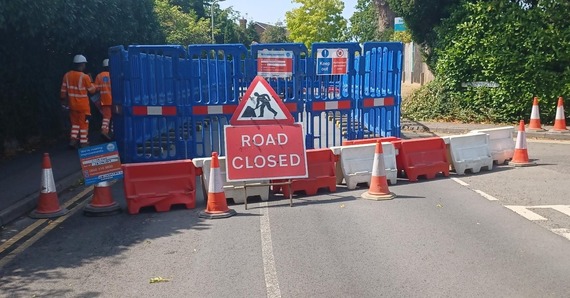 Above: Thames Water's emergency closure of Evendons Lane in 2025 was unforeseen but necessary
Most roadworks aren't ours, and we can't just say no
In 2025/26, almost 70 per cent of the 11,634 works we issued were to utility firms:
- 4,634 (40 per cent) - telecommunications
- 2,360 (20 per cent) - water
- 739 (6 per cent) - electricity
- 340 (3 per cent) - gas
We coordinate works to happen at similar times where this would minimise disruption, or we can stagger them where the combined impact would be unacceptable.
We aim to avoid scheduling disruptive works during school term time, when overall traffic volumes are typically higher.
However, this isn’t always possible where emergency works are needed and we have a legal duty to accommodate all reasonable requests.
While this can cause congestion and delays, we can’t allow properties to go without essential utilities or overlook a genuine safety concern.
Across England, more than 200 organisations have the right to dig up the roads and councils like us have to manage and coordinate this effectively.
We ensure that access to properties is maintained where possible, with closures largely applying to through traffic only.
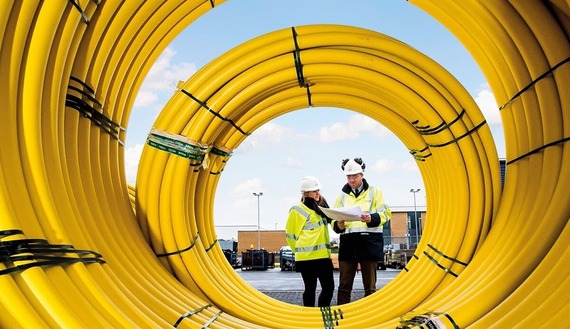 Above: SGN, like other providers, are upgrading utilities for a more reliable and resilient service
Encouraging others to work quickly and reduce delays
We work closely with utility firms and their sub-contractors to see how works are progressing and identify ways of working quicker or less impactfully.
This frequently results in planned closures and diversions being downgraded to temporary lights, or significantly shortened from the original application.
We investigate reports where no work seems to be happening at a closure, though there’s often a valid reason like supplies being on order, materials drying or related works taking place at another location.
Of all permits agreed in 2025/26, 1,903 (15 per cent) were emergencies and we issued 3,806 penalty fines where works overran or didn't comply with conditions.
In some cases, works were able to finish well ahead of schedule with our support.
We can't stop all disruption, but it's not always visible that we're working behind the scenes to prevent it from being worse.
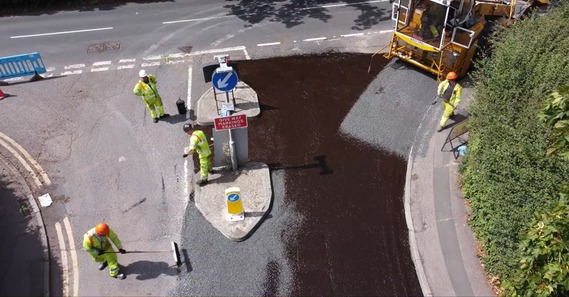 Above: surface dressings and other treatments help to keep our network in good condition
Our own works - protecting and investing in our network
We maintain our roads proactively, meaning we aim to stop faults developing in the first place and don't just fix them when they happen.
Our annual roads and footways maintenance programme often requires closures for access only while we lay new surfaces or prolong the life of existing ones.
We aim to act before roads deteriorate significantly, which helps to reduce potholes, improve safety and provide better value for money.
This requires tough decisions about how we spend our limited resources, but the Government has recognised our work in its maintenance league table.
Out of 154 councils in 2025/6, we were one of just 26 to be officially rated “green” for the condition of our network, and 21 to achieve “green” for wider best practice.
We inspect the roads regularly to log and fix faults, and you can report faults online using the same mapping tool that our partners at VolkerHighways use.
We’ll always act where there’s a legal duty to keep you safe, though not all faults meet our threshold for repair.
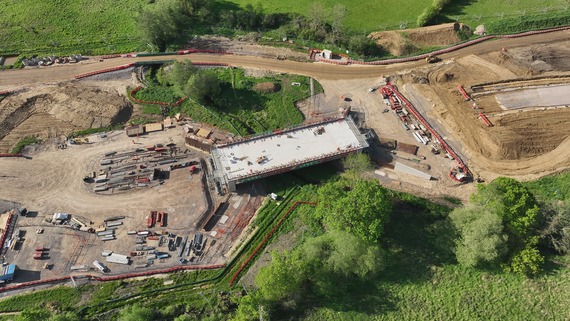 Above: a new bridge starts taking shape as part of the South Wokingham Distributor Road
Looking ahead to meet transport and housing needs
Some of our projects, like the South Wokingham Distributor Road or the Woodley to Reading active travel route, can cause disruption over longer periods.
We offset this as much as possible by working with those most affected, sharing regular progress updates and providing links to more information.
But we need major new roads for access to new housing, which is an essential part of the borough's future growth and for new generations to live and work locally.
Likewise, walking and cycling infrastructure is the most effective way to reduce congestion because it provides alternatives to driving for short local trips.
Major works can reduce the network's capacity to cope with additional disruption, so we try to postpone as many non-essential works as we can.
However, we aren’t responsible for maintaining or monitoring utilities and, like all highways authorities, we can’t know when emergency works may be needed.
We appreciate your patience while we work to keep the borough moving safely today while preparing our transport network for the decades to come.
Road closed? You don't always have to follow the official diversion, as long as any route you take is legal, safe and appropriate for the vehicle you're driving.
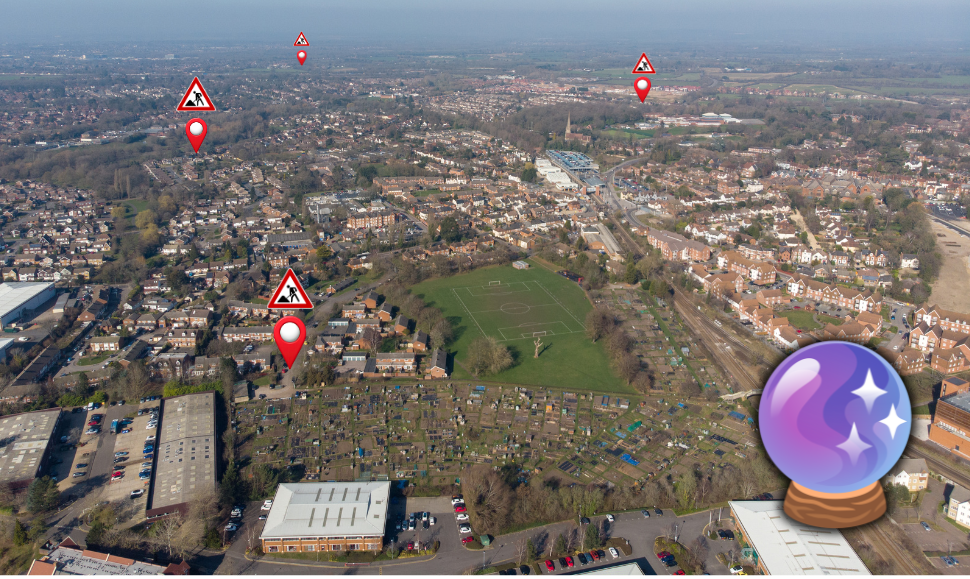 Helping you plan ahead and avoid delays
We provide up-to-the-minute information across a range of platforms to help you plan your journey around any disruption that may be taking place.
You can check our list of roadworks or see our interactive map for a look at all planned roadworks over a longer period.
We also share information through our Traffic and Travel Facebook page and in our regular Thursday edition of Moving Around the Borough.
We know driving may be the natural choice for your journey, but we encourage everyone to consider walking, cycling or public transport where possible.
Over half of car trips undertaken in the borough are short local ones of under five miles, so we know there's scope for more people to travel sustainably.
We're working to improve infrastructure for walking and cycling, as well as bus services, to make these options more attractive and convenient.
|