|
This a special edition to explain some of our upcoming road and footway maintenance works in detail. Your regular weekly newsletter will arrive on Thursday evening (14 May) as usual.
 Road treatment schedule kicks off this summer
From early next month, we'll be carrying out annual maintenance treatments on our roads and footways to keep them in good condition.
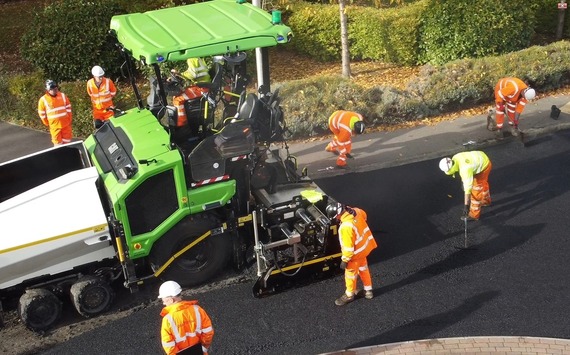
In some cases, we'll be stripping down worn-out surfaces and resurfacing them with an entirely new layer of asphalt.
But that isn't always necessary, especially if they're less heavily worn, and there are alternatives which offer better value for money.
That includes surface dressing, where we press new layers of chippings and bitumen into the existing surface to seal it and prevent further damage.
This year we're trialling retexturing, which involves blasting the surface to restore its roughness and make it easier for tyres to grip.
We have to use our limited resources carefully, and these treatments cost significantly less than a full resurfacing - as well as producing fewer emissions.
This allows us to invest in resurfacing areas which need it most, while improving conditions on as many other roads as we can.
 How works could affect you, and when
Our maintenance partners at Volker Highways inspect the roads throughout the year to help us decide where we should be treating.
They use a mixture of visual surveys and various technical assessments, and are also guided by your reports of any defects.
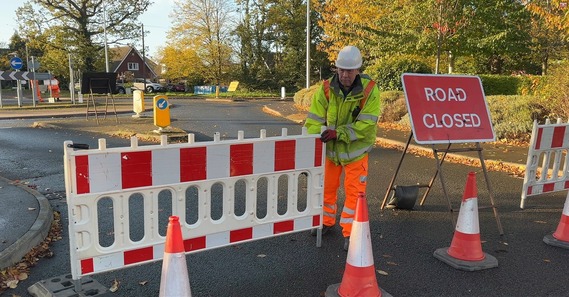
Maintenance requires road closures or temporary traffic lights, which we know is disruptive but we try to avoid times when most people are going to work or school.
We're still issuing letters in streets that are being resurfaced, but aren't doing that for other treatments as this saves money and is better for the environment.
Instead, we'll be putting signs up in areas where we're going to work, with QR codes linking to our full list of streets and expected dates.
If your street's on the list, forward this email to your neighbours and check back regularly as timings can change due to circumstances like rainfall.
We try to stay on schedule, but sometimes we have no choice as the treatments will only be effective in good weather.
See a map of the exact areas where we'll be working in your street - click the blue button next to the location search bar, click Annual Road Maintenance Programme then check the box which appears below that.
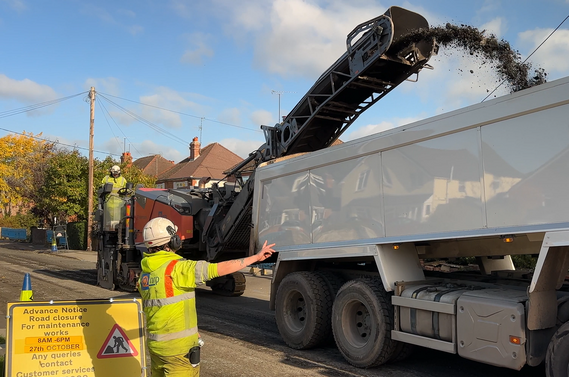 Above: asphalt is fed into a truck during a full resurfacing treatment
Different ways that we look after your roads
Full resurfacing (watch video) involves removing layers of a worn-out road surface and laying down new asphalt.
We lay it while it's hot and then roll it, and the road can reopen as soon as it cools. This is the most extensive and expensive treatment, and sometimes most suitable if a road is badly damaged.
But a surface dressing (watch video) offers better value for less damaged roads as it keeps water out of the carriageway and improves grip. It offers protection for up to 10 years at a fraction of the cost, and it's approved by the Government.
Once it's bedded in, the road looks the same and sometimes people think the treatment is failing when it isn't. The road won't be perfectly even, but a surface dressing should stop it getting worse and prevent potholes.
We apply a temporary 20mph limit until the chippings have been rolled in by traffic. On some roads, where needed, we come back to sweep up the excess.
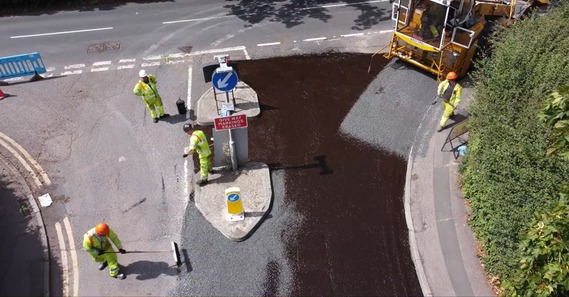 Above: a layer of chippings is set down during a surface dressing
Other treatments being used this year
As in previous years, we'll be applying a slurry seal to selected footways across the borough. This is a thin, tough layer asphalt emulsion blended with finely crushed stone for grip, which seals minor cracks and other irregularities.
We're also trying retexturing, which can restore roads that have been worn to a smooth finish by traffic passing over them. They can become "fatted", where the bitumen rises to the surface.
Retexturing makes the overall surface (macrotexture) and the material embedded within it (microtexture) rougher again by blasting it with water or steel shot.
This improves skid resistance and braking, and emits up to 96 per cent less carbon as it doesn't use any new materials.
On top of this proactive maintenance, we work all year round to repair faults as we discover them through inspections or your reports. We have the highest rating of green for the condition of our roads and our use of best practice, according to the latest Government league tables.
 Investing wisely to meet financial challenges
Like all local authorities, we face huge financial challenges to keep services running. The Government’s new way of funding councils means we expect to lose over £43 million in the next three years.
We allocate funding for road maintenance where it's needed most, regardless of location, rather than allocating ward by ward as this wouldn't offer best value. Read about highways finances in depth on our website.
We'll always do what's needed to meet our legal duty to keep you safe, but not all defects need immediate action.
Read more about different types of road damage and how we typically respond, or the standards we set in our overarching maintenance plan.
|