 The February 2026 edition of the SENCO newsletter includes:
- Area SENCO update
- Training opportunities
- SEND White Paper
- New DfE Guidance on Restrictive Interventions
- Imagining Difference as Ordinary - a blog by Soraya Khanna
- New Berkshire Healthcare website
Welcome to the second spring term edition of the SENCO newsletter. It has been lovely to finally enjoy a brief glimpse of the sun this week.
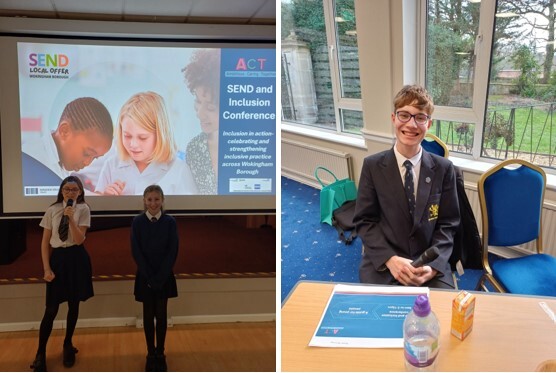
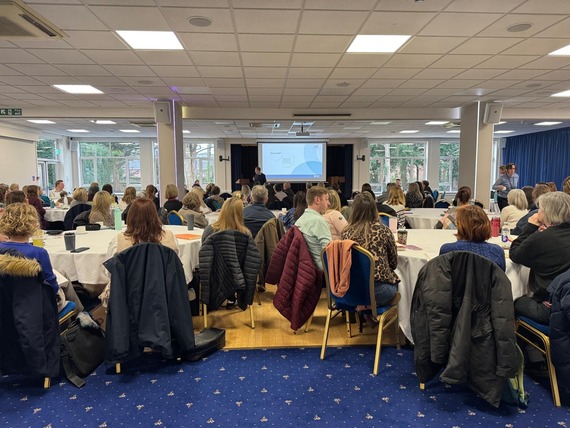
It was wonderful to see so many of you at our first SEND and Inclusion Conference in January in partnership with Maiden Erlegh Trust and the Partnerships for Inclusion of Neurodiversity in Schools (PINS) programme.
Our keynote speakers, Gary Aubin and Pete Wharmby, delivered powerful insights sparking conversations about what meaningful inclusion looks like in our schools.
A particular highlight of the day was the contribution of Maiden Erlegh pupils Arthur, Charlotte, Florence and Kenny, who impressed us all with their confidence, professionalism and thoughtful reflections.
Workshops throughout the day explored key topics reinforcing how small, intentional changes can make a big difference.
A huge thank you to everyone who attended, supported and contributed. All handouts and slides from the workshops and the main session are now available on the SENCO Hub.
A reminder that our next SENCO Network Meeting will be held online on Tuesday 10 March at 2pm. We will be sharing various updates including some early thoughts about the new white paper. Please do join us if you can.
I hope the rest of the term goes well for you all. As always, if you require any support or advice, feel free to contact the Area SENCO team at helen.jackson-brench@wokingham.gov.uk
Our EP Service and Outreach Services are offering more training this term on a range of topics including:
- Gestalt Language Processing and Echolalia
- ARFID and food play
- De-escalation strategies
- Play schemas and
- Emotion Coaching
More information is available on the Wokingham Schools Hub.
Berkshire Sensory Consortium are offering a free session focusing on Glue Ear on Tuesday 17 March 2026 from 3.45pm to 4.20pm. The training is open to SENCOs, teachers and support staff in mainstream, Berkshire Schools. Please note that this is a repeat of the training offered in May 2025.
Our Adult Education Team are offering a range of adult education courses on a range of topics. Parents and carers may be particularly interested in attending some of the family learning courses on topics such as managing anxiety, building resilience, helping with homework and phonics.
RISE are offering the opportunity to attend a free conference, the RISE: Focus on mainstream inclusion conference on Monday 9 March from 9.30am to 3.30pm.
The conference will feature inspiring talks, networking, and actionable strategies. You will hear the government’s vision for an inclusive mainstream school system, and from sector experts about how inclusive schools are providing early, effective support for children with SEND.
You will need to book quickly if you would like a space.
As you will be aware, the much-anticipated white paper Every Child Achieving and Thriving has now been published alongside the SEND consultation document, SEND reform: putting children and young people first. You will have until 18 May to share your views about the planned changes.
The paper marks one of the most significant shifts to SEND policy in recent years with a strong focus on consistency, early intervention and a clearer graduated offer of support. Much of the operational detail is still to come as consultation and analysis continue.
We will monitor developments closely and will offer further support to schools as more information emerges.
A series of shorter documents summarising the information are available at Every child achieving and thriving and SEND consultation supporting information - GOV.UK
At our next SENCO network meeting, we will be interested in hearing your thoughts about the opportunities and challenges arising from the white paper.
The DfE has published updated guidance Restrictive interventions, including reasonable force, in schools, coming into effect April 2026.
The updated guidance places a strong emphasis on meeting the needs of pupils with SEND, recognising that distress, sensory overload, communication barriers and anxiety can lead to behaviours that may be misunderstood as deliberate.
Schools will be particularly interested in the clarified definition of seclusion. The guidance is clear that seclusion is not a disciplinary measure but a safety intervention, to be used only when a pupil’s emotional or behavioural dysregulation poses an immediate risk of harm to others.
The guidance also states that seclusion must be supervised, time‑limited and ended as soon as the risk reduces - and that the environment must feel safe rather than punitive.
This highlights the expectation that schools prioritise prevention, de‑escalation and SEND‑informed support before considering any restrictive intervention.
Many of you will have attended our Educational Psychologist, Soraya Khanna’s training sessions on neuro-affirming practices.
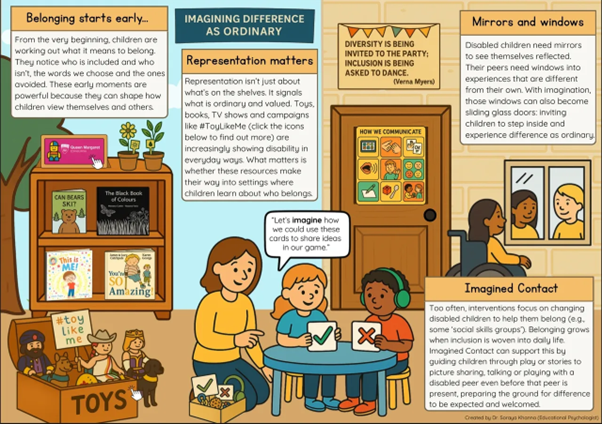
Soraya recently wrote a guest blog for Diverse Pathway entitled A World Where Difference Is Ordinary. In it, she emphasises that early childhood is a critical time when children form ideas about belonging and difference, and positive disability representation in early-years settings is essential.
She argues that inclusion should be part of daily practice, rather than achieved through interventions that expect disabled children to adapt or mask.
Soraya's research highlights the importance of creating environments where all children expect and welcome difference. I highly recommend giving the blog a read.
Berkshire Healthcare NHS Foundation Trust has replaced the previous CYPF website with a new platform that now combines information for both children/young people and adults.
The updated site includes a section on Help for ADHD and Autism. The page includes information on ADHD and Autism support, managing sensory and communication needs, behaviour, emotional regulation, and how families and schools can access help when they need it.
The site also features a Neurodiversity in schools page, which links to a series of videos developed in partnership with Brighter Futures for Children.
These short, practical clips are designed to support teachers, TAs and school teams working with neurodiverse pupils. The videos cover a wide range of useful topics and are ideal for staff for staff CPD.
|