Wokingham Borough Connect
 Gloriously Ordinary Language
On Tuesday 29 April, I was excited to find out more about Gloriously Ordinary Language, an approach shared by Tricia Nicoll and Bryony Shannon.
What’s it all about?
Words are powerful, they reflect our values and how we treat people. Sometimes the language used in social care can be impersonal, bureaucratic or reduce the person to a label or problem.
Gloriously Ordinary Language is about making the words we use in social care and about people who draw on care and support, more human and every day.
It isn’t about banning words; it’s about taking a second to think about the meaning of different words and see if they are daft or sometimes even hurtful to others.
The day
The first thing I noticed was how many people were there. Not a single seat was empty, which was impressive, considering it was a beautiful sunny afternoon. This session was run by Tricia, who began by asking everyone who they were and what made their hearts’ sing.
This was a great icebreaker, which helped everyone relax. Most answers to the first question, was their job and, of course, their name; and most answers to what made their hearts sing were their family – for me, it was takeaways; I order a mean Chinese!
Once everyone had all been introduced, Tricia told us about the types of words to look out for: daft words – words you’d never use in everyday life, for example personal care, mobilising, accessing the community – and othering words – them and us words, such as client, hard to reach and vulnerable. In small groups, we then explored why using clear, everyday language is meaningful to each of us.
This made me reflect on an experience I had after I had an X-Ray done at the hospital, the doctor told me: “Your skeleton has a weird shape, doesn’t it?”. Now my skeleton is an abnormal shape, but using the word ‘weird’ is the wrong choice. Obviously, the doctor didn’t mean anything by it, but this shows that anyone can slip up, so it’s important for everyone to think about the impact of the words they use.
So what can you expect?
Wokingham Borough will be working with other areas around England to make practical changes. By changing the language, we use in and about social care, we can change attitudes and ways of working. Over the coming months, I will be speaking with people involved to share what’s been discussed and what is going to be different.
 Sport in Mind tackling unkind headlines
It’s not just Wokingham Borough that’s looking at the impact of language. Sport in Mind is the UK’s leading mental health sports charity and has supported more than 31,000 people through its mental health and sport programmes.
They deliver physical activity projects in partnership with the NHS to aid recovery, promote mental wellbeing, improve physical health, combat social isolation and empower people to move their lives forward in a positive direction.
They have done some research and found that harmful language appeared in one in 20 words in sports coverage – impacting 91% of people living with mental illness.
Headlines are the biggest culprits. They frequently describe players as ‘crazy’, ‘mad’ or ‘insane’ - language that not only misrepresents reality, but also reinforces damaging stereotypes. Other terms like ‘psycho’, ‘addicted’ or ‘mental’ were found to be far more common in sports media than in general conversation.
As a result, Sport in Mind has launched a ‘Mad Headlines’ campaign to tackle harmful language in sports media, backed by former footballers Anton Ferdinand and Marvin Sordell. The charity is asking journalists, broadcasters, sportspeople and individuals to sign the Mad Headlines pledge to stamp-out unkind language.
Anton Ferdinand said: “I’ve been on the receiving end of damaging headlines. It doesn’t just sting in the moment – it stays with you. It shapes how people see you, how you see yourself and whether you feel safe asking for help. That’s why I’m backing Sport in Mind’s Mad Headlines campaign. We need to change the language – for the players, for the fans, for anyone who’s struggling. I’ve signed the pledge and I hope others in sport will too."
 Save the date – free events for carers next month
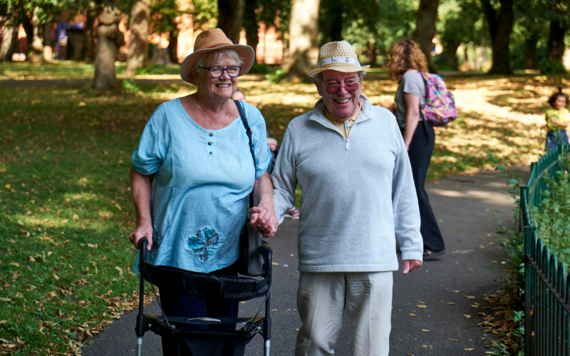
The Wokingham Carers Partnership is organising a series of free events to celebrate Carers Week 2025 (9 to 13 June).
Carers Week is organised every year by Carers UK and Carers Trust, with a different theme each year drawing attention to issues facing unpaid carers across the UK.
The theme for this year’s national campaign is about ‘caring about equality’ and aims to highlight the inequalities faced by unpaid carers.
The following events are being held locally:
- Carers Walk – California Country Park, Finchampstead, Monday 9 June, 1pm to 3pm
- Cream Tea on the Thames – Caversham Pier, Richfield Avenue, Reading, Tuesday 10 June. Enjoy a cruise on the Caversham Princess and a cream tea while you take in the view. Arrive for 10.30am for an 11am departure, arriving back in Caversham at 1pm. A non-refundable deposit of £10 will need to be paid and spaces are limited. This trip is being subsidised by Wokingham Borough Council
- Information Day – Loddon Hall, Twyford, Wednesday 11 June, 3.30pm to 7pm. There will be stands offering information and support from a range of local organisations. Children can also look forward to activities, including face painting, a meet and greet with birds of prey and a visit from Royal Berkshire Fire and Rescue Service
- Carers Walk – Dinton Pastures Country Park, Hurst, Thursday 12 June, 10.30am to 12.30pm
- Games Evening – Radstock Community Centre, Earley, Friday 13 June, 6pm to 8pm
To find out more about any of the above events and to book, email: carers@ageukberkshire.org.uk
|