Bank holiday bin collections
Your rubbish and recycling collections will continue as normal on 29 May (Spring bank holiday Monday).
Our crews will start an hour earlier at 5.30am on that day. Please put out your waste the night before to avoid being missed.
 Use one blue bag per week
Have you started using your new roll of blue rubbish bags delivered to you earlier this year?
We've reduced the number of blue bags to 54 this year. That means you should be using on average one per week, so you don't run out of blue bags before next year's delivery.
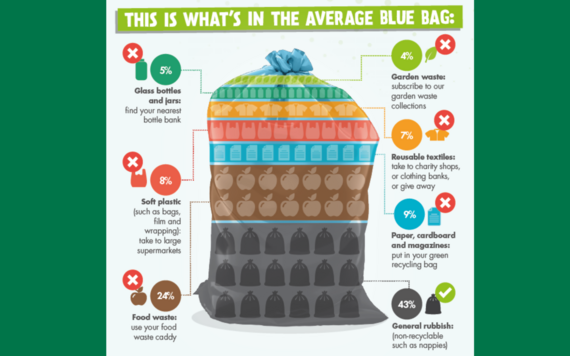
If you find that difficult, have a look at what you put in your blue bag and see if you can find anything that can be recycled using the green bags, the food waste caddy or taken to a recycling point.
A study by re3 shows that 1) food waste; 2) paper, cardboard, magazines; and 3) soft plastics are the top three types of recyclable materials in the average blue bag.
 Use our weekly food waste collections
Having food waste in your general rubbish not only causes unpleasant smells in your kitchen and can attract animals when put out kerbside, but it also costs the council (and council taxpayers like you) a lot of unnecessary money as general rubbish costs more to dispose of than food waste.
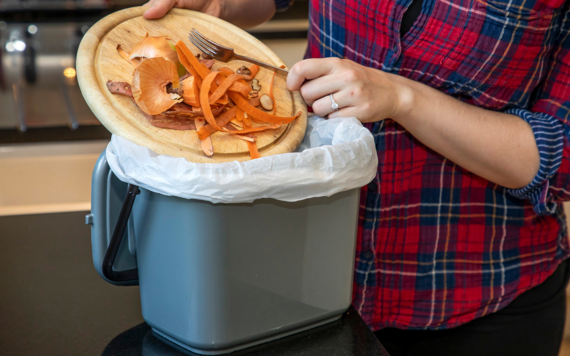
To avoid this, if you don't compost at home (more in the next section), put food waste in your kitchen caddy and transfer it to your outdoor food waste bin when the caddy is full.
We collect food waste every week and turn it to energy to power homes and fertiliser for farmers' fields. Recycling food waste saves money and resources, and it's also good for the environment.
Check out our website for a complete list of kitchen scraps and unwanted or uneaten food items we collect.
Try home composting your food waste
Composting is an inexpensive, natural process that transforms your kitchen and garden waste into a valuable and nutrient rich food for your garden. It's easy to make and use, if you have the facilities.
These food waste items can be added to your home composting bin: Fruit and vegetable peelings, seeds and cores, tea bags, coffee grounds and filter papers, paper towels (if they haven't touched meat) and egg shells.
You can't compost cooked food, fish, meat or dairy products.
If you're interested in home composting, visit the Royal Horticultural Society website or Recycle Now website for more information.
 Almost all used paper can be recycled
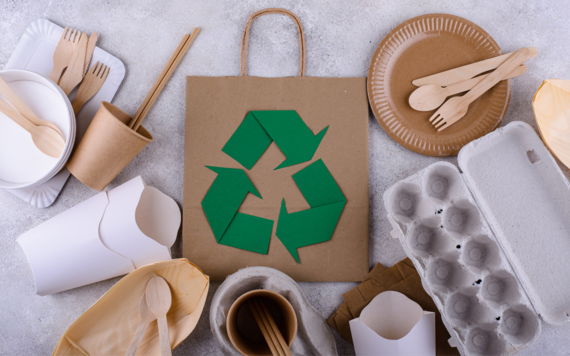
Apart from paper, cardboard and magazines, you can also recycle greeting cards, wrapping paper (without glitter), envelopes (including those with a window) and even shredded paper (must be put in an envelope).
How about pizza boxes? According to the Confederation of Paper Industries, stains or marks on pizza boxes, which are from contact with food, do not prohibit paper and cardboard from being recycled.
However, if the paper or cardboard has visible pieces of food on it, it should be cleaned so that there isn't any solid food before recycling.
Remember - paper is a valuable recyclable material but only when it is clean.
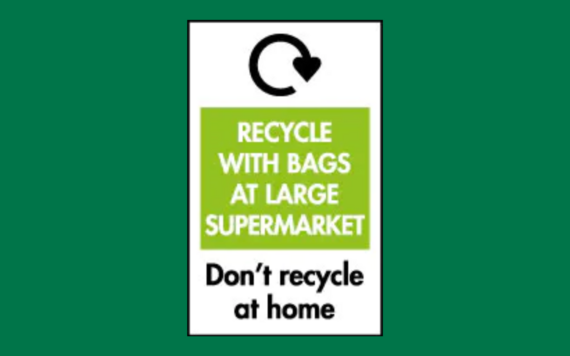 Have you seen this label
You may see this label (image above) on the back of many plastic food packaging, such as bread bags, fruit and vegetable bags, crisp packets and chocolate wrappers. It means the packaging can be taken to the soft plastic recycling points in most major supermarkets.
A lot of wrappers for food or non food products, carrier bags and film are made from soft plastics. The Recycle Now website has a list of bags and wrappers that are accepted at the supermarket recycling points.
Some tips about soft plastic recycling
- It's important to ensure the bags or wrapping are clean and food-free, as this means it's in the best possible condition for recycling.
- Some packaging may still say ‘not recyclable’, but that’s because the labelling may not be up to date with the latest recycling schemes.
- Compostable and biodegradable bags are not designed to be recycled. If they enter the recycling system, they can potentially cause quality issues in the recycled material. These should be placed in your home composting bin, if you have one.
 Did you know?
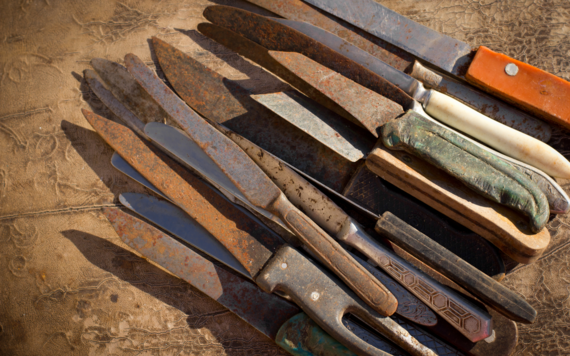
Can I recycle a knife with a plastic or wooden handle?
Yes. The best way to dispose of kitchen knives is to take them to the re3 recycling centres, because they can be recycled. You can place them in the scrap metal bay or hand them to the centre's staff members.
During the recycling process, any non-metal parts such as plastic or wood will be separated.
To prevent any injuries, please wrap the blades securely in materials like old newspaper, unwanted cardboard or cloth before taking the knives to the recycling centres.
|