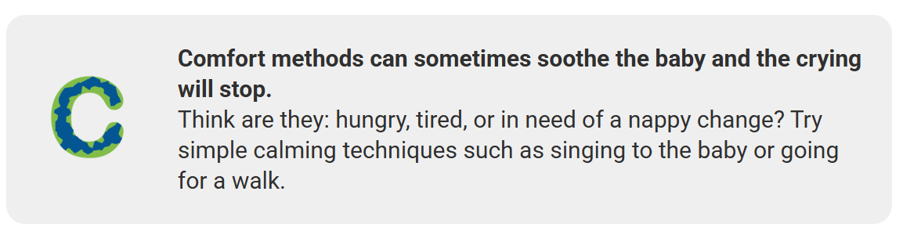
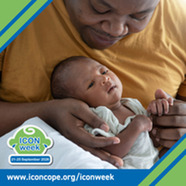
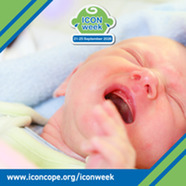
Although crying cannot always be stopped immediately, there are a range of comforting techniques that may help soothe babies and support parents. Every baby is different and families often need reassurance that there is no single "right" approach.
What This Means for Practitioners
Professionals can support families by discussing practical comforting methods and helping parents understand that not every technique works every time.
Comforting methods may include:
Feeding where appropriate.
Holding or cuddling the baby.
Skin-to-skin contact.
Gentle rocking or movement.
Singing or talking to the baby.
Going for a walk.
Reducing noise and stimulation.
It is important to reinforce that parents should not judge their success based on whether crying stops immediately. Responsive caregiving and maintaining a calm approach are often more important than finding an instant solution.
Professionals should use conversations about comforting methods as an opportunity to explore wider support networks and identify any additional help families may need.
While crying is a normal part of infant development, professionals should also encourage parents and carers to trust their instincts and seek medical advice if they are concerned about their baby's health. Most crying is not a sign of illness, but there are occasions when urgent medical assessment is needed.
Reassure parents that healthcare professionals would always rather see a baby and find nothing seriously wrong than miss an important sign of illness.
Advise parents to seek urgent medical help if their baby has any of the following:
A rash that does not fade when a glass is pressed against it. This requires urgent medical attention as it may indicate meningitis.
A fit, seizure or convulsion.
A cry that sounds unusual, particularly a high-pitched or weak cry.
Difficulty breathing, noisy breathing, or breathing that seems unusually fast.
Skin that appears grey, mottled, blue or unusually pale.
A high temperature:
Babies under 3 months: 38°C (100.4°F) or above.
Babies aged 3 to 6 months: 39°C (102.2°F) or above.
Professionals should balance reassuring parents that crying is normal with encouraging them to seek advice when they have concerns about their baby's health. Providing clear information about signs that require medical attention can help parents feel more confident about when to seek support.