|
Having trouble viewing this email? View it as a Web page.

Farm Safety Week: Monday 20 July - Sunday 26 July
Livestock are a routine and essential part of farm life, but they remain one of the most unpredictable hazards. Unlike machinery, animal behaviour can change quickly in response to noise, movement, or perceived threat.
Children often grow up around animals and may feel confident or familiar with them, which can increase risk. They may approach animals without recognising warning signs or understanding how animals react to their environment.
The guidance highlights that livestock incidents are common and can result in serious injury, even during everyday handling activities.
Today’s briefing focuses on animal safety and wellbeing, exploring how and why animals present a risk to children, and what steps adults can take to prevent harm.
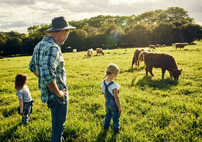
Animals react to behaviour, movement, and environment. Children, by nature, can be unpredictable — they may run, shout, or approach too closely, which can trigger an animal’s natural instincts.
Children are also less able to judge distance, size, and behaviour, making it harder for them to recognise when an animal is becoming agitated or defensive.
Injuries often occur not because animals are aggressive by nature, but because they are startled, frightened, or protecting themselves or their young.
|
Certain situations significantly increase the risk of injury around livestock.
Cows with calves are known to be particularly protective and may react quickly if they perceive a threat. Bulls also present a significant risk due to their size and strength.
Confined spaces, such as pens, crushes, and sheds, increase danger further because there is limited room to escape. Feeding times or handling activities can also make animals more reactive.
The guidance emphasises that getting into enclosed areas with animals should always be avoided wherever possible, and should only ever be done with appropriate experience and planning.
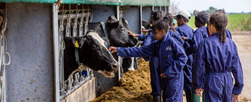
Children should not enter livestock areas unsupervised, and younger children should not be involved in handling animals at all.
Guidance states that children under 13 should not be allowed to enter cattle housing or handle cattle, and that older children should only carry out low-risk tasks under supervision.
Even calm or familiar animals can cause harm. A sudden movement, noise, or change in behaviour can lead to kicking, crushing, or trampling.
Keeping children physically separated from livestock areas is one of the most effective ways to reduce risk.
|
A basic understanding of animal behaviour is essential for safety. Livestock respond to pressure and movement, and may react defensively if they feel cornered or threatened.
Animals use body language — such as movement, posture, and positioning — to communicate how they feel. Children are unlikely to recognise these signals, which increases their vulnerability.
The guidance highlights that many unsafe practices come from habit or routine rather than conscious decision-making, reinforcing the need for continual awareness and safer handling systems.
Livestock can carry infections that can be passed to humans, known as zoonotic diseases.
Children are more vulnerable to these infections, particularly through contact with animals, bedding, or contaminated surfaces such as slurry or manure.
Good hygiene practices, including handwashing and changing clothing after contact with animals, are essential to reduce this risk.

Safety around animals depends on both physical controls and behaviour.
Secure fencing, well-designed handling facilities, and clear separation between work areas and family spaces all reduce risk. Planning how animals are handled — including avoiding direct contact where possible — also plays a key role.
Education is also important, helping children understand risks from an early age, but this must always be supported by adult supervision and clear boundaries
|
|