|
|
Having trouble viewing this email? View it as a Web page.

Farm Safety Week: Monday 20 July - Sunday 26 July
Many of the most serious and fatal incidents involving children on farms are linked to vehicles and machinery. These risks are often present during everyday tasks and can arise quickly, particularly when children are nearby and unseen.
Children are naturally curious and are often drawn to tractors and machinery, but they may not understand the dangers or how quickly situations can change. Guidance highlights that children are particularly vulnerable around moving vehicles and are at real risk of being run over.
Today’s briefing will focus on tractor and machinery safety, exploring why these risks are so significant and the practical steps adults must take to prevent children coming into contact with both operating and unattended equipment.
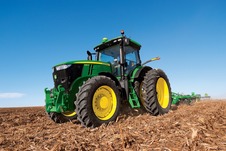
Tractors and visibility
Children are particularly vulnerable around tractors and other large vehicles because they are smaller and harder to see. The guidance highlights that children can be easily overlooked by drivers and are at real risk of being run over, especially in busy yards or during peak working times.
This risk increases when reversing, turning, or manoeuvring in tight spaces. Children can move quickly and unpredictably, meaning drivers may not be aware of their presence until it is too late.
Children and tractors
Tractors are not designed to carry children, and it is unsafe to allow them to ride either inside or outside the cab.
The guidance makes clear that falling from a tractor and then being run over is a common cause of fatal accidents involving children. Even when inside the cab, children can distract the driver or interfere with controls, increasing risk.
Children under 13 must not ride on or operate agricultural machinery.
|
Safe Stop – securing machinery
A significant number of incidents happen when machinery is left unattended or not properly secured.
SAFE STOP is a simple but critical safety procedure that should be followed every time a driver leaves a machine:
-
Put controls into neutral
-
Switch off the engine (or isolate the power)
This ensures that machinery cannot move unexpectedly and prevents children from climbing on and attempting to operate it.
Even a short lapse in following Safe Stop can lead to serious or fatal consequences.
PTO shafts – understanding the risk
A PTO shaft (Power Take-Off shaft) is a rotating component that transfers power from a tractor to attached machinery, such as slurry mixers or feed equipment.
These shafts rotate at high speed and are often partially exposed, making them extremely dangerous. The guidance highlights that PTO shafts have been involved in many fatal injuries, particularly when people try to clear blockages or carry out maintenance while machinery is still running.
Entanglement can happen in seconds. Clothing, hair, or limbs can be pulled into the rotating shaft almost instantly, leading to severe or fatal injuries.
Stopping the machinery fully, using Safe Stop, and ensuring guards are in place are critical steps in reducing this risk — particularly to prevent children accessing these areas.
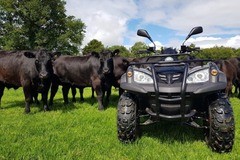
Quad bikes (ATVs)
All-terrain vehicles (ATVs), commonly known as quad bikes, are another major source of risk on farms. They are powerful machines designed for off-road use but can quickly become unstable if used incorrectly.
The guidance states clearly that:
-
Many serious and fatal accidents involve young people
-
Helmets are essential, as many deaths involve head injuries
-
Passengers must never be carried
-
Only trained individuals, usually over 16, should operate them
Allowing children access to quad bikes significantly increases the risk of overturning, collisions, or being thrown from the vehicle.
|
|
|
|
|