|
|
Having trouble viewing this email? View it as a Web page.

Drowning Prevention Week
This 5‑day series supports Drowning Prevention Week and national campaigns including Respect the Water and Be Water Aware. Focusing on understanding risk, responding safely, and preventing incidents.
In Cumbria, lakes, rivers and open water are a key part of our local environment but present real and often underestimated dangers. National data shows many incidents are preventable and often occur when people did not intend to enter the water.
The briefing series will cover the following themes:
-
Day 1 (today): Water Safety Code & Cold Water Shock
-
Day 2: Emergency response – Float, Call, Tell, Throw
-
Day 3: Open water hazards (jumping, waterfalls, currents)
-
Day 4: Safer participation in outdoor water activities
-
Day 5: Home water safety and safer swimming environments
|
|
- Always follow the Water Safety Code
- Never assume natural water is safe
- Cold water shock can happen in under 60 seconds – even in summer
Everyone should know and follow the Water Safety Code:
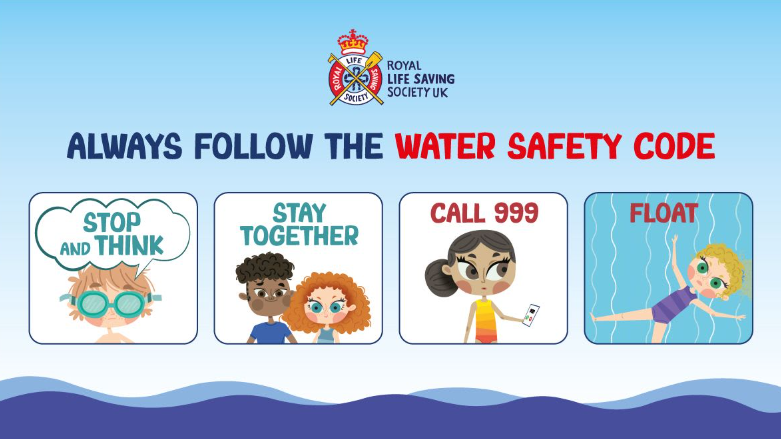 Stop and Think
- Assess the risks before entering the water
- Check depth, temperature, and hazards
Stay Together
- Never enter the water alone
- Look out for each other
Take Safety Advice
- Follow local signage and guidance
- Wear a buoyancy aid or lifejacket where appropriate
If You Fall In – Float to Live
- Lean back, keeping your airway clear
- Try to control your breathing
- Move your hands and legs gently to stay afloat
In an Emergency
- Call 999 and ask for the appropriate service
- If someone is in trouble Phone, Tell, Throw – do not enter the water yourself
Cumbria has thousands of lakes, rivers, tarns and becks. They are beautiful but cold, unpredictable and dangerous all year round.
Even during warm weather, most open water in the UK remains below 15°C, which is cold enough to trigger cold water shock.
Natural water environments differ significantly from swimming pools. Conditions can change quickly, and hazards are often hidden beneath the surface.
Cold water shock is the body’s immediate response to sudden immersion in cold water. It affects everyone, including strong swimmers.
Key effects:
- Gasp reflex → risk of inhaling water
- Uncontrolled breathing (hyperventilation)
- Panic with rapid heart rate and increased blood pressure
- Muscle weakening and loss of coordination within minutes
These effects happen within seconds, with the first minute being the most dangerous.
Cold water shock is recognised as a key contributor to drowning in UK open water incidents.
|
RLSS Water Safety Code downloads: Water Safety Code Downloads | Royal Life Saving Society UK ( RLSS UK )
Cumbria Fire & Rescue – Water Safety: https://www.cumbriafire.gov.uk/water-safety
RLSS UK – Drowning Prevention Week: https://www.rlss.org.uk/pages/category/drowning-prevention-week-campaign
RLSS – Cold Water Shock Facts: https://www.rlss.org.uk/cold-water-shock-the-facts
RNLI – Cold Water Shock: https://rnli.org/safety/know-the-risks/cold-water-shock
|
|
|
|