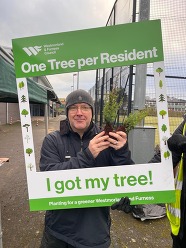
Throughout January and February, an ‘unbe-leaf-able’ 58,450 tree saplings were handed out through the Council’s Free Trees for Residents Scheme.
A huge thank ‘yew’ to everyone who took part in this ‘tree‑mendous’ initiative!
Saplings were supplied by Alba Tree Nursery in East Lothian, with Council staff and volunteers from partner organisations including Fibrus, RAISE, and local community groups supporting the successful delivery of the events.
|
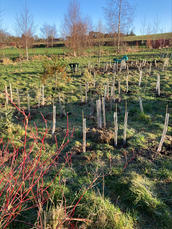
Whether you collected your free sapling or were one of the many volunteers who gave their weekend to help, your enthusiasm has helped this scheme grow far beyond expectations.
This latest scheme takes our total so far to over 100,000 trees and hedgerows planted, bringing us closer to our ambitious target of 250,000 - the equivalent of one tree or one metre of hedgerow per resident in Westmorland and Furness.
|
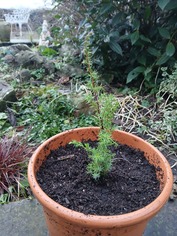
The saplings are already destined for inspiring projects across the area. From creating havens for birds and wildlife to establishing cosy hedgehog corridors, and restoring pockets of ancient woodland, these young trees are set to make a meaningful difference.
Each planting project represents a small but significant step toward enhancing biodiversity and enriching our local green spaces.
We can’t wait to see these ideas flourish, the habitats they’ll support, and the lasting legacy they will create for our communities across Westmorland and Furness.
|

Community groups across Westmorland and Furness are invited to apply for grants of up to £300 to support local activities for Great Big Green Week, taking place this year from Saturday 6 June to Sunday 14 June.
Thanks to the support of the Westmorland and Furness Council Locality Boards, funding is available for not‑for‑profit groups planning events that celebrate climate action and encourage people to make simple, sustainable choices.
The grants, delivered in partnership with Futureproof Cumbria can help support activities such as repair cafés, plant swaps, clothes swaps, workshops, talks and other community‑led initiatives.
Application forms can be downloaded from the Futureproof Cumbria website, and completed forms should be sent to: communitygrants@futureproofcumbria.org.uk.
Deadline for applications is Monday 4 May 2026.
|
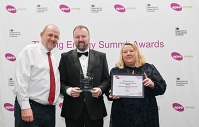
We’re thrilled to have won and be shortlisted as a finalist for two APSE Energy awards this year.
These awards celebrate the fantastic work happening across our council and highlight our ongoing commitment to sustainability, climate action and achieving net zero.
We won the Clean Energy - Heat accolade for trailblazing work to decarbonise our property estate (including our corporate buildings and schools) as part of our carbon net zero by 2037 ambition; and were shortlisted in the Decarbonising Transport category.
For example, the £2m project to replace gas boilers with air source heat pumps at Appleby and Kendal Leisure Centres, South Lakeland House and Kendal Indoor Market is expected to save the equivalent of 343.2 tonnes of carbon emissions per year (or driving around the world 52 times).
The APSE Energy Awards are designed to celebrate innovation and are held in partnership with the Department for Energy Security and Net Zero.
We were one of six category winners from 66 entries by councils across the country, with judges saying: "As councils across the UK push towards fast-approaching net zero goals, these winners shine as powerful examples of progress in action."
|
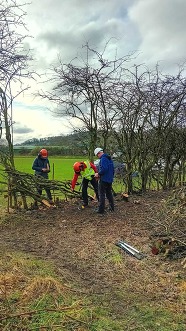
A few weeks ago, Kendal Conservation Volunteers (KCV) reached out to ask whether any hedges on Westmorland and Furness Council-owned land were ready for attention during their winter working party.
As it turned out, a section of hedge at Jubilee Playing Fields in Kendal was overdue for its first laying so KCV stepped forward and took on the challenge.
The hedge had seen such vigorous growth that, in addition to laying it, volunteers were able to create a dead hedge using the leftover brash. This simple but effective structure provides valuable habitat for insects, birds, and small mammals, enhancing biodiversity across the site.
|
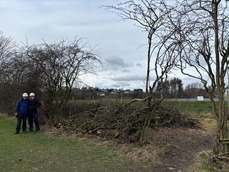
As part of the Council's Arboriculture Team’s ongoing professional development, two colleagues joined a session with KCV to learn the traditional Westmorland hedge‑laying style. Despite a biting polar wind, the day was described as both tough and deeply rewarding - an opportunity to work together, develop new skills, and help preserve an age‑old craft.
KCV leader Richard Wrigley reflected on the session:
"I was pleased with today's hedge laying session, old style with just hand tools. Progress was in part due to the enthusiasm of our two students who despite the biting polar wind, quickly picked up essential skills and were soon laying difficult pleachers.”
Kendal Conservation Volunteers continue to be an invaluable asset to the Council. Their work extends far beyond hedge laying, they support the management of Serpentine and Dog Kennel Woods, lay hundreds of metres of hedge at no cost, collect and germinate local tree seed, grow trees on in their nursery, and return any unsold stock to the landscape as understory planting.
For those inspired by their commitment to nature recovery and traditional land skills, volunteering opportunities with KCV are open to all. Learn more.
|
Westmorland and Furness Council secured £20,000 in grant funding from the North West Net Zero Hub, alongside additional funding from the Zero Carbon Cumbria Partnership, to deliver a technical feasibility study on small-scale, community-led energy systems in rural areas.
The study focused on rural and off-gas-grid communities, concentrating on seven rural communities across Westmorland and Furness, exploring how locally owned and cooperative energy solutions could support the transition to low-carbon energy while addressing challenges such as fuel poverty and energy resilience.
Consultants, Arthian Ltd, assessed the technical and economic feasibility of a range of technologies suited to rural contexts, including solar PV, micro wind, small-scale hydro, heat pumps and hybrid solutions that integrate multiple technologies at a community scale.
The feasibility study has:
- Reviewed best practices in rural low-carbon energy in UK.
- Evaluated technical, financial and governance models for delivering community energy systems and develop case studies for the selected communities.
- Explored opportunities for community ownership, local benefit and long-term sustainability.
- Provided an evidence base to support future funding bids and project development.
This project provides a valuable foundation for locally-led progress as we continue working with communities and local partners to help them understand the opportunities identified and explore how these insights could support future low‑carbon projects.

The Council has been part of a successful Europe-wide funding bid to work on soil conservation.
The initiative, called ‘Soilstice’, is funded by the EU and supports the Council to work with local communities to co-create agreements (known as Territorial Management Agreements) that help look after our soils and use them more responsibly.
Soils are the basis for all food production and is essential for healthy wildlife and the wider environment. It also plays a major role in storing carbon with soils holding more carbon than the atmosphere and all plants combined. This makes healthy soil crucial for tackling climate change. But if land is poorly managed, that stored carbon can be released back into the atmosphere, contributing to climate change.
Healthy soils also bring important benefits such as slowing rainfall run-off, which helps reduce flooding further downstream. How well soil can do this depends on its condition; better soil management creates a more resilient environment and better outcomes for communities.
The Soilstice project will give people across the Westmorland and Furness area opportunities to get involved in activities and discussions about soil. It will also support several key actions identified in the Cumbria Local Nature Recovery Strategy (LNRS), the Council's Nature Action Plan and Climate Action Plan, and help deliver a more sustainable future for everyone.
|
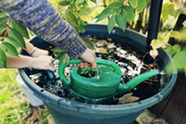
The sun’s out and lots of us are getting back into the garden but did you know your garden can help reduce flood risk?
Our gardens can help manage the risk of flooding by absorbing rainwater and easing pressure on drains.
Simple changes such as installing rain gardens, permeable paving, and water butts are great examples of Sustainable Drainage Systems (SuDS) that help manage the risk of surface water flooding. These features not only slow the flow of rainwater but also create greener, more climate-resilient outdoor spaces.
Using SuDS in gardens can support biodiversity, improve drainage, and manage the risk of localised flooding during heavy rainfall.
Find out more in the Flood Hub's blog.
|

A film featuring an animated Cumbrian red squirrel explaining the role trees can play in helping with flooding and climate change has won an international prize.
‘Wood You Believe It’ was awarded the ‘IPST Education Award’ as part of the Goethe Institute’s ‘Science Film Festival’ 2025. The festival saw more than 1500 films from 110 countries submitted with only 123 films selected for competition.
The short, engaging and informative film is one of a series of four Creature Comforts-style animations created to show how natural flood management can help protect homes, businesses and farms and assist in the fight against climate change.
They are the result of an Environment Agency-funded collaboration with the ‘Cumbria Wildlife Trust’ and the ‘Cumbria Innovation Flood Resilience’ (CiFR) project.
Natural flood management is a catch-all term for a variety of landscaping techniques used to hold water back during flood events which reduce the impact downstream on communities and infrastructure such as bridges. The films demonstrate how these techniques can also reduce the impact of climate change and improve water quality.
Watch 'Wood You Believe It' and its three companion films.
|

A new subscription-based garden waste collection service is to be introduced across Westmorland and Furness from 1 April 2026.
Residents who wish to continue receiving garden waste collections, or wish to receive future collections, will need to subscribe to the service at a cost of £60 per bin per year. The subscription window will open on 1 April and close on 28 June, with only bins displaying a valid sticker collected from 29 June. General household waste and recycling collections remain unaffected.
This change follows decisions made as part of the Council’s 2026/27 budget, agreed at Full Council on 26 February, and reflects the need to review discretionary services in light of significant financial challenges. Garden waste collection is not a statutory service, and introducing a charge ensures fairness with those who use the service contributing to its cost while helping the council protect essential services for all residents.
There's nothing residents need to currently do and should continue putting their bin out as usual for now.
From 1 April, the Council will issue clear guidance on how to subscribe to the garden waste collection. For those newly subscribing to the service, the first garden waste bin will be provided free of charge. Any additional garden waste bins can be supplied at a one-off cost of £25 per bin, and each bin – including the first – requires a subscription fee of £60.
We'll continue to collect garden waste bins as usual from 1 April until 28 June 2026. This grace period is to give people the opportunity to subscribe to the service.
You do not need to contact us if you do not wish to subscribe. Unless we hear from you, we will not collect your garden waste.
Once payment is made, a sticker will be posted out to be attached to the bin. Without a sticker, garden waste will not be collected after 28 June. Any additional bins ordered will be delivered following completion of signing up to the service.
Collections of garden waste will be made every two weeks and will run from April to March with no collections during the non-growing months of December, January and February.

Did you know...
We provide waste and recycling collections to around 117,000 homes across Westmorland and Furness.
We’re one of the largest and most rural unitary council areas in the country - covering 1,500 square miles.
Our crews make around 7.5 million collections every year.
They travel over 750,000 miles to reach every household.
Our crews can do as many as 30,000 steps a day when out collecting your bins - that's around 12 miles.
We do not send any waste directly to landfill.
All recyclables collected at kerbside are sorted and recycled.
Your general household waste is processed to produce a fuel which is then used in cement kilns and energy from waste plants to produce electricity.
|

Composting is a simple concept but a powerful and meaningful action we can all take to help combat climate change.
By composting at home, you are embracing the most sustainable way of managing the organic waste - including food scraps - that we all generate.
It is estimated that each domestic compost bin in use prevents 125kg of waste being transported and disposed of by councils every year. When you choose to compost, you’re not only protecting the planet, you’re also transforming your waste into something useful and life-giving for your garden.
In Westmorland and Furness, we are fortunate to have a team of compost enthusiasts who are happy to share their extensive composting knowledge and experience: with people who need help to start as well as those who want to improve their home composting.
The Master Composter programme is run through the organic growing charity Garden Organic and funded by Westmorland and Furness Council. Master Composter volunteers have a wealth of composting know-how and are keen to enthuse others to join the composting revolution. They can often be found at local community events promoting home composting and offering advice (see below for some events where you will find Master Composters in the coming months).
|
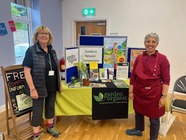
Upcoming events
Interested in finding out more?
The Master Composters will be providing composting information and advice at the following events across Westmorland and Furness in March and April:
- Seedy Saturday, Penrith Methodist Church: Sat 28 March 10am-1pm
- Ford Park Spring Fair, Ulverston: Sat 11 April 10am-4pm
- Ulverston Eco Fair, The Coro: Sat 18 April 10.30am-4.30pm
No need to book, just drop by.
More information
If you need advice on composting or would like to arrange a talk or workshop for your group, please contact MCCumbria@gardenorganic.org.uk
Find more information about the Cumbria Master Composters, including details of our Compost Demonstration Sites.
You can also access Garden Organic’s free interactive online course in partnership with Westmorland and Furness, and Cumberland Councils:
Garden Organic My Learning App
Guest password: Recycle4Cumbria21
|
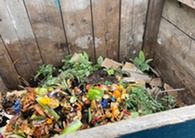
Top tips for composting
- Decide which type of compost bin or system best suits you and your garden. You can make your own compost bin from recycled wood, or upcycle an old plastic dustbin but if DIY is not your thing, there are numerous different designs available to purchase. If you are unsure where to start, why not visit one of our compost demonstration sites? There you’ll see a good variety of compost bins in use, with plenty of information on display to help you decide on the right system for you.
- Understanding what you can and can’t put on your compost pile is important, but as a general rule of thumb, most uncooked plant-based material can be added, either in the form of kitchen scraps or plant cuttings from the garden.
- Getting the right balance of nitrogen-rich ‘green’ materials (cut grass, vegetable peelings, fresh new plant growth) and carbon-rich ‘brown’ materials (dry plant material, cardboard/paper) is also key, as it ensures the compost will not get too wet (too many greens) or too dry (too many browns).
- The composting process is aerobic. This means that the decomposition needs air, so check that the heap is not too compacted and has plenty of air pockets. As lots of small creatures such as worms, and even smaller creatures like micro-organisms, are all helping to produce compost, it is also a good idea to chop up your material into fairly small pieces so that it is more manageable for your little helpers.
- Turning your compost or giving it a bit of a mix every time you add some fresh material will help speed up the process to get your compost ready to use in your garden. If you have given your compost the right balance of materials and attention, it should produce good compost in about 6 months. If you have just left it to its own devices, it might take around 18 months – and either method is perfectly fine.
Whatever type of soil you have in your garden, adding compost will improve its structure. The organic matter in compost improves drainage in heavy clay soils and allows sandy soils to retain moisture and nutrients better. Compost will also stimulate beneficial soil life and add nutrients to help your plants thrive.
Interested in buying a discounted composter?
Visit getcomposting.com for a range of discounted products to help you reduce and recycle food waste at home.
|
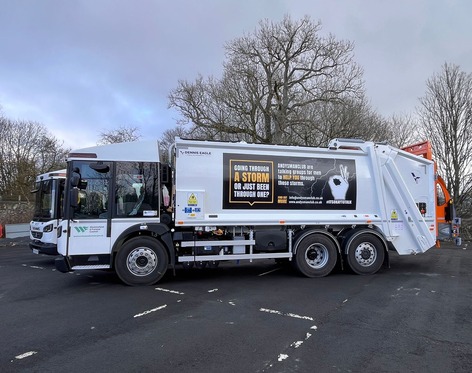 |
We're showing our support for Andy’s Man Club by bringing messages of men’s mental health awareness to the streets of Furness and South Lakeland.
Two of the our waste collection vehicles have been given new livery featuring signage from the Club’s ‘It’s Okay to Talk’ campaign, which encourages men to reach out and seek support.
Andy’s Man Club is a men’s suicide prevention charity that offers free, peer‑to‑peer support groups across the UK and online. Its mission is to end the stigma surrounding men’s mental health by providing a welcoming, judgment‑free environment where men aged 18 and over can talk openly about whatever they are going through.
As part of the launch of the new vehicle livery, volunteers from Andy’s Man Club have been visiting the Council’s waste teams to discuss the campaign and the new vehicle signage, helping spread the message among staff as well as the wider community.
To find out more, email info@andysmanclub.co.uk or head to www.andysmanclub.co.uk.

As the days get a little longer and signs of spring begin to appear, it’s the perfect time to roll up our sleeves and take pride in the places we live, work and love.
The Great British Spring Clean - the nation’s biggest mass‑action environmental campaign - is back until 29 March 2026, and this year, you’re invited to help make an even bigger difference.
Each year, more than 400,000 volunteers head out into their streets, parks, riversides and beaches to tackle the litter that harms wildlife, spoils local beauty and contributes to pollution. Whether you’ve never taken part before or you’re an experienced picker, every extra pair of hands helps.
Pledge as an individual, a group or a Keep Britain Tidy volunteer using this online form.
|

Closer to home, the Great Cumbrian Litter Pick, led by Friends of the Lake District (FOLD), returns for two days of coordinated community action across the county.
Cumbria is full of fantastic individuals and volunteer groups already out litter picking year‑round. This annual event helps bring those efforts together, celebrate local pride, and support even more people to get involved.
A useful interactive online map makes taking part simple - either by joining a local pick or adding your own.
Use the map to find a participating group in your area. Click on a ‘bin’ icon for contact details, then get in touch with the organiser to join their pick. Please note some groups are ‘private’ and not open to sign‑ups, but still shown on the map.
Organising your own pick? Add it to the county map by completing the online form. You’ll need: your group name, location, contact details, and whether your pick is public or private. Public events will appear as open for others to join.
|
Collected bags of litter but not sure what to do with it?
The Council is here to help by collecting bags of waste gathered during your litter pick. Find out how to get in touch with us..


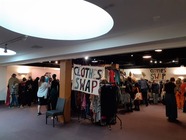
Hundreds of people joined Cumbria Clothing Collective and Restore Cumbria for their ReWear Revolution event on Saturday 28 February at Rheged, Penrith.
An inspiring day dedicated to sustainable fashion, clothing repair and waste reduction, the event brought together films, discussions, hands‑on workshops, clothes swaps and a vibrant mix of local exhibitors - all championing the message that small changes in how we buy, use and care for our clothes can make a big difference.
Throughout the day, visitors explored practical ways to extend the life of their wardrobe. From beginner-friendly sewing workshops to demonstrations from experienced repairers, the event was packed with opportunities to build skills and gain confidence in repairing, rewearing and reimagining clothing.
|
A community committed to change
The atmosphere throughout the day was positive and full of energy, with visitors sharing ideas, swapping clothes, discovering new skills and connecting with others who care about reducing clothing waste. The message was clear: repairing, recycling, restoring, reusing and reimagining our clothes isn’t just good for the planet - it’s accessible, creative and empowering.
|

Launching the Cumbria Repair Directory
One of the highlights of the event was the launch of the new Cumbria Repair Directory - a free, one-stop place designed to help people find trusted local clothing repairers across the county. This resource aims to support residents in making more sustainable choices while boosting visibility for small repair businesses.
We were delighted to welcome professional repairers to our joint Waste Reduction stand with Cumberland Council, where they could sign up to be featured in the directory. It’s a simple, effective way for local makers and menders to reach new customers and support a growing repair culture within our communities.
Interested in signing up or know someone who would be? Complete this online form.
Explore the Directory
Whether you need outdoor clothing repairs, tailoring, wedding dress alterations, or simple fixes like hems and zip replacements, select the repair you need, enter your postcode, and you'll be matched with the best local business. Contact them directly by email and get your clothes repaired.
Visit the Cumbria Repair Directory.
|
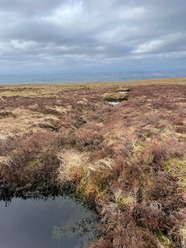
Peatlands are one of our most valuable natural assets in the fight against climate change. These unique landscapes store vast amounts of carbon, support biodiversity, and help manage flood risk.
This month, we joined colleagues from North Pennines National Landscape to visit Fiends Fell, a peatland restoration area supported by Westmorland and Furness Council.
Located southwest of Alston, restoration work has been carried out on approx. 186ha of the fell with the aim of restoring areas of eroding peat and degraded blanket bog. This work will:
- help slow the movement of water across the site and reduce erosion
- raise the water table to encourage a healthy bog and suitable habitat for many flora and fauna species
- reduce erosion of steep edges of bare peat by shaping them to a gentle slope and revegetating them, and
- reduce carbon emissions and help the peatland act as a carbon store.
For more information on why peatlands matter, read this document we've pulled together. It also details the work of our partners, who are helping to restore and protect these vital ecosystems.
You can also find out how to get involved with the organisations below:
|
 |
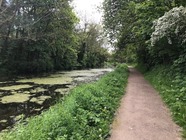
The Lancaster Towpath Trail is a unique place for walking, cycling, paddling and enjoying the tranquillity of our rural landscape.
Stretching between historic Kendal and Lancaster, it follows the original canal towpath - both the watered and un‑watered sections - to create a stunning route that connects communities, wildlife and heritage.
Today, the Towpath Trail is more than just a path. It’s a growing blue‑green corridor - a place where nature thrives along the water’s edge and where people of all ages can enjoy the simple pleasure of being outdoors.

New funding secured for the Trail
As a Council, we are committed to supporting the long‑term future of this unique space. That’s why we are pleased to have awarded funding through the Thrive Heritage Fund to help enhance this much‑loved stretch of the trail.
This investment will enable:
- A safer, easier route between the towpath and The Dairy Shed (a self-serve milk and milkshake vending machine near Kendal), encouraging more people to enjoy a car‑free visit and a well‑earned refreshment stop.
- Restoration of Natland Hall Bridge, protecting an important local heritage asset and making the route feel safer and more welcoming for everyone.
These improvements represent exactly the kind of practical progress we want to support - helping people of all ages to get outside, connect with nature and enjoy everything the Towpath Trail has to offer, whether it’s a family outing, a gentle stroll with a friend or a breath of fresh air after work.
|
Upcycling our heritage
At its heart, the Towpath Trail is an upcycling initiative. Instead of building something new, an historic structure is being repurposed and given new life for modern use. What once powered the canal’s working boats now supports healthier, low‑carbon journeys and a deeper connection to nature.
By conserving, restoring and improving this corridor, its past is being honoured while helping meet the growing need for accessible outdoor space - a need that’s increasingly important as we adapt to the challenges of climate change and rising pressures on our natural environments.
|

Making the trail accessible for everyone
Whether walking, wheeling, cycling or simply exploring at your own pace, work is being made to make the Towpath Trail barrier‑free wherever possible. Improvements to surfacing, gradients, signage and connections to villages and green spaces are all part of this ambition.
The ambition is for every person, whether a local resident, family, visitor, or someone new to exploring the great outdoors, to feel confident that the trail is welcoming and enjoyable for them.
Explore even more with the loop walks
To help people discover not just the towpath but the beautiful spaces that sit alongside it, a series of ten loop walks link the Towpath Trail to surrounding landscapes, wildlife sites and points of interest.
These routes range from short, family‑friendly options to longer exploratory walks.
Explore the loop walks here.
|

Working together for a greener future
The Towpath Trail initiative is led by the Lancaster Canal Regeneration Partnership, a Community Interest Company.
The partnership is supported by Local Authorities and local and national charities including:
- Canal & River Trust
- Inland Waterways Association
- Kendal Town Council
- Lancashire County Council
- Lancaster Canal Trust
- Lancaster City Council
- Westmorland and Furness Council
Together, we’re committed to creating a place where heritage, wildlife and wellbeing come together - a place that supports sustainable travel, nature recovery and the joy of spending time outdoors.
|
 Care about the future of Windermere and its catchment? So do we. The Love Windermere Partnership (LWP) brings together communities, businesses, environmental groups and organisations committed to improving the health of our lake. And there are now more ways than ever for you to get involved.
Join our monthly drop‑in events
Every month, we host informal drop‑in sessions where anyone can come along to ask questions, share ideas, and learn about the work happening across the catchment. Whether you’re a resident, a business owner, or simply passionate about protecting Windermere, you’re always welcome.
Upcoming sessions include:
- Thursday 26 March - Lakeland Motor Museum, Old Blue Mill, Backbarrow, Ulverston LA12 8TA - 10am until 3pm
- Thursday 2 April - Force Cafe & Terrace, Kelsick Grammar, Stockghyll Lane, LA22 0QY - 10am until 3pm
- Thursday 21 May - National Trust Fell Foot Cafe, Newby Bridge, Ulverston LA12 8NN - 10am until 3pm
For more information, visit the LWP website.
Sign up to the newsletter
Stay up to date with the latest projects, scientific developments, community initiatives and ways to support the lake. Our regular newsletter brings you behind‑the‑scenes updates and opportunities to get involved - all straight to your inbox.
Sign up now via the LWP website.
Explore the website
Want to understand the challenges facing Windermere and what’s being done about them? The Love Windermere website offers clear, accessible information about current projects, data and partnership activity, as well as practical guidance on how you can help.
Visit the LWP website.
Follow LWP on social media
Help spread the word by following and sharing our content:
These channels are great ways to stay connected and see what’s happening in real time.


From October 2027 a new Deposit Return Scheme (DRS) for drinks containers comes into force.
A Deposit Return Scheme is a system designed to increase recycling and reduce litter. Under the scheme a deposit is added to the price of the drink when it is sold and the deposit is refunded when the empty bottle or can is returned.
Businesses will play a key role in the scheme for example by hosting reverse vending machines where consumers can return their containers to collect the deposit.
Exchange for Change - which is the industry-led organisation responsible for designing, implementing, and operating the Deposit Return Scheme across England, Scotland, and Northern Ireland - is holding a series of free 45 minute introductory webinars to provide more information about the new scheme.
For more information sign up via their website.
|

Did you know there are multiple textile recycling banks across the Westmorland and Furness area you can take your unwanted clothes, shoes and textiles to?
The Fire Fighters Charity has collection points at several fire stations including:
- Penrith
- Shap
- Appleby
- Ambleside
- Windermere
- Staveley
- Kendal
- Milnthorpe
- Grange
- Arnside
- Barrow
- Walney
- Broughton-in-Furness.
Find your nearest recycling bank by checking the charity's map
|
Work is rapidly progressing on Walney’s new Earnse Hub, a flagship community space designed to bring people closer to nature, climate education and the island’s extraordinary coastal environment.
The first modular buildings began arriving in February, marking a major visible milestone for a project many see as transformational for the area.
Funded by the Brilliant Barrow Town Deal and delivered by Westmorland and Furness Council, the Earnse Hub’s first phase will open before summer. Once complete, it will give local residents and visitors opportunities to explore and learn from Earnse Bay - one of the country's most nature‑rich and beautiful coastal landscapes.
Construction of the Hub uses modular buildings supplied by Enevate Homes, helping to reduce waste, shorten build times and minimise disturbance to the surrounding habitats. The new café, community activity space, campsite support building and changing block have each been designed to sit lightly on the land while encouraging sustainable tourism.
The 3.37-hectare site will see the creation of a space focused on outdoor activities, free-to-access trails and opportunities to camp overnight in a purpose-built and sensitively sited area. Play equipment will be spread across the site, rather than positioned in one central area, to encourage people to explore the site.
There will also be a community garden, surrounded by hedges, for vegetable growing and orchard activities, with scope for further community-led development. Quieter, wilder spaces will be created in the north eastern part of the site, close to residential properties at West Shore Park. Landscaped mounds planted with wildflower meadows and scrub will act as a buffer between park activities and nearby homes.
Keep up to date with news about the Earnse Project by signing up to its newsletter.
Read more about the latest progress onsite.
How we talk about climate change can inspire and motivate people to act, or make it feel more overwhelming and confusing than it needs to be.
By understanding the issues, we can help explain to others why it's important to act on climate change, the scale of that action and how to be part of that change on an individual and community level.
To help, we'll be sharing useful links and highlighting some great resources that help explain the main issues.
FREE home energy pop-up sessions
Futureproof Cumbria is out and about offering free advice with their home energy pop up sessions. You don’t need to book - just drop in!
FREE webinars from Futureproof Cumbria
Futureproof Cumbria are hosting a series of free webinars where you can learn skills and gain knowledge to help yourself and your community. Why not take a look at one of the below?
Tell Your Green Story: Media & Storytelling for Great Big Green Week
25 March - 7.00-8.00pm via Zoom
Great Big Green Week returns from 6-14 June, and once again Futureproof Cumbria is offering funding to help local groups run events or activities that spark interest and action around climate and nature in their communities.
This hands-on workshop is for community organisations that want to feel more confident using local media and social platforms to get their message out there. You’ll learn how to craft strong, people-centred stories about your work, pitch them to local journalists, and use social media creatively and safely to extend your reach. Through practical exercises, you’ll leave with a clear story idea, useful tools, and a simple next step to start sharing your message.
The session is led by Local Storytelling Exchange, specialists in helping communities tell authentic stories of the green transition. With extensive experience working alongside grassroots groups, they focus on amplifying local voices and showing that meaningful change is already happening - led by people like you.
This workshop is delivered with thanks to funding from UKRI, in association with the JUST Centre.
Book your free place.
|

Plan a brilliant low-carbon event
15 April - 7.00-8.30pm via Zoom
|
The State of the Global Climate is a yearly report produced by the World Meteorological Organisation (WMO). It gives up‑to‑date information about what is happening to our climate, using key measurements and real examples of major weather and climate events from around the world.
The report supports the work of the Intergovernmental Panel on Climate Change (IPCC) by offering a timely summary of the year’s climate conditions. It is created by the WMO together with national weather services, international data centres, leading climate researchers, and United Nations partners.
Its aim is to help everyone better understand how the climate is changing and what that means for our planet.
Read and download the report.
|