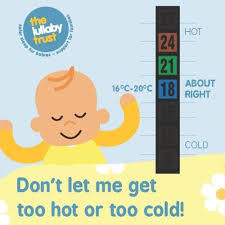
Below are some top tips for families around how they can manage sleep-time temperature and the risk of overheating:
The ideal room temperature for a baby’s sleep environment is 16–20 °C. This range helps protect against overheating — a known risk factor for Sudden Infant Death.
Encourage families to use a room thermometer rather than relying on subjective feeling. Many rooms that feel “normal” to adults may actually be too warm for a sleeping baby.
As soon as babies come indoors — especially after being outside or in transit (for example, in a car or pram) — ensure they are no longer wearing hats, coats, thick outdoor clothing or gloves. Their head should remain uncovered during sleep: babies regulate heat through their heads, and covering the head significantly increases risk.
When using bedding: remember that a folded blanket counts as two layers. Thick, fleece‑lined or padded blankets, or adult‑style duvets and quilts, are strongly discouraged — they can trap heat and increase Sudden Infant Death risk. Instead, families should opt for a lightweight blanket or a properly sized baby sleep bag, especially for room temperatures within 16–20 °C.
To check if a baby is too warm: advise parents to feel the baby’s chest or back of the neck. Feeling their hands and feet is not reliable — it’s normal for them to feel cooler, even when the baby’s temperature is fine. If skin feels hot or sweaty, one or more layers should be removed.
Overheating signs that should prompt layer reduction include: sweating, a hot or flushed chest or neck, clamminess, or unusual irritability or restlessness.
Families should avoid using hats, gloves or extra head coverings at night — even if such items were used when the baby was in neonatal care or outdoors. For sleep, babies generally only need a vest, a sleepsuit and possibly a lightweight sleep bag, depending on the room temperature.
Even when it's cold outside, trying to “over‑insulate” a baby indoors can be dangerous. It is usually safer to err on the side of slightly cool rather than too warm. Regular checks and adjustments (based on the baby’s skin, not adults’ comfort) are key.
|