Two important nature recovery documents have been published in the last few months.
 Cumbria has officially launched its Local Nature Recovery Strategy (LNRS), becoming the thirteenth LNRS to be published in England.
You can watch our launch video by clicking the image above.
The strategy has been led by Westmorland and Furness Council, working in close partnership with Cumberland Council, the Lake District National Park Authority, the Yorkshire Dales National Park Authority, and Natural England.
Developed collaboratively, the Cumbria LNRS sets out clear priorities for restoring biodiversity across the county. It brings together existing environmental data, established local and national strategies, and, crucially, incorporates local knowledge and expertise to ensure that actions for nature recovery deliver the greatest possible positive impact for Cumbria’s distinctive landscapes and wildlife.
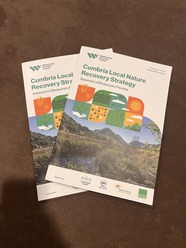
The LNRS will be formed of two parts: a Statement of Biodiversity Priorities and a Local Habitat and Opportunity Map. Together, these identify key priorities for nature recovery, outline potential measures to achieve them and highlight the geographical areas best suited for targeted interventions.
Its publication follows a public consultation earlier this year that invited residents, landowners, businesses, community groups, and anyone with an interest in nature recovery to share their views on a draft version of the document. Feedback from this consultation played a vital role in shaping the final version of the Cumbria LNRS.
How you can get involved
Now that the Cumbria LNRS is live, we invite you to explore the Strategy and see where you can play a part. Nature restoration will only be possible through a huge collective effort, whether you're a landowner, business, community group, or simply someone who cares about Cumbria’s landscapes and wildlife. Take a look at the priorities and mapping tools, and consider how your actions could help make a real difference.
Read the LNRS Statement of Biodiversity Priorities.
View and use the Local Habitat Mapping Tool.
|
A new Nature Strategy marks a significant step forward in protecting and restoring nature and biodiversity across Westmorland and Furness.
The Strategy sets out a clear plan to halt and reverse the decline in biodiversity and ensures nature recovery is embedded in every aspect of council operations.
Nature and biodiversity play a vital role in shaping the places and spaces across Westmorland and Furness, supporting the local visitor economy, farming and local food production, as well as enhancing health and wellbeing through access to nature. Healthy natural ecosystems also provide improved services for people such as clean air and water, climate regulation and adaptation, and flood protection.
However, like much of the UK, the area faces ongoing pressures including habitat loss, pollution, climate change and invasive species. The Council’s new Nature Strategy responds to these challenges by identifying practical actions to restore habitats, protect species and strengthen the natural resilience of local landscapes.
The Nature Strategy aligns closely with the Council’s Council Plan, Climate Change Action Plans, and its forthcoming Climate Adaptation Strategy, ensuring that environmental considerations are embedded across the organisation.
The programme of actions include focus on:
- Enhancing biodiversity across council-owned land such as parks, open spaces, and cemeteries
- Supporting community-led nature projects and green initiatives
- Working with local partners and organisations to create connected habitats that enable native species to flourish.
|
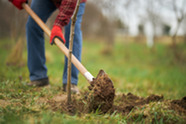
Huge thank 'yew' to everyone who applied through our Free Trees for Residents Scheme. We had an unbe-leaf-able amount of interest with over 2,100 applications!
The scheme is now closed and we’re working through your applications to review them.
From providing havens for birds and wildlife to creating hedgehog sanctuaries, and restoring ancient woodland - these are just some of the incredible ideas we’ve seen so far in your plans. We can’t wait to see these ideas come to life, the difference they’ll make, and the lasting legacy they’ll leave across Westmorland and Furness.
Please keep an eye out on your emails - we'll be getting in touch soon with your collection date and location.
|
We're inviting residents to take part in a series of community conversations to help shape our Climate Adaptation Strategy.
The events will take place in Barrow, Kendal, Penrith and online throughout December and January. The sessions are open to everyone.
These initial conversations are designed to explore what climate adaptation means, why it matters for our future, and to give people the chance to hear the Council’s draft priorities for climate adaptation. They are an opportunity to ask questions, share views and connect with others concerned about climate impacts. Feedback from these sessions will help refine the strategy before more in-depth engagement takes place next year, when the Council will work with communities to help develop and shape an Action Plan for how we can collectively build resilience across Westmorland and Furness.
These conversations are scheduled as follows:
- Barrow Library – Thursday 18 December 2025, 10am – 3pm
- Penrith Library – Friday 19 December 2025, 10am – 3pm
- Kendal Library – Wednesday 7 January 2026, 10am – 3pm
- Online – Thursday 8 January 2026, 7pm – 8pm
Drop in anytime for the library sessions.
For online events, please book your place online.
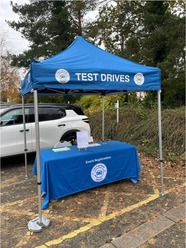
Our GO EV! – short for ‘Get Onboard with Electric Vehicles’ – event in Kendal this October drew people from near and far across our area, all eager to explore the world of electric vehicles.
The free open day event was designed to provide attendees with the opportunity to view and test drive a range of exciting new electric cars and vans, speak to dealers, ask questions and learn from industry experts about the latest advancements in EV technology including charging infrastructure whether for home or work.
|

A new Nature Recovery Fund has been launched to help protect and restore local wildlife and habitats across Westmorland and Furness.
The fund is aimed at projects which can aid in the recovery of one or more priority species or control/eradicate key invasive non-native species listed in the recently published Cumbria Local Nature Recovery Strategy (LNRS), or that support pollinators across the area.
Organisations and partnerships can apply for grants of between £5,000 and £20,000, which can be used to partially or fully support projects that make a measurable difference to nature recovery efforts within Westmorland and Furness.
The Nature Recovery Fund aims to support projects that:
- Restore, enhance, create, or connect habitats to support pollinators or one or more LNRS priority species.
- Undertake bespoke actions to support LNRS priority species.
- Support the removal of invasive non-native species (INNS) as listed in the Cumbria LNRS.
- Conduct research to inform and support future species recovery.
Activities could include habit enhancement, restoration and/or creation works; purchase and installation of infrastructure such as swift boxes, bat boxes and trail cameras; baseline surveys; purchase of equipment to directly support the removal of INNS such as that used for direct removal/eradication; reintroduction of pollinators or priority species to their former habitats, supporting existing populations, or helping species adapt to environmental changes; and research and development.
Applications are now open until Friday 30 January 2026 and can be completed online. Eligible organisations and groups are encouraged to apply for funding to help drive forward species recovery across the area.
|
 |
In March 2024, Westmorland and Furness Council alongside Futureproof Cumbria, Cumbria Tourism, Fell Brewery, Holker Estate and Playdale Playgrounds received £150,000 from Innovate UK to tackle some of the challenges of achieving net zero in rural areas.
Running until December 2025, the project focused on two main areas:
- Circular Economy
- Place to Plate

Circular economy
To help explore how we could reduce waste and reuse resources more effectively, we looked into a biochar feasibility study, produced alongside the University of Edinburgh and Black Bull Biochar, to understand the viability of producing biochar from green waste; and a mini business case for a circular economy business hub which would encourage business to business material exchange.
|
Place to Plate
Futureproof Cumbria alongside ProVeg launched Cumbria Carrot Connections to connect local food with local schools, working with local growers, caterers, wholesalers and schools.
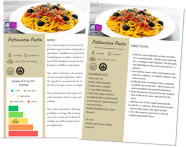
As part of the project, Futureproof Cumbria and ProVeg delivered assemblies, shared classroom resources and created carrot recipe cards (meat, vegetarian and blended options).
Another project supporting Place to Plate is Cumbria Tourism’s carbon costed menus research paper which includes nine carbon costed recipes that restaurants can add to their menus. In addition, the Place to Plate project established a low carbon food advisory group and supported DREAM placement students with Cumbria Development Education Centre which encouraged collaboration from various stakeholders.
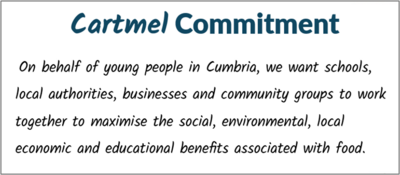
The DREAM placement students wrote the Cartmel Commitment:
|
 |
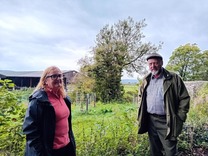
Trees play a very important role, they help tackle climate change, clean the air we breathe, support biodiversity, and boost our wellbeing.
Westmorland and Furness Council has set the ambitious goal to plant One Tree per Resident – that’s 250,000 trees across the area!
|
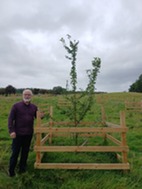
As part of this commitment, in 2023/24 the Council awarded £50,000 to 12 community groups, schools, charities, and local organisations to create community orchards in celebration of The King’s Coronation. These orchards have planted nearly 600 trees which have provided fruit and nuts for communities and wildlife, peaceful spaces for reflection, and even a Forest School area.
|
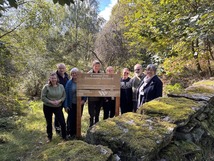
Members of the Nature and Climate Team, alongside local ward councillors, recently visited several of these orchards to see the fantastic work first-hand. These projects are a wonderful example of how communities are coming together to create accessible green spaces for everyone.
Pictured are Levens Parish, Cold Springs and Cartmel Fell community orchards.
|

In the heart of Cumbria’s Lyth and Winster Valleys, a group of 48 farmers and partners have come together with a shared mission: to produce high-quality food, protect the environment, and support thriving local communities. Known as the Lynster Farmers Group - a name inspired by the valleys and the River Winster -this collaborative network manages over 5,000 hectares of land and is tackling one of the area's most pressing challenges: flooding.
For decades, heavy rainfall and rising water levels have left farmland waterlogged, threatening crops, livestock, and the delicate ecosystems that coexist alongside agriculture. To safeguard food security and enable sustainable farming practices, the group recently took decisive action - clearing a vital culvert that channels water into the river. This work is essential to prevent flooding and keep thousands of hectares of productive land viable.
While it’s too early to see the full impact, this project marks a significant step toward resilience. By working collaboratively, the Lynster Farmers Group is proving that local action can drive climate resilience, protect our landscapes, and secure the future of food production for generations to come.
Westmorland and Furness Council is pleased to have been able to support this project through its Climate and Nature Partnership Fund and securing additional funding through the North West Flood and Coastal Committee. The Group has also been supported through Farming in Protected Landscapes (FiPL) funding via Defra and the Lake District National Park Authority.
Read more about the group on their website.
|
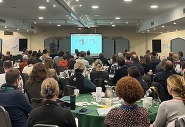
In October, over 100 delegates from 53 organisations gathered for the Landscape in a Changing Climate Conference.
Hosted by Cumbria Innovative Flood Resilience (CiFR) Project and the Cumbria Flood and Coastal Erosion Risk Management Partnership, and supported by the North West Regional Flood and Coastal Committee, the event focused on how climate change is transforming our landscapes, and how we can respond.
Looking ahead, outputs from the event including its workshops will be reviewed alongside new funding opportunities to shape Cumbria’s adaptation strategy. The conference also highlighted systemic challenges, such as fragmented planning and funding barriers, that need addressing to enable effective collaboration.
By working together - across sectors, communities, and landscapes - we can build resilience and harness the natural environment to meet the challenges of a changing climate. As one attendee put it: “The whole is greater than the sum of its parts.”
The full conference report is available to view and download online.
|

Earlier this month, Grasmere Village Hall hosted a community resilience drop-in event, bringing together residents, organisations, and experts to share practical advice on preparing for and responding to emergencies.
The event was organised by the Cumbria Innovative Flood Resilience (CiFR) programme, which supports rural communities in managing flood risk and adapting to climate change.
There was practical advice on reducing rainwater entering drainage systems, which often struggle during heavy rainfall. Tips included creating rainwater gardens that not only manage water but also improve water quality, support wildlife, and help during droughts. For those living near rivers, planting guidance was provided to reduce erosion and protect riverbanks.
United Utilities introduced an innovative smart water butt that stores rainwater and releases it at optimal times, easing pressure on drainage networks. Watertight International showcased Property Flood Resilience solutions such as self-closing air bricks, pumps, and flood-resistant flooring - tools that can significantly reduce damage and speed up recovery after flooding.
The Woodland Trust were on hand and can offer communities free trees, which help absorb water and create habitats. Meanwhile, Westmorland and Furness Council’s Community Development Officer and Grasmere Village Society were represented and discussed their Community Emergency Plan, which details actions to safeguard residents and property before, during, and after emergencies.
Grasmere’s vulnerability was underscored by its experience during Storm Desmond, which caused severe flooding and disruption. Events like this aim to empower communities to take proactive steps, working together and combining natural solutions with innovative technology to build resilience.
For more information on emergency preparedness and practical tips for managing water in your garden, contact the CiFR team: cifr@westmorlandandfurness.gov.uk
|
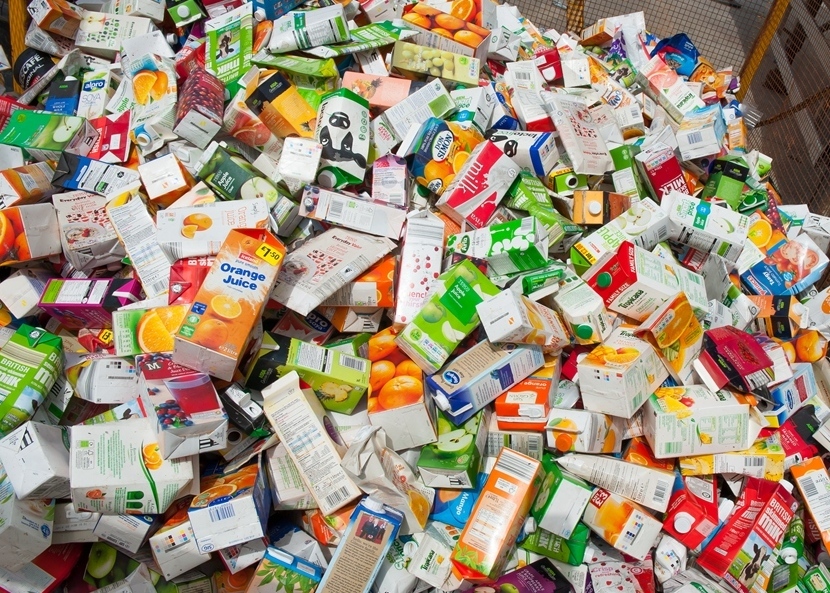 |
Residents across Westmorland and Furness are now able to recycle liquid cartons as part of their regular kerbside collections.
The change is being introduced as part of Westmorland and Furness Council’s wider plans to expand and harmonise waste and recycling services across the area, making it easier for residents to recycle more materials from home.
The new addition means that cartons such as juice, milk, soup, sauce, and plant-based drink containers can now be placed in household recycling for collection, rather than taken to local recycling centres.
The announcement follows the Cabinet decision in September to introduce a new, harmonised waste and recycling collection service across the council area. The new service, to be rolled out in phases, will bring the current different local collection arrangements together under one efficient and easy-to-use system.
The rollout responds directly to feedback gathered during the Council’s Community Conversations and options consultation which attracted more than 7,300 responses combined. Residents consistently asked for greater consistency in what can be recycled and for easier ways to recycle at home.
Visit the council's website for more information on what can be recycled at home.
How to recycle your liquid cartons
Cartons such as juice, milk, soup, sauce, and plant-based drink containers can be recycled as follows:
- When empty, rinse them out and squash flat.
- Leave any plastic tops on (these will be removed and recycled).
- Place them in your kerbside container for collection as below:
- Furness - red 240 litre wheelie bin
- Eden - green canvas bag for plastics
- South Lakeland - blue recycling bag
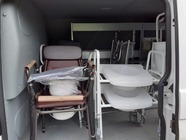
A huge thank you to everyone who took part in our Aids to Daily Living Take Back event last month in Windermere.
We received 26 items - including commodes, bed raisers, perching stools, overbed tables and trolleys.
Your support means these vital pieces of community equipment can now be cleaned, sanitised, and reused - helping others in need while also reducing unnecessary waste.
Thanks also to our colleagues at Windermere Library for hosting this event and to the Community Equipment Service Team for collecting the items.
Together we are making a real difference - both for people and the planet.
|

The Cumbria-wide school battery recycling campaign is back for 2025/26, encouraging young people to safely recycle used batteries and protect the environment.
Following the success of last year’s school 'baa-ttery campaign' – which saw over two tonnes of used batteries collected and diverted from household waste – Westmorland and Furness Council, alongside campaign partners, is proud to announce the return of the initiative as part of a Cumbria-wide effort.
The campaign will run until Friday 13 February 2026, giving schools plenty of time to collect and safely dispose of used batteries including AAs, AAAs, LR20s and lithium-ion batteries.
The initiative, managed by Biffa, highlights the dangers of improperly disposing of batteries. When batteries are placed in general waste or recycling bins, they can be damaged during collection, transportation or treatment, potentially igniting and causing serious fires. By providing safe and easy recycling options, the campaign aims to protect people, property and the environment.
Each year, a staggering 3.2 million batteries are discarded in Cumbria’s waste – equal to the weight of more than 3,650 Herdwick sheep – making safe disposal more important than ever.
The Council, together with Cumberland Council, is donating a total of 12 book token prizes:
- 4 prizes of £300
- 4 prizes of £200
- 4 prizes of £100
To make recycling easier, free battery collection boxes have once again been distributed to participating schools by campaign partner Valpak Ltd. When full, schools can request a free collection, ensuring the safe disposal of batteries, and delivery of a replacement box.
Any schools wishing to participate and find out more, should email: hayley.slack@biffa.co.uk.
|

Not sure how to take charge of your batteries?
Over the Christmas period alone, people in the UK use a staggering 189 million batteries! With all the new toys and gadgets, the average household throws away about seven batteries during the festive season.
Batteries can be found hidden in everyday items like toothbrushes, toys, phones, e-cigarettes and laptops.
Why not try rechargeable batteries?
And if you are using disposable ones, always remember to recycle them and not to dispose of them in your general household waste as they can cause fires in bin wagons and waste processing plants.
Batteries can be taken to your local household recycling centre or an instore collection point such as those found in supermarkets.
Check Recycle Now for nearby recycling points.
|

Fancy a new festive look without spending a penny?
Throughout December, Kendal, Barrow and Penrith Libraries are hosting FREE Christmas jumper swaps for adults and children!
No need to donate one to take one - just pop in, browse the rails, and give a jumper a new lease of life.
Donations of clean adult and children’s jumpers are welcome too!
Save money, reduce waste, and spread festive cheer.
Check our website for library opening times.
|
 St Mary's Hospice Ulverston volunteers will once again be collecting trees on Friday 9 and Saturday 10 January 2026 from LA11, LA12, LA13, LA14, LA15, LA16, LA17, LA18, LA19, LA20 and LA21 postcodes.
Make sure you register online before midnight on Monday 5 January 2026 to be included.
The areas in which the charity is collecting trees covers Ulverston, Barrow, Askam, Cartmel, Dalton, Grange-over-Sands and Millom – a significant proportion of the area in which St Mary's Hospice's services operate.
Hospice at Home Carlisle and North Lakeland is once again running its Christmas Tree Collection Appeal on Thursday 8 and Friday 9 January 2026. This service is available to residents in Penrith, Carlisle, Wigton, Longtown, Brampton, and Dalston.
Postcodes include: CA1, CA2, CA3, CA4 8, CA5 6, CA5 7, CA6 4, CA6 5, CA7 4, CA7 9, CA8 1, CA8 9, CA10 2, CA11 7, CA11 8, CA11 9, CA11 0.
Last year, your support raised an incredible £16,415, the equivalent to funding 54 nights of care from a registered nurse. That’s 54 nights where families could simply be together, without the roles of patient and carer taking over.
St John's Hospice is also collecting Christmas trees on Thursday 8, Friday 9 and Saturday 10 January 2026 across the following postcodes: LA1, LA2, LA3, LA4, LA5, LA6, LA7, LA8, LA9, LA10, LA22, LA23, PR3 1 & PR3 0.
Collections must be booked by midnight on Sunday 4 January 2026. Please ensure that your trees are ready for collection from 7am Thursday 8 January 2026. They are not able to provide exact dates or times.
The charities welcome a donation for the collection of your tree. When you give locally, the Hospices are able to spend locally and every single penny they generate is spent directly on delivering care for people in their service area.
No trips to the tip, no needles in the car, you will be supporting a local charity AND your tree gets recycled!
Please remember to remove any decorations, take the tree out of the pot (if it has one) or remove the base.

A host of brilliant Repair Cafes are now open all over Cumbria, fighting waste with practical skills and local knowledge.
From small electricals, to furniture, books, toys and jewellery, repair cafes can help give your items a new lease of life - saving you money, reducing landfill and helping the environment.
Find your nearest one and tips to save you money.
|


United Utilities are proud to share they have launched a new campaign, ‘change the cycle’ to engage with customers on the disposal of period products. They recently conducted research with more than 1,700 women across the North West and found that a quarter of them had recently flushed a period product. With an estimated 4.6 million disposable period products being flushed down loos across the country every day, they were keen to understand more about why products are flushed.
The new campaign aims to raise awareness and encourage women to ‘wrap it and bin it’ - disposing of period products in the bin, rather than flushing. Flushed period products can cause blocked toilets, pipes, and drains and lead to sewer flooding. United Utilities hope the campaign will have a positive impact and dispel the myth that period products and packaging are safe to flush.
It’s now time to ‘change the cycle’. Please don’t flush. Put period products and packaging in the bin.
Find out more about the change the cycle campaign on United Utilities.
|
 The Love Windermere Partnership has launched its Action Plan – the first coordinated, science-led programme of practical actions in over a decade, aiming to improve water quality and restore the ecological health of the Windermere catchment.
The plan sets out the commitment from nine organisations (including Westmorland and Furness Council) to deliver 33 coordinated actions that tackle the complex environmental pressures facing Windermere.
Action Plan Highlights Include:
- Tackling nutrient pollution from all sources of sewage
- Working with farmers and landowners to explore how they can make positive contributions to improve water quality
- Investigating opportunities to reduce flood risk whilst improving water quality using techniques such as natural flood management
- Informing policy approaches through our work for Windermere that balance the needs of the environment, people and the economy
- Expanding the range of people we work with, including citizen scientists, to increase access to water quality information
View and download the full Action Plan on the Love Windermere website.
Sign up for future updates by subscribing to the Love Windermere newsletter.
“Only Rainwater into Windermere” (ORiW) is a new, innovative and exciting feasibility study tasked with delivering options that result in only rainwater entering the lake, with sewage and highways runoff being removed.
The study is led by a coalition of organisations and contributes to a wider programme that partners are delivering to improve water quality and build resilience into the natural and engineering infrastructure in the Windermere catchment.
ORiW has been established in recognition of the extraordinary importance of Windermere to the region’s economy and to our national natural and cultural heritage. The future health of Windermere matters to millions of people and it is vital that we have a long-term plan that ensures that Windermere is protected for future generations.
The coalition brings together key stakeholders who can assess the options and determine the feasibility of this ambition: the Environment Agency as regulator; the Lake District National Park as the local planning authority; Love Windermere, the local partnership supporting a healthy future for Windermere and its catchment; Save Windermere, an environmental campaign aiming to restore the lake’s natural state; United Utilities, the region’s water and wastewater provider; and Westmorland & Furness Council, the local authority. The group is convened by Edward Twiddy, who offers extensive experience from roles in central government, business, and environmental organisations.
Find out more by visiting the ORiW website.


Following preparations that began in early spring, the council’s services are ready to keep residents safe, moving and cared for this winter.
The ‘Winter Ready’ pages on the council’s website have lots of useful information, advice and practical tips about:
-
Winter road maintenance and gritting including gritting maps, information about priority gritting routes, salting, grit heaps and salt bins, weather cameras, gulley cleaning and clearing snow.
-
Flooding advice and support including preparing for flooding, how the council is working with communities to support flood resilience, signing up for flood warnings, what do to if there is a flood and how to report a flood or a blocked drain or gulley.
-
Staying well this winter including advice on cost-of-living support, vaccinations, mental health support, staying warm, help available if you become homeless, and what to do if you have concerns for someone’s welfare this winter.
Find the ‘Winter Ready’ information on the council's website.
You can also follow Westmorland and Furness Council on your favourite social media platform for regular useful ‘winter ready’ tips and guidance. Working together with our communities, we can be winter ready.
|
Supporting communities to prepare for flooding emergencies
Westmorland and Furness Council and Cumbria Local Resilience Forum (CLRF) are working with communities to provide more locally accessible support to prepare for and respond to flooding emergencies.
The council area covers 1,500 square miles and is one of the largest and most rural unitary authorities in the country. This can present particular challenges
when a speedy response is required to localised emergencies like flooding.
Working with CLRF partners and community resilience groups, the council is aiming to ensure the right support is available in the right areas and closer to the
communities most at risk from flooding.
This includes help to develop community emergency plans and helping community resilience groups to access funding for emergency flood protection
measures. These can be gel-based ‘flood sacks’ which are an effective alternative to traditional sandbags, as well as property-level preventative protection measures such as flood doors and flood gates.
For advice on planning for flooding, setting up a community group or developing a local emergency plan, contact your local Community Development Team:
How we talk about climate change can inspire and motivate people to act, or make it feel more overwhelming and confusing than it needs to be.
By understanding the issues, we can help explain to others why it's important to act on climate change, the scale of that action and how to be part of that change on an individual and community level.
To help, we'll be sharing useful links and highlighting some great resources that help explain the main issues.
FREE climate card game
Climate Stewards' Carbon Footprint Game is a fun and engaging way to help people understand more about the carbon footprint of different activities, and think about ways to cut their footprint.
You can download the cards to print at home. Choose full colour or black and white. Black and white is best if you would like to save ink! Don’t forget to download the instructions too.
Catch up on FREE webinars from Futureproof Cumbria
Futureproof Cumbria have been hosting a series of free webinars this year where you can learn skills and gain knowledge to help yourself and your community. Why not take a look at one of the below?

Unpacked: Electric Vehicles
This free webinar will help you understand how EVs and the infrastructure work. Experts outline why you would consider using an electric vehicle, compare battery and consumption costs and energy efficiency data, look at the benefits and costs, as well as detailing what you need to consider before deciding to buy new, second hand or lease.
It provides information on charging – at home (off-street and on-street), away from home and future developments. There is also a real-life case study showcasing a “Day in the Life of an EV car driver in Cumbria”, where lessons learned and costs are shared.
Watch on YouTube now.
|
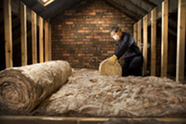
Unpacked - Home renovation and retrofit
In this free webinar, independent expert Tina Holt outlined what it is possible to do with your house from small to large scale renovations to make it warmer, healthier and more energy efficient.
This ranges from adding insulation and new windows to improving ventilation or changing your heating system and adding renewable energy generation such as solar panels, a process often called retrofit.
Hear how you can approach large-scale, more expensive renovations to smaller-scale interventions that are easier and cheaper to install, and see examples where householders will explain what they have done and the benefits they have seen.
Watch on YouTube now.
Futureproof Cumbria also offer support through their home retrofit service, which includes a wide range of expert advice, from home energy audits through to advice while your building work is underway. Visit their website for more information.
|

This free webinar explores the costs, benefits and suitability of solar photovoltaic (PV) panels and electric storage batteries.
It unpacks concepts such as self-consumption and exporting back to the grid, and helps you decide whether solar PV is right for your home.
It includes a panel of local vetted installers on hand as well as a local householder that have benefitted from solar panels. They do their best to answer questions from ‘how big is a battery?’ to ‘do I need permission?’
This session also explains how you can access support from Futureproof Cumbria's Solar PV Support service, which provides independent advice to help you determine the suitability of your home for solar PV and batteries. If you think it’s right for you, they can support you to get quotes and installations from local vetted solar PV companies.
Watch on YouTube now.
|
|