Safeguarding REMAINS everyone’s responsibility
Dear subscriber,
Wolverhampton Safeguarding Together is a multi-agency partnership made up of many organisations all with one aim in mind, to protect the welfare of vulnerable children, adults and families in Wolverhampton.
The Partnership moved to new arrangements in September 2019 and since then we have been establishing our new structure and agreeing how to achieve our strategic priorities over the next 12 to 18-months.
We hoped to bring you our first WST newsletter in less challenging local and national circumstances, however, it is more important now than ever before for all of us to be reminded that safeguarding is everyone’s responsibility and together, we must protect those who need support the most.
Please find included in this newsletter useful information for organisations, professionals and citizens on what type of safeguarding issues you can look out for during the Covid-19 outbreak and how you can continue to report a safeguarding concern.
What to look out for...
Below are some examples of safeguarding concerns to look out for to best protect vulnerable adults, children and families during the Covid-19 outbreak.
Always THINK FAMILY! Whether your safeguarding concern be for a child or an adult – who else is in the household that could be affected?
Physical, sexual and emotional abuse
- Increased stress levels in the household due to self-isolation and those at risk not being able to flee or leave
- Children not seeing trusted adults regularly
- Living with perpetrators who may have more control over a family
- Children of separated parents not being able to move between households
Financial Abuse and Exploitation
- Financial abuse from people you don't know offering to do the shopping for you
- Vulnerability to loan sharks because of reduction or loss of income
- Overcharging for goods and services or selling things at a premium
- Zero-hour contracts or reduced or no work and the take up of loan sharks
- An increase in potential scammers targeting those self-isolating
Inappropriate befriending
- People being targeted for support by people they don't know who don't belong to an organised group
Self-neglect
- Individuals not going out for essentials for fear of catching the virus.
Stress placed on adult or young carers
- A carer needing to self-isolate or even becoming ill that could lead to unintended abuse because of stress and reduced access to support and respite
Neglect
- A decision not to provide care to someone due to real or perceived Covoid-19 symptoms
- Lack of access to safe places and resources such as school and free school meals
- Increased risk of poverty to a household
People sleeping rough or homeless
- Lack of knowledge and clarity of the virus risks, symptoms and actions to be taken
- Access to handwashing facilities
Mental health and substance misuse
- An increase in episodes of mental health or relapses of parents due to reduced direct support
- Isolation from friends and support network
- Anxiety about friends and family’s health
- Uncertainty about the pandemic
Criminal exploitation
- Increased vulnerability due to being out of school and usually ‘safe’ routines.
WST Covid-19 Safeguarding Poster
Click here to download our WST Safeguarding Covid-19 poster to share or display within your agencies
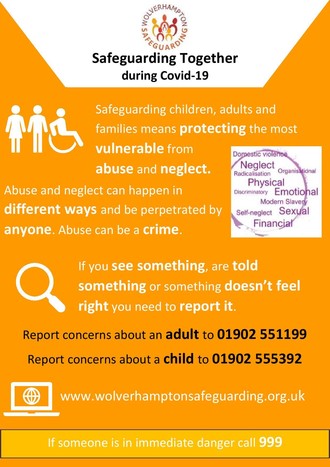
If you are concerned about an adult or a child, please use the link below to report a concern.
Report a concern
|