|
Welcome to our first newsletter for 2026!
Like Welsh, this newsletter belongs to us all – please read, discuss and share!
Do you have any comments or feedback about our newsletter? Please let us know.
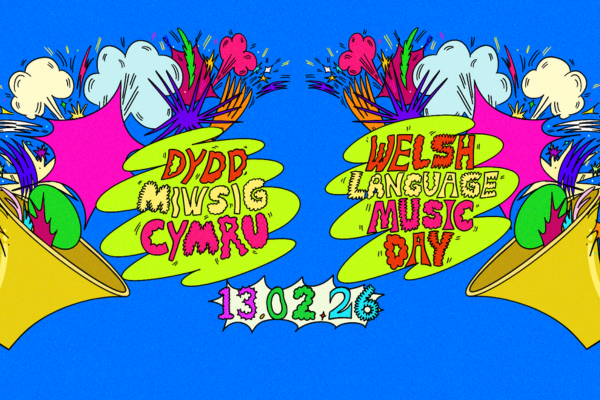 Welsh Language Music Day 2026
This year we’re celebrating Welsh Language Music Day (Dydd Miwsig Cymru) on Friday 13 February.
Many events are taking place across Cymru to mark the occasion and help us to celebrate the best of Welsh music.
Need inspiration to find your new favourite song? There are playlists containing some great Welsh music on the Dydd Miwsig Cymru website.
Searching for a local gig? The Awni website can help you find an event near you.
Take part in any way you choose! You can also follow our Cymraeg channels on X, Facebook and Instagram, or visit the DMC website for the latest news.
 |
 |
|
Cymraeg 2050 Areas of Research Interest – now published
We’re pleased to share that a new resource, Cymraeg 2050 Areas of Research Interest (ARI), has been published.
We want to work together to collect the best evidence to help the Welsh language. This resource shows the type of research and evidence that will help our work achieve the ambitions of Cymraeg 2050.
It focuses on three main themes:
Get more people to speak Cymraeg.
Use the language more each day.
Create the right conditions for Cymraeg to grow.
This work is wide-reaching and affects everything that’s important to us – from education and communities to technology and culture.
You can help! We want to talk to all kinds of academics and researchers. We can build on what we already know and find new innovative ideas together. Our aim is to share information and help to drive research that supports the future of our language.
Come and join us! If you work on relevant research or want to share your ideas, we’d be very pleased to hear from you.
You can:
Read the whole document on our website.
Complete the contact form.
Send us an email.
Remember to share this message with your networks too.
|
|
 |
|
Welsh language vital for care experienced children and young people
Children and young people have highlighted how important it is that they never lose their Welsh language because they have been taken into care, as part of a revised vision announced at the end of 2025.
The Radical Reform Summit Declaration, signed by care experienced Young Ambassadors alongside First Minister Eluned Morgan and Minister for Children and Social Care Dawn Bowden, sets out what children's care services in Wales should look like and deliver.
First Minister, Eluned Morgan said:
“For children entering care, the thought of changing something as fundamental as the language they use at home means immediately feeling different and out of place, at one of the most difficult times in their life.
Children have told us they need to be able to speak Welsh, make friends in Welsh, and feel at home in their language – and I’m proud we’re continuing to support this”.
Read the full story.
|
Topic consultation for Census 2031
The Office for National Statistics (ONS) is currently consulting on what should be included in Census 2031 in Wales and England. We are encouraging everyone with an interest in the Welsh language to take part.
Census data is vital for understanding our communities, including Welsh-speaking communities. This is your chance to tell the ONS how you use Welsh language census data, and what else you would like to see included in the next census.
You can find out more about the consultation and respond on the ONS website.
The consultation will close on 4 February.
Help safeguard our living Welsh heritage
We have worked alongside the UK Government to launch the Inventories of Living Heritage in the UK, as part of the commitment to the 2003 UNESCO Convention for the Safeguarding of Intangible Cultural Heritage. We’re encouraging communities across Wales to contribute to the inventory.
This is the first time Wales has had a national inventory of living cultural practices, and it represents a major opportunity to make sure that the traditions and skills found in our communities are formally recognised, celebrated, and supported for future generations.
Why your submission matters
The purpose of the inventory is to:
- safeguard living heritage by recognising practices that communities value and want to maintain
- raise national and international awareness of the richness and diversity of Welsh cultural life
- support community-led transmission of knowledge, skills, and traditions
- strengthen the case for future support, resources, and recognition for local traditions
- create a public record that reflects the reality of Welsh culture, not just its institutions.
The inventory is meant to be simple and based on community voices. If you’re part of a community with examples of living heritage, please apply.
How to make an application
The first step is to complete a short online form giving basic information about the practice. All of the details to submit an application are available on the UNESCO website, and you’re welcome to e-mail culture@gov.wales for further advice.
The deadline for final submissions is 27 March.
Become a Review Panel member
We’re searching for knowledgeable and experienced panel members to assess the bids from Wales. The panel will need to represent all the communities of Wales.
Apply on the UNESCO website by 30 January.
Call for universities, colleges, schools, learners, and businesses in Wales to share their views on post-16 education and research, including Welsh language provision
The Future of Tertiary Education in Wales evidence paper, published on 21 January, sets out the challenges facing further and higher education in Wales. If you’re part of the post-16 education sector, we’d like you to share your views and experiences to help us shape future policy and address these challenges.
Please share your information with us by 27 March 2026.
Read the full story.
Geraint and Gwyneth Welsh language synthetic voices now available through Hwb
We want to make sure everyone can access Welsh language technology. An important part of this is helping people with specific needs.
Through a collaboration between the Welsh Government and the Royal National Institute of Blind People (RNIB), learners and teachers can now download the voices directly from Hwb and use them with compatible assistive technology.
With funding from the Welsh Government, the RNIB developed these voices with software company IVONA. The voices are free for individuals and organisations to use for non-commercial purposes. You can now install them on school or home devices and use them with any Windows assistive package, including JAWS, NVDA, Supernova, Zoomtext, Read and Write, Clicker 8 and Tobii Dynavox.
This work isn’t only so that people can use more of their Welsh but also so that they can use it easily, without additional challenges.
Click here to download the voices from Hwb.
Want to know more about what we’re doing? Click on our Welsh language technology and AI priorities page here.
If you’d like to learn even more about Welsh language technology, our Helo Blod website is always here to help.
Latest News
Cymraeg 2050 recent announcements:
Fund open to help communities start local projects
Health and Social Care workers find their Cymraeg voice
To see all statements relating to the Welsh language: Announcements | GOV.WALES
Statistics and Research
Recent statistics and research on the Welsh language:
Welsh language in higher education: August 2023 to July 2024
National Survey for Wales: results viewer
To see all statistics and research relating to the Welsh language: Statistics and research | GOV.WALES
|