
Earth Overshoot Day (which was 30 July) is the date when humanity will have used up nature’s entire annual budget of ecological resources and services. It now falls nearly five months before year’s end, meaning a significant share of global economic activity depends on depleting our planet’s resources.
Across the planet, humans use as much ecological resources as if we lived on 1.7 Earths, or 70% more resources than our planet can naturally replace in a year. If everyone on the planet lived in the same way as the average Brit, we would require 3.3 Earth’s worth of annual resources every year.
► Read more
It may be worth a short reminder of why our own action matters. Historically, the UK is a much larger emitter – totalling 4.5% of the world’s overall emissions to date.
Reducing our own emissions ‘makes space’ for those of developing countries.
Importantly, our investment and innovation in low-carbon technologies also lowers the cost of this technology for developing countries to grow without the carbon cost.
Only six countries account for more than 2% of global emissions each: the rest are ‘negligible’ emitters, but they add up to 36% of global emissions – meaningful action requires all negligible emitters to act.
Many countries use products that are made elsewhere, meaning their true contribution is much higher than emissions produced within their own borders.
The government is asking young people aged 16 and under to share their ideas about climate and nature.
These ideas will help shape what the Youth Climate and Nature Panel focuses on when it starts later this year.
They want to hear about the climate or nature issues that matter most to young people – what are the most important ideas that the panel should consider?
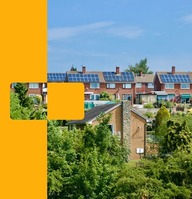
Recent research by the Energy Saving Trust has found that the right combination of energy tariff, heat pump, solar PV panels and battery storage can save householders around £800 a year.
This includes a government grant to replace traditional heating systems (up to £9,000) with heat pumps, and ensuring works are completed by an approved installer to be eligible for the grant.
The Trust also notes that switching away from gas for cooking as well removes the gas standing charge from the energy bill.
|
The Super High-Impact Initiative for Fixing Tomorrow is a simple quiz and guide to find people’s climate-fixing superpowers as either a citizen, professional, investor, consumer or role model to connect personal choices to bigger collective change.
It was created by climate scientist Dr Kimberly Nicholas and the team at Project Drawdown.
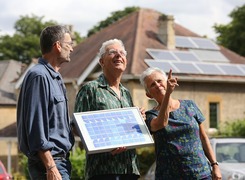
Community Energy GO offers free, tailored support to community groups that are just starting out, recently formed, or developing an innovative project for the first time.
It supports groups working on renewable energy and low-carbon projects to shape their ideas, build confidence, develop projects, and access expert guidance to turn ambitions into successful community energy projects.
|

The EAT-Lancet Commission has developed scientific targets for healthy and sustainable food systems including a diet to help sustain good planetary health.
It suggests using a variety of high-quality plant-based foods including protein and whole grains, and low levels of animal-based foods, refined or processed products and unhealthy fats, while meeting nutritional requirements for human health.
|
Parents For Future UK is the biggest parent climate group in the UK, with over 40 local groups across the country.
It aims to work and partner with others to bring about changes that will address the climate crisis through local actions and networks. The supportive community helps families make an impact and build resilience within communities.

Small electrical items, including fans, are now collected weekly in Uttlesford alongside your wheeled bins (please leave in a bag on top of your bin ready for collection), or can be taken to a recycling centre.
|
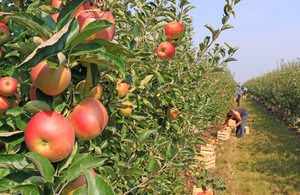
The new £30-million Farmer Collaboration Fund will help farmers reduce costs and build stronger businesses while improving our precious natural environment.
Applications open on 1 September, with further rounds in 2027 and 2028.
The aim is to fund delivery partners to support farmers, land managers and growers to work together. It will be provided through organisations including charities, local authorities and NGOs, giving farmers access to trusted local expertise and practical support while reducing paperwork so they can focus on learning from one another and improving their businesses.
|
Electric vehicle chargepoint grants
The government grant schemes for installing EV charge points for renters, homeowners, landlords, schools and businesses have been updated and the value increased.
Patagonia Grants Programme
This grants programme supports environmental organisations with bold, direct-action agendas and a commitment to long-term change.
Evergreen Fund
The fund invests in projects that are commercially viable, and dedicates £100,000 each year to native tree planting with various partners, serving as a catalyst and amplifier for projects.
The International Tree Foundation
The International Tree Foundation supports community-based tree planting in the UK to create and conserve native tree habitats and foster social inclusion and cohesion.
Trees Outside Woodland Fund
The Tree Council and Defra support tree planting to create or improve public green spaces outside of established woodlands.
The Wildlife Trust
The Wildlife Trust funds organisations contributing to nature recovery, responding to the climate emergency and improving the quality of and access to nature rich spaces, especially in more deprived areas.

The Sustainable Uttlesford website is a resource for everyone in the district to find information, expertise and groups that care about our planet and want to protect it.
Explore local groups and projects, learn more with events and meetings, and find grants and other funding sources for your community project.
|
This newsletter has only been sent to those who have signed up as a member of Sustainable Uttlesford. If you would like to add anyone else to the distribution list, please email the details to: climatechange@uttlesford.gov.uk. If you do not wish to continue receiving the newsletter, let us know and we will remove you from the list.
|