Museum News for September 2023
 |
|
Visiting the Museum!
Our standard opening hours are:
Wednesday-Saturday 10-5pm
Sundays & Bank Holidays 2-5pm
Closed Mondays (apart from bank holidays)
Tuesdays are reserved for pre-booked group visits by schools and other parties in term time.
www.saffronwaldenmuseum.org
|
Exhibitions
 |
|
New Exhibition
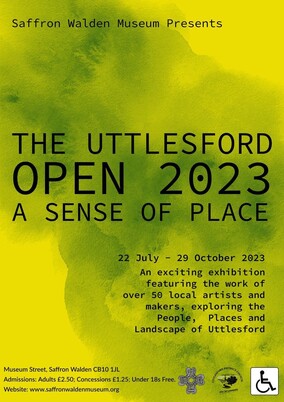
Uttlesford Open 2023
runs until 29 October
The Uttlesford Open 2023 is Saffron Walden Museum’s first, open call, judged art exhibition.
Artists, aged over 18 who are living, working, or studying in Uttlesford or within 20 miles of Saffron Walden Museum have submitted artworks on the theme of “A Sense of Place: The people, places and landscape of Uttlesford”.
The entries submitted were judged and selected by artists Ian Wolter and Heath Kane.
The exhibition features artworks by over 50 local artists and makers, both amateur and professional.
|
 |
|
Object of the Month
The Museum’s ‘Object of the Month’ provides an opportunity to explore interesting and unusual objects from our stores.
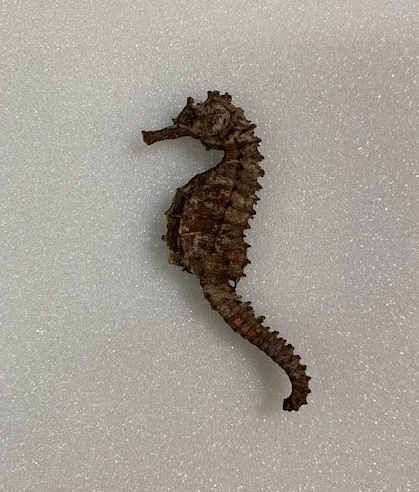
September’s Object of the Month is a Spiny Seahorse found on the east coast of England at Skegness, Lincolnshire in 1904.
The dried specimen was donated to the Museum by a resident of Saffron Walden. It is 12 cm long from head to tail.
British Seahorses
There are two species of British seahorse. The Spiny Seahorse, Hippocampus guttulatus, and the Short Snouted Seahorse, Hippocampus hippocampus. The main difference between the two species is the length of the snout. The Spiny Seahorse has a longer snout and spines on the back and the head. They can grow to 18cm in length and live for 10 years.
Seahorses live in shallow coastal waters around the British Isles, up to the Shetland lsles, and Ireland.
A Short Snouted Seahorse was seen for the first time at Harwich Harbour, Essex in 2023.
They are poor swimmers and rely on their prehensile tail to cling onto seaweed and seagrass to stop themselves being swept away.
A small dorsal fin beats 35 to 70 times per second to provide weak forward propulsion.
Seahorses feed on small shrimp, crab and plankton. Their eyesight is good and the flexible snout can get into crevices in rocks.
Prey is sucked up through the snout because seahorses do not have teeth. In winter they migrate to deeper water and anchor themselves to rocks or seaweed to ride out storms.
Image (above left): Spiny Seahorse, Hippocampus guttulatus SAFWM : 1975.68 Saffron Walden Museum ©
|
 |
|
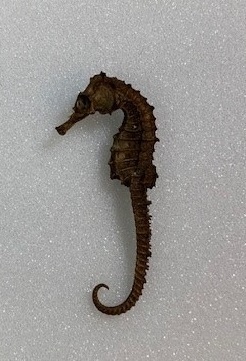
Image (pictured left): Spiny Seahorse, Hippocampus guttulatus, an example which shows the full prehensile tail. SAFWM : 164003. Saffron Walden Museum ©
Seahorse Facts
Fish: Seahorses are fish! They are related to pipefish and sea dragons.
Pregnancy: the males get pregnant.
Seahorses are the only animal with a true reversed pregnancy. The female transfers the eggs to the male with her ovipositor. He fertilises them and keeps them in his brood pouch to grow. Then he gives birth to live young called fry. Seahorses are monogamous and have one partner for the breeding season from April to October. It is not thought that they mate for life now.
Colour: seahorses can change colour like chameleons.
This helps camouflage them to hide from predators and in courtship. Each day the female meets the male in his territory, they change colour and perform a dance where they may circle each other, or an object, and hold tails.
Threats
Seahorses are endangered. They are legally protected by CITES (Convention on the International Trade in Endangered Species) and The Wildlife and Countryside Act. It is illegal to import, kill, capture or disturb a seahorse.
Habitat destruction
Seagrass meadows can be destroyed by anchors, fishing nets, dredging, drilling for oil and pollution. 92% of meadows have been destroyed. Marine Protect Areas are being set up around Britain to protect biodiversity.
Illegal trade
Seahorses are captured for the pet trade or killed and dried for use in traditional medicines or sold as souvenirs.
Climate change
A marine heatwave around Britain in April 2023 saw seas reach their highest recorded surface temperature of 210C. Seagrass meadows are stressed by heat. Ocean heatwaves cause mass mortality of marine plants and animals and the collapse of food chains. Sea ice also is melting and ocean circulation has slowed down due to higher global temperatures.
If ocean currents change direction or stop the supply of plankton that seahorses depend on for food may be disrupted.
How can you help?
Never buy souvenirs of dried sea creatures such as seahorses, starfish or shells which are homes for hermit crabs.
Reduce your use of plastics and buy fish that is caught sustainably.
Use eco moorings when sailing to anchor your boat.
Support a marine conservation charity such as The Seahorse Trust http://www.theseahorsetrust.org Donate or volunteer and you can even adopt a seahorse!
Report sightings of seahorses to The Seahorse Trust via the British Seahorse Survey website
http://www.theseahorsetrust.org/conservation/british-seahorse-survey/
|
 |
|
Your Stories:
Community Showcase
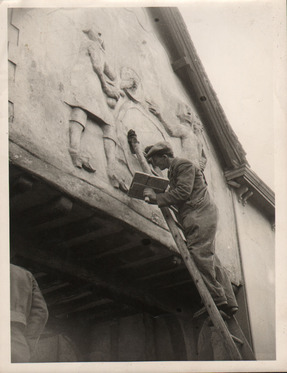
The Art of Pargeting
Last year we were approached by pargeter and researcher, Anna Kettle about the pargeting related items we hold in our collections.
We subsequently partnered with SPAB (the Society for the Protection of Ancient Buildings) to host Anna doing a placement with both organisations researching local pargeting examples.
She has provided pargeting tools and samples for this temporary display and the tools will remain in the museum's collections for future generations.
This display also links nicely with the recent pargeting workshops held in the museum's grounds, and the pargeting which was demonstrated at the recent Heritage Craft Day. Both pargeting activities are being run by The Pargetting Company and the workshops were kindly funded by Paul Fairhurst and the New Homes Bonus scheme
|
 |
|
Future
"Your Stories" displays
"Your Stories" is our display space for co-curated displays by local and regional community groups and organisations.
It was begun as a new initiative in 2016 and has since successfully been used to present material from a wide range of community organisations and clubs, including badged groups, theatre groups, schools, home education groups, sports clubs, craft groups and many more. These displays change during the year.
If your community group or organisation would like a temporary display in the museum please get in touch with Jenny Oxley on museum@uttlesford.gov.uk 01799 510333 to be considered for the winter 2023 and 2024 exhibition programme.
|
 |
|
Next Exhibition
Evacuee:
A Wartime Childhood
Sat 11 November - March 2024
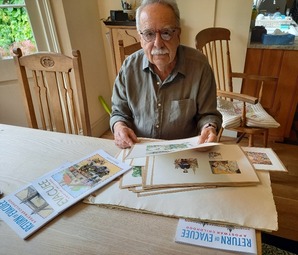
The museum will exhibit the original artwork of artist and author Brian Sanders (pictured left with his original artwork and wartime books).
His career spans decades working on books, magazines, stamp and coin designs, editorial and advertising projects. High profile work such as Mad Men and Stanley Kubrick, examples of which will feature in the exhibition.
Scenes of Saffron Walden and the district from his two books, Evacuee: A Wartime Childhood (2010) and Return of Evacuee: A Post-war Childhood (2016) will dominate the exhibition, accompanied by wartime items and photographs from the museum’s collections.
Visitors will be able to explore the second world war context and the lived experiences of evacuees who came to live in Saffron Walden and Uttlesford during that time, such as Sandy.
Sandy’s original artwork features well known places in the town including Bridge End Gardens, St. Mary’s Church, Bridge House, the 8 Bells pub and the Boys British School, as well as venues of the time which no longer exist or are much transformed such as the cinema and public baths, which many will remember.
The exhibition will also reflect on the experiences of those who have come to Saffron Walden and Uttlesford as modern-day refugees, as a result of ongoing conflicts around the world.
The exhibition will be accompanied by craft activity events and a Community Town Trail (self-guided tour map) capturing moments and places from around the town from the books.
|
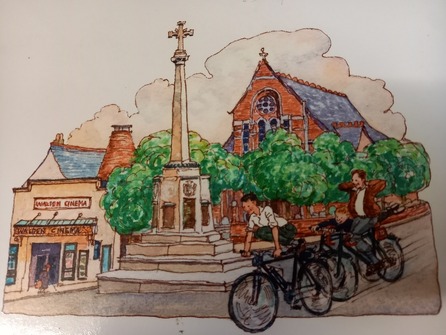 |
©Brian Sanders (artist), image from his book "Evacuee: A Wartime Childhood" (2010)
Upcoming Events
Online pre-booking for our ticketed events is via our art tickets page
https://saffron-walden-museum.arttickets.org.uk/
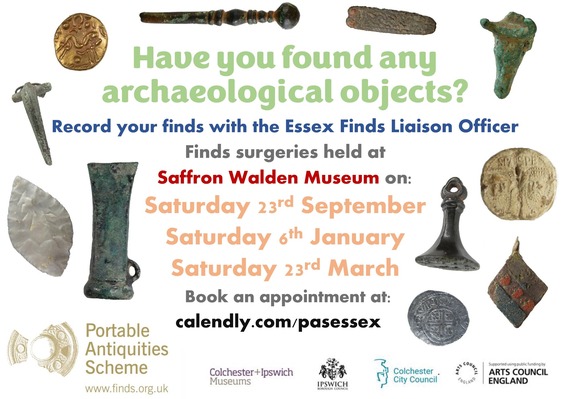
These sessions to record finds with the Essex Finds Liaison Officer need to be booked in advance. They are aimed at detectorists with archaeological finds to identify and record with the Portable Antiquities Scheme, but they can also apply to anyone who has picked up archaeological finds (any materials – pot, stone and flint, bone, not just metal) which they would like to know more about and report. Museum staff will also be on hand, showing visitors items from our archaeological handling collection.
News Updates
 |
|
Wild About Walden Trail
Thank you to everyone who has taken part in our activity trail this Summer.
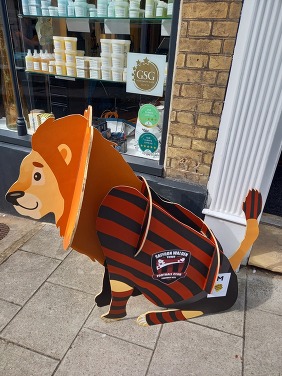
Did you spot the large lion sculptures dotted around Saffron Walden town centre, at places of cultural and historical significance.
The “Wild about Walden” map trail was very popular, we met lots of lion spotters over the Summer holidays!
Thank you to all the community groups and organisations in the town who painted lions and /or contributed venues for the trail.
(Pictured left): The football club's decorated lion, outside Casa Luxe.
|
Heritage Crafts Day
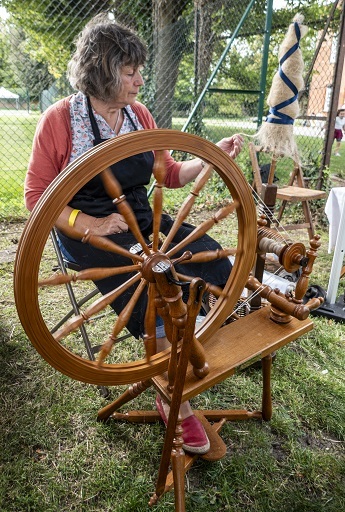
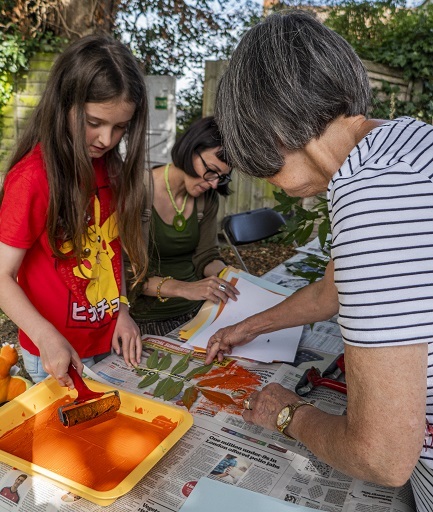
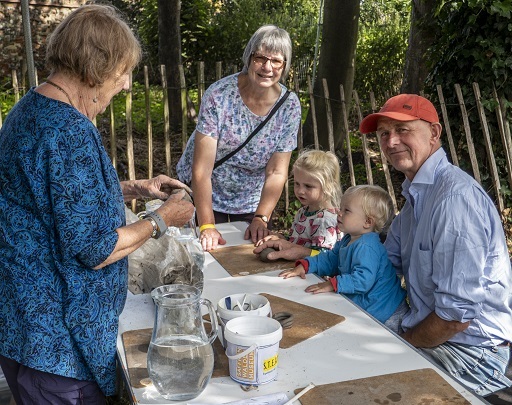
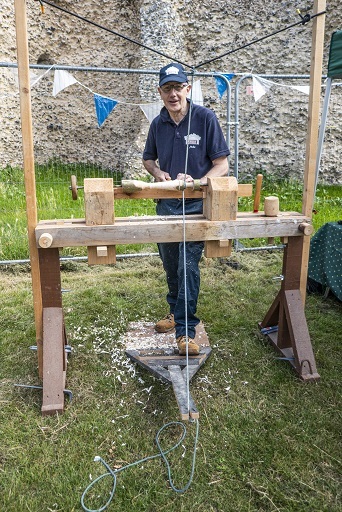
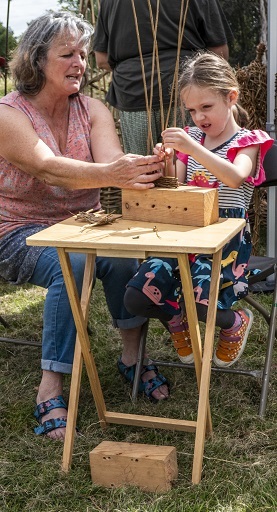
Thanks to everyone who came along to our outdoor event showcasing historic crafts on the 24th August. It was lovely to see the grounds and museum buzzing with all the different traditional crafts on offer. A rainy start to the morning, was quickly replaced with warm sunshine.
In the run up to the event staff featured on BBC Radio Essex on the Trading Places quiz, giving clues as to the event location and got some great air time to promote the event.
Our exhibitors on the day included:
Willow weaving
Spoon carving (Idea Tree Designs)
Members of the Cambridge Guild of Spinners & Weavers
Saffron Walden Community Shed (traditional pole lathe and Bug Hotel making)
UDC Climate Change Team (making bird feeders from recycled materials)
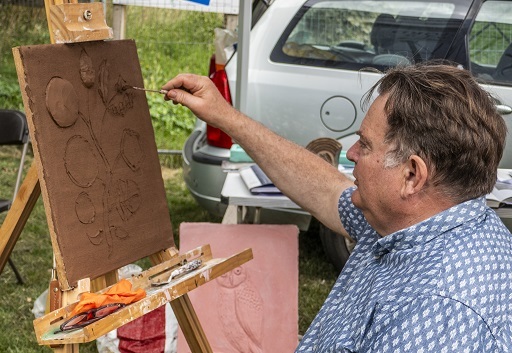
The Pargetting Company (pargetting)
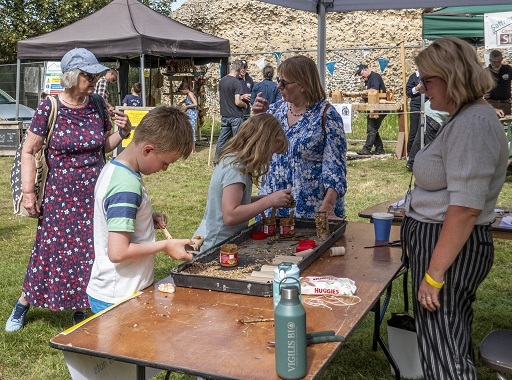
Museum staff and volunteers were on hand to demonstrate potting on a wheel and gave the kids the chance to make their own pinch, coil and slab pots out of air drying clay.
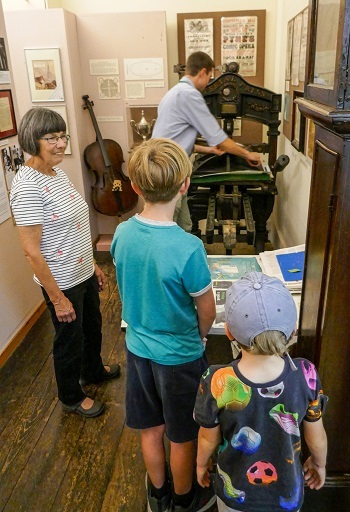
We also used the museum's Victorian printing press for the first time in at least a decade, to demonstrate flower pressing.
Refreshments were available from our lovely neighbourhood ice cream van and Truckiato Coffee Truck.
Here's some pictures of the day, kindly captured for us by museum volunteer Dominic Davey. Who also did a sterling job helping us put up and takedown gazebos and tables.
Thank you to everyone who was involved in making the event a fun and successful day.
|
|
 |
 |
 |
 |
 |
 |
 |
 |
 |
|
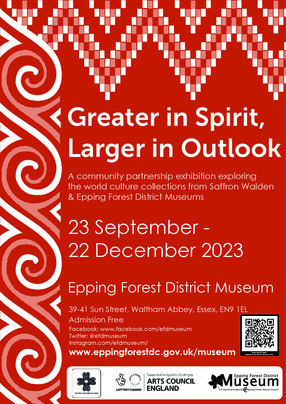
Greater in Spirit, Larger in Outlook (GiSLO) Project
Our Art Council funded joint project with Epping Forest District Museum (EFDM) enters the final stage as the project exhibition opens at EFDM on the 23rd September and runs until late December.
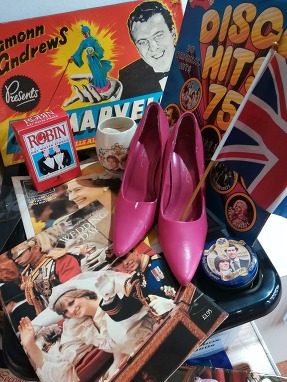
Alice Lodge, Collections Connector project assistant, has been researching for the exhibition for around 6 months working here and at EFDM on both world cultures collections and liaising with source community and diaspora groups to interpret the items and better understand their cultural significance.
Around a dozen items from our museum's world cultures collections have gone on loan for the exhibition to EFDM, including items originally from Australia, Oceania, the Pacific Islands and Africa.
|
 |
|
Learning & Outreach
Saffron Walden Museum is committed to sharing stories from its collections through its learning and outreach services.
We welcome schools and community groups to the Museum or offer outreach sessions.
Why not book in your school or community group.
We also have loans boxes on a range of historic themes available for hire.
|
 |
|
Shop Focus
Geology Rocks! Activities
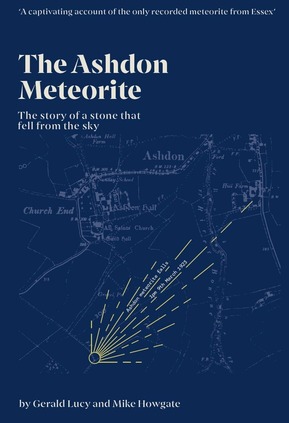
We have for adults - “The Ashdon Meteorite” book (pictured left), the story of a stone that fell from the sky. A captivating account of the only recorded meteorite from Essex. Which is on sale in the shop for just £3
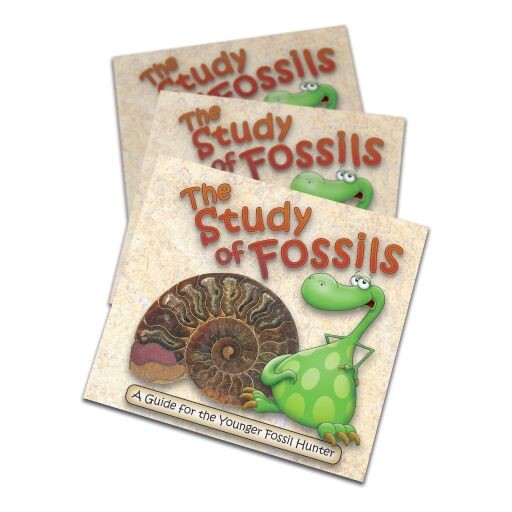
For children – we have the “The Study of Fossils” (pictured below) – a wonderful little 25 page colour illustrated booklet which gives any young enthusiast a great deal of information about fossils. On sale in the shop for just £1.99
|
 |
|
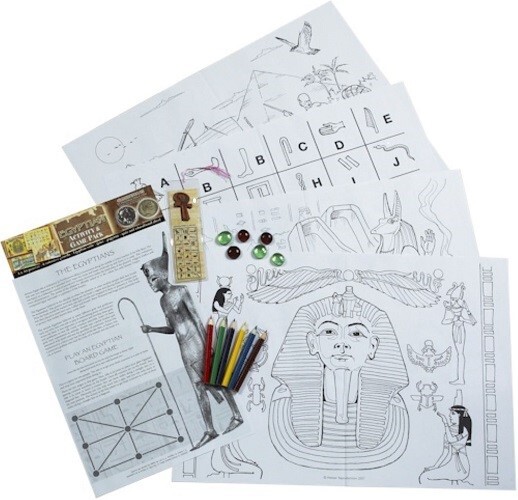
To align with our arts and crafts activities we have our new Egyptian Activity & Game Pack?
It is a set of 4 A3 colouring posters with Egyptian images on, supplied with 6 pencils. The pack also contains a papyrus bookmark, an activity sheet with trivia questions, an Egyptian themed game and a reproduction coin. On sale for just £4.50
|
|
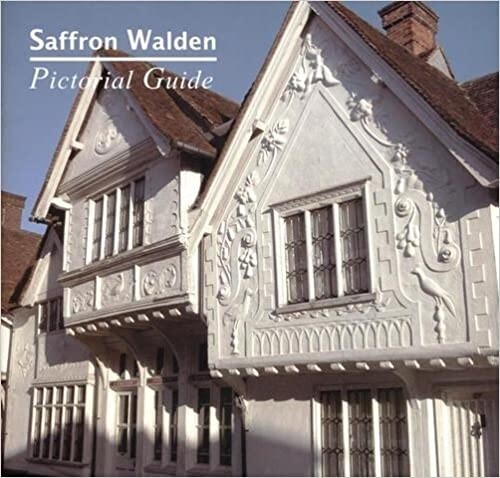
And finally, to align with the current ‘Sense of Place” theme in the Open Uttlesford Exhibition, we have the Saffron Walden Pictorial Guide, on sale at just £2.95.
The front cover of the guide features the Old Sun Inn, a beautiful example of 17th century freehand pargeting which can be seen in the town.
|
|
 |
Volunteering at the Museum
Would you like to join our team?
The museum could not operate without the help of our valued volunteers. We currently have around 50 volunteers, who fulfil a number of different roles, but we are always looking for more help.
Welcome Desk volunteers
Our Welcome Desk is run entirely by dedicated volunteers. They provide a friendly welcome for visitors, sell tickets and merchandise, provide information about the museum, and direct enquiries to members of staff. They usually volunteer for a 2.5 hour shift, every day except for Mondays and Saturdays.
Maintenance Volunteers
Are you a dab hand with a paintbrush and roller? Come and help us out behind the scenes to spruce up the whole of the museum and assist staff periodically with installing new displays and exhibitions. This is a flexible volunteer opportunity, to join our team.
For more information about all our volunteering opportunities at the museum contact us using the details at the end of this E-Newsletter.
 |
|
Volunteer Verge Surveyors
Do you like wildflowers and getting out into the countryside?
We need volunteers to keep an eye on special roadside verges in the district.
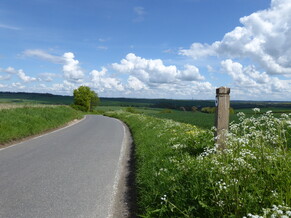
Uttlesford is lucky enough to have 46 verges designated for their chalk grassland and rare plants. They are remnants of the wildflower meadows that once covered this area. The verges are cut in March and October or November each year.
Volunteers check the verges to ensure they have been cut properly and spot if wooden marker posts and plaques are missing. If botany is your passion, we also need help with ecological surveys in summer.
To find out more, please contact Sarah Kenyon on 01799 510641 and skenyon@uttlesford.gov.uk
Pictured Left: Cowslips in flower at one of the special verges in Arkesden. Volunteer Vic checked and found that the damaged post had been replaced © Saffron Walden Museum
|
Website: www.saffronwaldenmuseum.org
Email: museum@uttlesford.gov.uk
Phone: 01799 510333
|