|
The latest news in your community |
|

We're updating our fleet of recycling collection vehicles and need your help!
We're planning to name each vehicle in the fleet so residents can spot them out and about collecting.
We have 21 kerbside sort recycling collection lorries, each visiting a different locations throughout the district. Each round empties on average 2,500 recycling containers each day!
We'd like to give each lorry an individual, unique and catchy name.
You can send your name suggestions to us, either on social media or by emailing recycling@teignbridge.gov.uk. If you provide your address and your idea is chosen, we will try to put your suggestion on the lorry that collects from your property.
Prizes will be awarded for winning entries and the names of each vehicle will be displayed on the lorries. There is a maximum of four names per person.
Closing date Friday 30 August.
So put your creative hats on and let us know your ideas, we look forward to hearing from you!
|
|
|

New charges have been set out by Teignbridge for the Community Infrastructure Levy – charges paid by housing developers that contribute towards community facilities, infrastructure and improvements such as countryside parks such as Ridgetop in Exminster (pictured), community facilities, or new roads and railway stations.
The existing charges for the CIL have been reviewed because a new Local Plan has been submitted for examination by the Secretary of State. The Local Plan includes new development sites for the district for the next 15 years, which will generate a need for new and improved infrastructure. The use of CIL is vital to secure money for this infrastructure.
Since the introduction of CIL in 2014 the Council has spent over £10 million on infrastructure projects and £4.6m of CIL has been paid out to Town and Parish Councils. Projects wholly or partly funded by CIL income have included:
- Dawlish Countryside Park
- SW Exeter Ridgetop Park;
- Improvements to the A382 from Newton Abbot to Drumbridges;
- Kingsteignton new Primary school
- Decoy Park and The Den play areas
- Marsh Barton Railway Station
The new charging schedule will be examined by the Secretary of State this autumn.
|
Be inspired on the Teignbridge Climate Hub
 Our new Teignbridge Climate Hub website provides ideas, support, and suggestions to encourage residents and businesses to make changes to save money, improve their lifestyle and help Teignbridge achieve its Net Zero target.
The website has lots of zero-cost and low-cost changes which are simple and easy to make, from getting a smart meter or turning the boiler thermostat down, to eating more seasonally and reducing food waste.
Each action has been assessed and given a star rating for ease and impact so you can easily decide what steps you can introduce in your life and what will have the most impact.
Many of our residents have already started making changes and the Teignbridge Climate Hub is a place where we share their stories. Watch Jenny, Heather and Renee talk about the changes they’ve made and benefits they’ve seen.
We will also be sending out a newsletter to provide you with updates about what we're doing to become a carbon neutral district as well as ideas and suggestions to help you get involved. Sign up for the Teignbridge Climate Hub newsletter.
|
|
 Civil Enforcement Officer; Apprentice Customer Support Officer; Accounting Technicians (2); Revenue and Benefits Assistant / Officer; Community Environment Officer.
Leisure vacancies: Class Instructor; Swimming Teachers; Sports Coaches.
Full details of all vacancies and closing dates for applying are on our jobs portal or follow us on LinkedIn.
Lots of things to spot on Teignbridge beaches
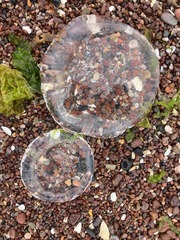
If you're out and about on our beaches, you night notice some unusual sea creatures washed ashore.
Recently, our resorts team have been seeing lots of moon jelly fish at point beach in Teignmouth.
If you see them, don’t worry they don’t sting, and they are harmless to humans.
The moon jelly is the most common jelly fish in the UK and often washes up on our beaches.
They are usually around 5-40cm in diameter and can be recognised by their round dome-shaped jelly with four circles visible through the translucent white bell and short, delicate tentacles hanging down from the sides of the bell.
|
|
Another interesting phenomenon seen on Ness beach this week were the outer shells of hundreds of spider crabs.
Each summer, these distinctive creatures travel from deep to shallow coastal waters as part of their life cycle.
They congregate in huge numbers and shed their old shells in a synchronised act; protecting themselves from predators while they wait for their new exoskeletons to harden.
|
|
 |
Parent and carer sessions prove a success
 Almost 6,000 people across Devon have taken part in one of Safer Devon’s Let’s Talk sessions which provide advice and support to parents and carers to help young people with the challenges they face. The sessions are being backed by police and are seen as a useful preventive approach, read the full story on the BBC website.
Let’s Talk Bitesize Sessions are also available for parents and carers. These short 20 minutes sessions cover a range of topics including, healthy relationships, changing youth culture, family strengthening and community risks.
You can watch the Bitesize Sessions on the Let’s Talk You Tube Channel.
|
|

Pensioners should check if they could be eligible for Pension Credit to secure the Winter Fuel Payment, worth up to £300 per household.
Pensioners need to apply for pension credits by 21 December 2024, to receive the Winter Fuel Payment.
Pension Credit gives you extra money to help with your living costs if you’re over State Pension age and on a low income.
The average Pension Credit award is worth over £3,900 per year and it opens doors to other support, including the Winter Fuel Payment, help with housing costs, council tax and heating bills.
There are up to an estimated 880,000 households across the UK eligible for Pension Credit who are yet to claim, and we are urging people to check whether they or their loved ones are eligible for this support
Find out more on the gov.uk website.
|

Summer holidays in Devon can't be relied on to be hot and sunny - at least, not all of the time! However, there is one scenario that we don’t usually expect during the summer - flash flooding.
We tend to associate stormy weather with winter months, but thanks to our changing climate, we can expect to experience more intense summer rainfall more frequently in coming years. Many of the most extreme rainfalls in the United Kingdom have occurred in the southwest of England between the months of June and August. When a significant amount of heavy rain falls in a short period of time, steep fast-flowing rivers and urban drainage often cannot cope, leading to deep, fast-moving water. There are 76 ‘Rapid Response Catchment’ drainage areas in Devon and Cornwall, which include watercourses that respond very quickly to heavy rainfall.
Flash floods can happen anywhere (far away from rivers and the sea), and even in areas that have not flooded before or flooded for a long time. They can also happen on clear and sunny days when a storm has struck higher ground. They are very difficult to predict as they are often caused by sudden, heavy rainfall in specific areas, rather than widespread rainfall across a larger region. This means that, unlike other types of flooding, flash flooding can happen before flood warnings can be issued by the Environment Agency through the free flood warning service that it offers. These floods can cause danger to life due to the depth and speed of the water, along with how quickly water levels can rise.
The Environment Agency is sharing an animation across Devon and Cornwall to highlight the dangers of flash flooding and reduce risk to life.
Knowing the warning signs of flash flooding can help you to stay safe:
Very heavy rain, often from thunderstorms
- Severe weather reports and warnings
- Quickly rising water levels
- Dark water that is moving with great force
- Debris in rivers and streams
Being prepared can help you to respond quickly and calmly:
Create a personal flood plan and understand your accommodation’s emergency evacuation procedures
|

Ukrainian Independence Day celebrations will be taking place in Newton Abbot tomorrow (Saturday 24 August).
Meeting at St Leonards Tower (on Courtenay Street), our council Chair Cllr Rosie Dawson, Cllr Alex Hall -Mayor of Newton Abbot and the local Vicar will lead a short reflection. The Ukrainian flag will be raised on the tower, followed by lunch at the Courtenay Centre (Please bring food and drink to share).
|
Protect your car from theft
There has been a rise nationally in the number of car thefts involving cars with keyless fobs.
Cars with keyless entry unlock automatically when the key comes within a short distance of the car. This can be from inside a pocket or bag. If you have to push a button on your car key to open your car, you don't have keyless entry.
Keyless car theft or 'relay theft' is when a device is used to fool the car into thinking the key is close by. This unlocks the car and starts the ignition.
Thieves only need to be within a few metres of your car key to capture the signal, even if it’s inside your home. This means that even if your car and home are secure, thieves can still unlock, start and steal your car.
How to protect your keyless entry car
- When at home keep your car key (and the spare) well away from the car.
- Put the keys in a screened or signal-blocking pouch, such as a Faraday Bag and check if the bag or pouch is still working every few months.
- Re-programme your keys if you buy a second hand car.
- Consider physical security locks.
More advice can be found on the police website Preventing car and vehicle theft | Crime Prevention | Devon & Cornwall Police (devon-cornwall.police.uk)

|
|
|
|
|