|
Thank you for subscribing to this newsletter. This is a place for us to update you on what we are doing at West Devon Borough Council and what things are going on around the Borough.
It will tell you what's going on nationally and things you, our residents and businesses can be doing to reduce your carbon footprint and manage your land to improve the environment and its biodiversity.
If you have anything you would like to include in this newsletter, contact our Climate Change Specialist by email here
Thermal Imaging Hire Scheme for Winter 2024/2025

West Devon Borough Council is still offering its communities the chance to use thermal imaging cameras to analyse homes across the borough and see how they could be more energy efficient.
Our thermal imaging camera project supports our ambitions to make homes more environmentally friendly while helping people through the ongoing cost of living crisis.
So far four communities have applied, which leaves us able to support four more communities. As we explained in our December newsletter, the project is being run by the Council in partnership with Tamar Energy Community
Tamar Energy Community (TEC) will be supporting the scheme to:
- support / train / develop a community energy champion(s) within the community
- provide an introductory talk to the community about retrofitting, key considerations and advice and support available
- provide a follow up event / clinic in the community to discuss and share results as a community
Applications will continue to be considered on a first come first served basis. Tamar Energy Community will only be able to support two communities at a time, so the dates when you can use the cameras and arrange introductory and follow up sessions may be later than anticipated.
What to do and how to apply:
- Gather an interested group of people who wish to use a thermal imaging camera on their properties, the more the better, applications should include a minimum of six residents / properties.
- Ensure you have a venue available for introductory and follow up sessions.
- Nominate a Community Energy Ambassador who will act as a point of contact for your application.
- Submit your application by clicking here.
|
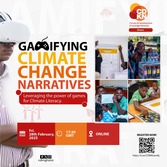
Gamifying climate change narratives
28th February 2025 5 p.m. to 7 p.m.
This event will explore how leveraging the power of games can enhance climate literacy and spark meaningful conversations around sustainability.
Who Should Attend
- Climate change advocates and educators
- Game developers and tech enthusiasts
- Youth groups and students interested in interactive learning
- Anyone passionate about innovative approaches to climate action
Click here to register to attend.
|

Nature narratives: Eden, spoils or garden' with Prof Sandra Díaz
5 March 5 p.m.
Prof Diaz will discuss social narratives around nonhuman life on Earth shape how we interrogate, value and act upon it.
These storylines have changed substantially over time, not fully replacing each other. Empirical evidence has accumulated supporting both deep connections between humans and other organisms, and ancient and pervasive human influence on the biosphere (“nature as garden”).
In this talk, Prof Sandra Díaz will unpack the “nature as garden” narrative, some of its cornerstones and challenges, and what it means for policy and action.
Click here to register for the crowdcast.
|

How the media covers climate change
12 March 2 p.m. to 4:30 p.m.
This event will also be hosted online, joining instructions will be sent prior to the event to those who have registered.
Overview
Communicating the fast-paced science and policy-response to climate change with both nuance and accuracy has always been challenging. But today's fast-fracturing and polarised media landscape – which includes legacy media as well as social media – means that scientists, policymakers and journalists have their work increasingly cut out to keep the wider public informed. This timely panel brings together three leading experts who have long been at the sharp edge of climate communications.
Click here to register.
|
The Esmée Fairbairn Foundation provides revenue funding to support charitable work in the UK. The foundation spends around £45m to £50m a year through its grant programme which has three funding priorities:
Our natural world – grants to help restore and protect: species health and habitats; sustainable and ethical food (encompassing nature-friendly farming and fishing); clean and healthy fresh-water environments.
A fairer future – including the arts, creativity and the rights of children and young people, funding is available to help improve systems, policy and practice and to empower organisations to tackle systemic injustice and inequity.
Creative, confident communities – communities working together for change; community-driven enterprise and regeneration; and community-led art and creativity.
The aim of the funding is to support organisations that are leading the way with transformative projects that will have a long-term impact. Most grants from the Esmée Fairbairn Foundation are for core costs and can be for three to five years. The minimum grant is £30,000.
Most grants are given to registered charities but other organisations doing legally charitable work such as CICs and companies limited by guarantee can also apply.
Click here to apply
Grow Wild is the outreach programme run by Kew Gardens. It provides funding for community groups and young people to transform local spaces for the benefit of people and wildlife, by planting and championing UK native plants or fungi.
£500 grants for 16 to 25 year olds with an idea for a project to champion UK native plants and/or fungi. You can apply as an individual or as a group of up to 6 people (you will need a Supporting Organisation to support your application and receive the grant on your behalf).
Click here to apply

According to the The Food Security Report in 2020 the UK is 54% self-sufficient and faces long-term stresses such as climate change
Food security remains under strain from environmental and climate challenges and new diet-related diseases.
A new report Titled 'Just in Case: narrowing the UK civil food resilience gap' by Professor Tim Lang, considers the state of UK civil food resilience and whether the UK public’s readiness for the possibility of food shocks. An executive summary and full report can be found here.
|

|