|
Friday 17 November 2023
Welcome to our Adult Social Care Practice Newsletter
In this newsletter, we will be focusing on safeguarding to coincide with the start of National Safeguarding Adults Week that takes place from Monday 20 - Friday 24 November.
 A focus on National Safeguarding Adults Week
The aim is to highlight key safeguarding issues, start conversations and raise awareness of safeguarding best practice. Each day, we’ll be focusing on a different safeguarding theme, which relates to how individuals and organisations can safeguard themselves and others.
 Making Safeguarding Personal webinar
Wednesday 22 November, 12.30pm - 1.30pm
With Eric Smith - Safeguarding & Service Quality Manager, Kate Concannon - Principal Social Worker, Rebecca Holdsworth - Safeguarding Children's and Adults Partnerships Manager.
If you haven’t received your invite, email lisa.wallis@southampton.gov.uk.
Exploring the Intersections Between Safeguarding Adults and Domestic Abuse
Thursday 30 November - 1pm - 4pm
This workshop is aimed at frontline practitioners who are working in Southampton as part of safeguarding adults in a variety of different roles. The training will explore the intersections between adult safeguarding, elder abuse and domestic abuse. It will provide a brief overview of the dynamics of domestic abuse, explore challenges around identifying abuse, particularly for older people, look at barriers to support, and outline referral pathways in Southampton.
Learning outcomes
- Identify some of the key elements of domestic abuse.
- Identify barriers to support for older people impacted by domestic abuse and options for specialist support or advice.
- Explore elements of elder abuse, financial abuse and familial abuse as they relate to domestic abuse.
- Review adult safeguarding and domestic abuse referral pathways in Southampton and how these different aspects of safeguarding intersect.
Contact Lisa Wallis if you would like to join. lisa.wallis@southampton.gov.uk
Southampton City Council Adult Social Care Safeguarding Adults Development Forum
Thursday 30 November 1.30pm - 4.00pm
Partnership Working. Run by Eric Smith
The theme of this safeguarding forum will be Partnership Working. We will focus on good practice in working collaboratively with colleagues in other organisations.
I will introduce the workshop, looking at key factors in partnership working, using policy, guidance and research evidence. I will include a brief case study about how a partnership approach produced a positive outcome for a homeless man.
There will then be presentations from a number of partners about their approach to working together across safeguarding. These presentations will include case studies. Organisations represented will include:
- Substance Misuse
- SCC City Safety
- Solent University
- Hampshire Fire and Rescue Service
- Southampton City Council Employment Support Team
The forum will conclude with an open session for discussion and questions about partnership working with participants.
External events
The Ann Craft Trust will be hosting events during National Safeguarding Adults Week, and you can book your place on the website.
Trauma Informed Practice - Clare Newman
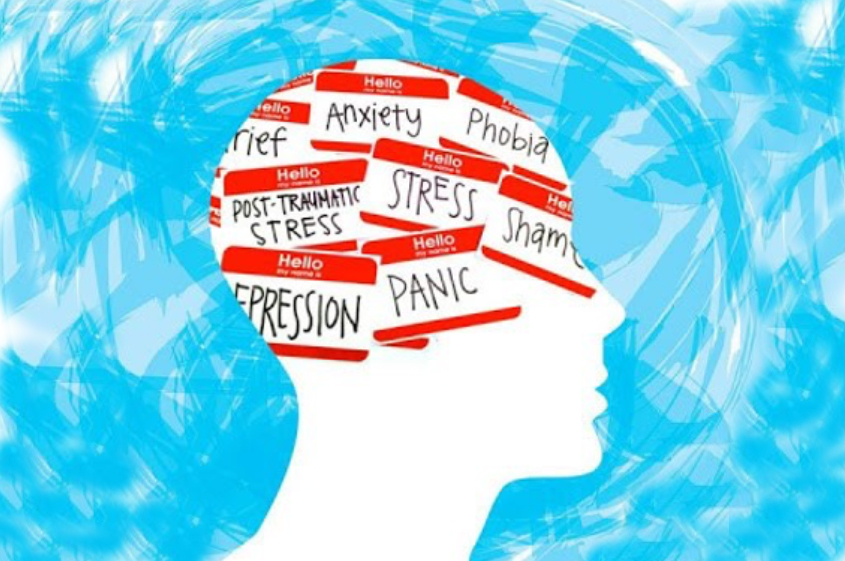 With the focus on safeguarding in this edition, I thought it would be useful to look at the link between trauma and self-neglect.
As you are aware, the Care Act 2014 introduced self-neglect as a category of abuse, recognising this as a safeguarding concern for those adults in receipt of, or in need of, care and support, when their health and wellbeing is significantly affected.
Safeguarding duties will apply where the adult has care and support needs (many people who self-neglect do not), they are at risk of self-neglect, and they are unable to protect themselves because of their care and support needs (SCIE, 2018).
Self-neglect is a complex issue that may include hoarding behaviours, neglect of personal care and/or living environment and is defined as follows.
- A lack of self-care to an extent that it threatens personal health and safety.
- Neglecting to care for one’s personal hygiene, health, or surroundings.
- An inability to avoid harm as a result of self-neglect.
- Failure to seek help or access services to meet health and social care needs.
- Inability or unwillingness to manage one’s personal affairs (SCIE, 2018).
Trauma can have a significant impact on people’s behaviour, and self-neglect can often arise as a result of previous abuse, neglect, or loss. It can affect relationships and people’s ability to engage with help and support offered. It may also be used as a coping mechanism that enables the person to deal with challenges or difficulties in life (Research in Practice, 2020).
When supporting those affected by self-neglect it can be helpful to consider and apply the principles of a trauma-informed approach.
-
Safety. Being empathic and non-judgemental. Asking people what they need to feel safe. Being aware that some people may find traditional methods of support such as “deep cleans” extremely traumatic.
-
Trustworthiness. Being clear and transparent. Explain what you are doing and why.
-
Choice. Being person-centred and strengths based. Listening to the needs of the person.
-
Collaboration. Working with the person. Being flexible, creative, and tenacious in your approach as it may take time to develop trust.
-
Empowerment. Validating the person's feelings. Listening and supporting the person to make decisions.
-
Cultural consideration. Recognising and challenging cultural stereotypes and biases based on, for example, gender, sexual orientation, age, religion, disability, geography, race, or ethnicity.
Further information
 Tri.x - Safeguarding site
This Safeguarding Adults site is intended for use by Adult Social Care teams and services. The site compliments and supplements our main procedures, practice guidance and tools.
4LSAB and SSAB procedures and resources
The first six sections of the contents list contains relevant links to all 4LSAB and Southampton SAB procedures and resources.
tri.x practice guidance
You will find additional guidance from tri.x included in the following sections:
- Safeguarding Adults Additional Practice Guidance
- Learning and Improvement.
Contacts and practice resources
This section contains documents and resources to support effective implementation of procedures and guidance.
Making Safeguarding Personal toolkit
The practice toolkit handbook guides you through the best approach and outlines the effective application of safeguarding with a range of helpful tools and practice-based case examples.
Star of the Month award

This month’s Star of the Month award goes to Emma Shaw! Well done, Emma, for this positive feedback you received.
“I would like to thank you for your continued support with mum. I am extremely grateful for the speedy and professional manner in which you have dealt with the issues around mum. You not only saved mum, but you also saved me too. It takes a very special person to do the work you do. You have shown unending kindness, compassion and understanding. You have kept me up to date on every occasion; eased my mind when I needed it; you answered my many questions. I truly cannot think of anything negative to say about you.”
“Emma was very well prepared with questions that required answering. The manager was quite confrontational at the beginning of the conversation with us, Emma remained calm, kept her voice at the same level and responded appropriately. Following this the manager became less confrontational and engaged answering the questions although he did not provide us with any evidence and documentation at the time. Well done, Emma, for her professionalism during a difficult meeting at times.”
|
|