|
Tuesday 18 July 2023
Welcome to our July ASC Practice Newsletter
In this month's issue, we are focusing on the 3Ps as drawn from Social Pedagogy, strengths-based practice, and highlighting some mental health crisis tools to support young LGBTQIA+ people.
The 3Ps (plus one)
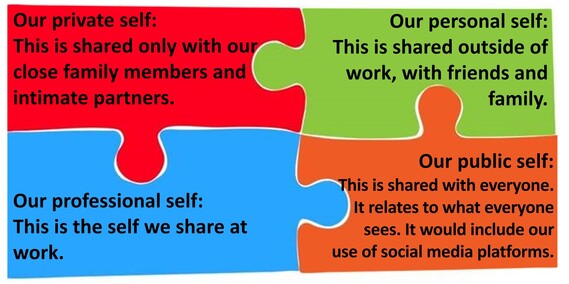
 The 3Ps is drawn from Social Pedagogy, which can be considered in terms of using a Relationship Based approach. Bengtsson et al (2008) identified the importance of being aware of three different aspects of ‘self’, which is known as the 3Ps: The Private Pedagogue, the Personal Pedagogue and the Professional Pedagogue. Maclean, Finch and Tedam (2018) added a 4th P:
-
Our private self: This is shared with our close family members and intimate partners.
-
Our personal self: This is shared outside of work with friends and family.
-
Our professional self: This is the self we share at work.
-
Our public self: This is shared with everyone. It relates to what everyone sees. It would include our use of social media platforms.
 It is important to consider how you might use your 3 (or 4) Ps when working with people to develop relationships, while also maintaining professional boundaries. For example, you may share with a service user elements of your personal self, such as that you have a dog or that you enjoy knitting, but it is important to not share elements of your Private P.
We can also use the 3 (or 4) Ps to consider how they may interact and possibly conflict with each other. For example, when considering personal and professional values.
Take a look at this video.
Developing our approach
 Strengths-based practice is defined as a “collaborative process between the person supported by services and those supporting them, allowing them to work together to determine an outcome that draws on the person’s strengths and assets.” (SCIE, 2015).
When supporting people to meet these outcomes, the Care Act (2014) requires local authorities to “consider the person’s own strengths and capabilities, and what support might be available from their wider support network or within the community.”
Person-centred practice moves away from professionals deciding what is best for a client or service user and places the person at the centre by acknowledging that they are experts of their own experience and supporting them to develop their own knowledge, skills, and confidence (SCIE, 2023). It affirms the person's need for support and resources and ensures that they are always treated with dignity, respect, and compassion.
Both approaches are key aspects of Trauma Informed (TI) practice, as they focus on the individual and their strengths; build relationships based on respect and understanding; promote a culture of hope, change and resilience; and seek to understand the person's lived experience, behaviour and needs by asking: “What happened to you, and how did you survive?”
Find out more here

Supporting young LGBTQIA+ people in crisis
 NHS England’s Workforce, Training and Education Directorate (WT&E) has commissioned People Unlimited to work with young people with lived experience, to develop an extension of Crisis Tools to support young LGBTQIA+ people in mental health crisis. This open access toolkit will help individuals working in health and care settings such as urgent and emergency, primary care, or mental health settings to effectively communicate and provide young LGBTQIA+ people in crisis with personalised support.
Rebecca Burgess-Dawson, Clinical Lead for Mental Health, NHS England Workforce, Training and Education Directorate, said: “This new addition to our successful Crisis Tools guides brings the voices and lived experience of LGBTQIA+ young people to all health and social care staff.”
There are four 15-minute learning guides in the LGBTQIA+ Crisis Tools which can be completed online. The learning guides are accessible for anyone wanting to do bite-size learning to provide better support to young LGBTQIA+ people in mental health crisis. On the website, you can also find the existing Crisis Tools, as well as Guides for Supporting Young Black Men in mental health crisis.
The Crisis Tools are presented in video and text format with accompanying downloadable guides and are available here.
Individuals who engage in the learning can do so on a one-off basis or create a simple profile allowing them to save their progress and download a certificate of completion for their records.
|