Local COVID data update
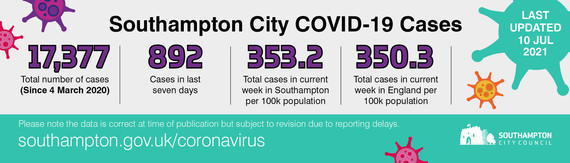 The rate of COVID-19 infection in Southampton continues to increase significantly, as cases in England also continue to increase. Our hospital admissions due to COVID-19 are relatively low but increasing and there were no local deaths due to COVID last week.
Please get vaccinated if you haven’t already: anyone 18 and older can now do it, and the interval between the first and second dose is now eight weeks for all age groups. Grab a jab next week, no booking required, at Oakley Road, 8am and 7.30 pm
If you have symptoms, get tested, and stay at home. We recommend that you continue to follow the Hands-Face-Space-Fresh Air guidance after the 19 July reopening, and as the government has suggested, there is an expectation and recommendation for the continuing use of face coverings in enclosed crowded places.
Even if you don’t have symptoms, you should get tested regularly, since one in three of us who have COVID-19 don’t show any symptoms. We’ve made it even easier to get tested regularly in Southampton. If you are not already doing it, why not start twice weekly symptom-free testing.
See the full local data update on our COVID-19 dashboard
Further restrictions to be lifted from Monday
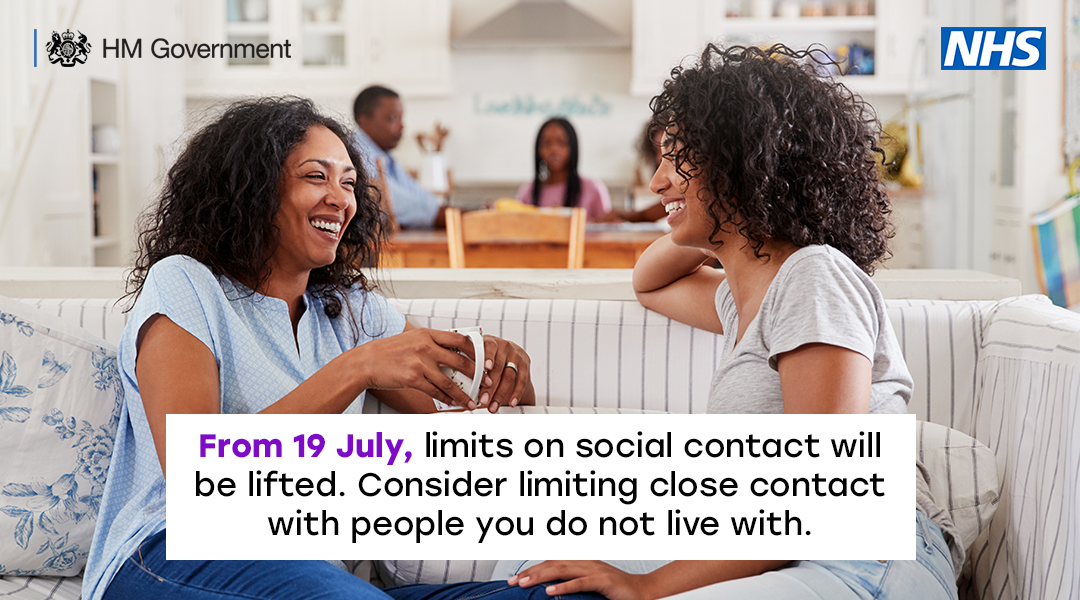 New guidance will come into effect when England moves to step 4 of the roadmap on Monday 19 July.
Although most legal restrictions will be lifted at step 4, and many people have been vaccinated, it is still possible to catch and spread COVID-19, even if you are fully vaccinated, and we are still in the third wave of this pandemic in the UK.
COVID-19 will be a feature of our lives for the foreseeable future, so although restrictions are ending, Covid isn’t.
It is important that we all use personal judgement to manage our own risk. While no situation is risk free, the following are actions we can take to protect ourselves and others around us:
- testing when you have symptoms and targeted asymptomatic testing in education, high risk workplaces and to help people manage their personal risk.
- isolating when positive or when contacted by NHS Test and Trace.
- wear face coverings in crowded areas such as public transport.
- being outside or letting fresh air in.
- minimising the number, proximity and duration of social contacts.
Every action to help reduce the spread will reduce any further resurgence of the virus in the coming months.
Further information and guidance is available on GOV.UK.
Grab your COVID jab in Millbrook!
 When: Seven days a week
Time: 8.00am- 7.30pm (no advance booking required - just drop in)
Where: NHS Covid Vaccination Centre, Oakley Road, Southampton, SO16 4GX
Anyone over the age of 18 will be able to walk in to the iconic city venue and grab their first COVID-19 jab. No advance booking is needed.
The NHS is calling on all adults to get the COVID-19 vaccine and encourage their friends and family to get vaccinated too. NHS staff are pulling out all the stops to vaccinate as many people as possible. With every person vaccinated, we are one step closer to our summer freedoms.
Having a COVID-19 vaccine is the best and safest way to protect yourself and those around you against a devastating disease. Having a COVID-19 vaccine is the best and safest way to protect your body and mind against any long term side effects of COVID.
For people that prefer a booked appointment them can also access via the NHS website.
What to do if you are Clinically Extremely Vulnerable
If you, or someone you know are clinically extremely vulnerable (or were previously advised to shield), you may be wondering how the new guidance affects you or perhaps feeling anxious about restrictions lifting.
Following the move to Step 4 of the roadmap, clinically extremely vulnerable people are advised, as a minimum, to follow the same guidance as everyone else. However, as someone who is at a higher risk of becoming seriously ill if you were to catch COVID-19, you may wish to think carefully about additional precautions you might wish to continue to do to lower your risk of infection and prevent the spread of COVID-19.
Here are some examples of the guidance on shielding and protecting people who are clinically extremely vulnerable from COVID-19:
- Limit close contact with those they do not usually meet
- Everyone on the Shielded Patient List should already have been offered a COVID-19 vaccine. If you have not yet received your first dose, please contact your GP, book your vaccination appointment online or call 119
- Whilst the legal requirement to wear a face covering is being lifted from 19 July, you could continue to wear one in crowded areas, such as public transport or in shops.
If you need help, our dedicated COVID-19 resident helpline is open Monday-Friday (8.30am-5pm) for practical support and information. Call 023 8083 4800, or complete our online form.
Read the guidance on shielding and protecting people who are clinically extremely vulnerable for more information.
Restrictions to remain at University Hospital Southampton
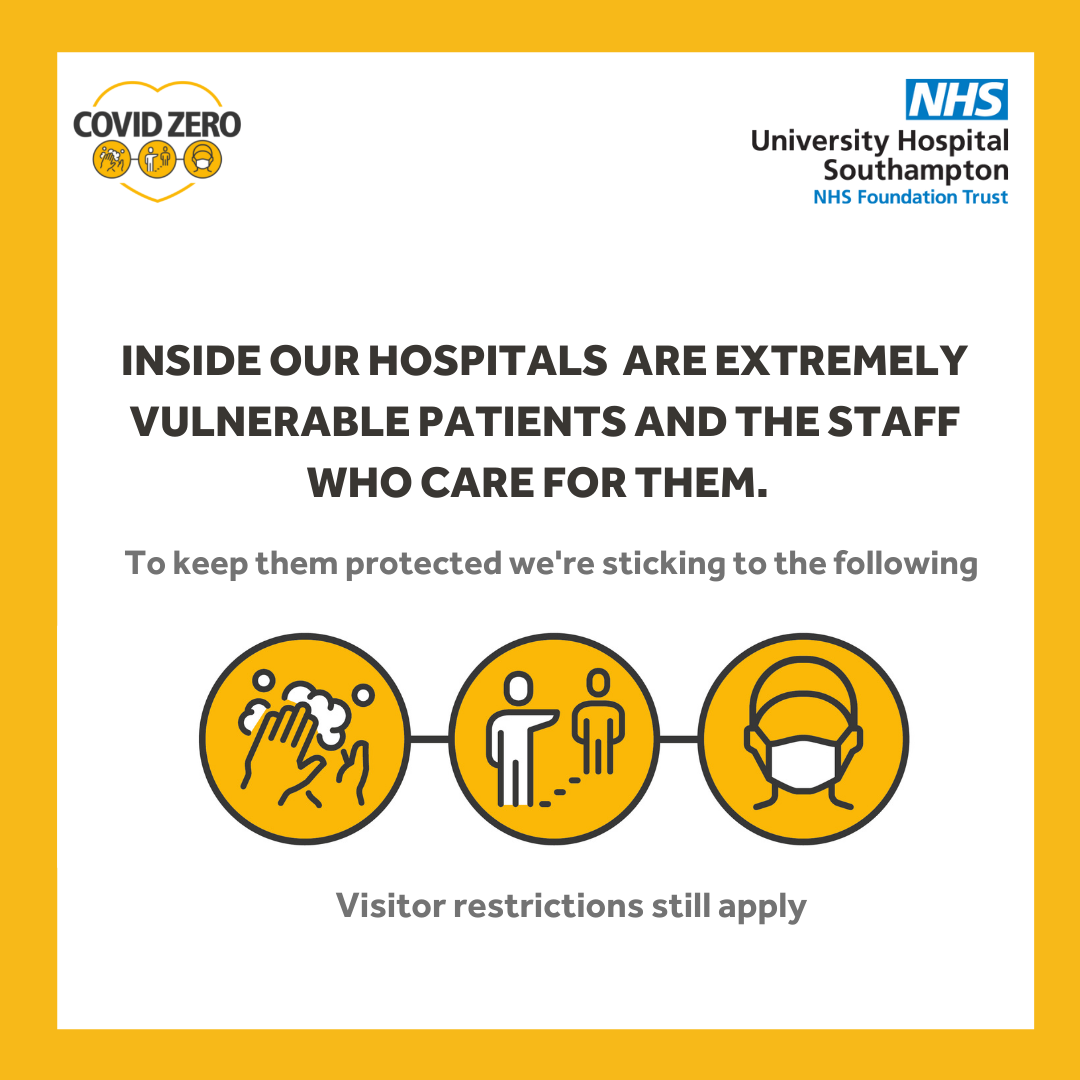 Patients, staff and visitors will still be required to wear face coverings in all areas of University Hospital Southampton, unless they are exempt, despite the end of restrictions from Monday.
For the time being, the numbers of visitors to UHS will also remain restricted – except in defined and exceptional circumstances – but this policy will continue to be reviewed and our guidance updated as the local situation changes.
The government has announced that NHS visitor guidance will stay in place across all health services including hospitals, GP practices, dental practices, optometrists and pharmacies to ensure patients and staff are protected. Staff, patients and visitors will also be expected to continue to follow social distancing rules when visiting any care setting as well as using face coverings, mask and other personal protection equipment.
|