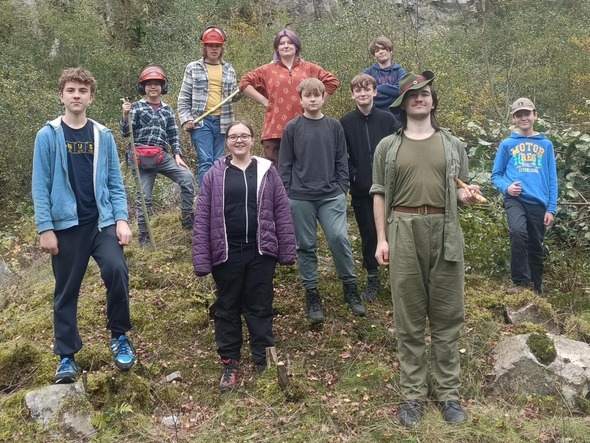
Shropshire Hills Young Rangers helping to restore habitat at Poles Coppice
Rescuing Rocks & Overgrown Relics is a habitat restoration project at four Shropshire Council countryside sites in the Shropshire Hills. The sites are former mines or quarries and include Poles Coppice at Pontesbury, Snailbeach and the Bog. .
These old industrial sites have become valuable spaces for nature as well as people. The project aims to expose more of the rocky/scree habitat which is favoured by some of our rarer plants and animals such as slowworm, grayling butterfly and Birds foot trefoil (foodplant of common blue butterfly).
The work to restore this important habitat is being done by volunteer groups, led by Shropshire Council’s Outdoor Partnership Team and the Shropshire Hills National Landscape Team. Volunteers include the Shropshire Hills Young Rangers and Shropshire Council Wild Team which supports those recovering from mental ill health.
Funding for the project is from Defra, through the Shropshire Hills National Landscape, to deliver the UK Government’s commitment to protect 30% of land and sea for nature by 2030, known as 30by30. Rescuing Rocks & Overgrown Relics is one of a number of 30by30 projects being supported in the Shropshire Hills National Landscape this winter. Others include habitat restoration on Norbury Hill and floodplain meadow restoration at Walcot.
For more information about the project please contact our Engagement Ranger, Joe Penfold - email joe.penfold@shropshire.gov.uk.
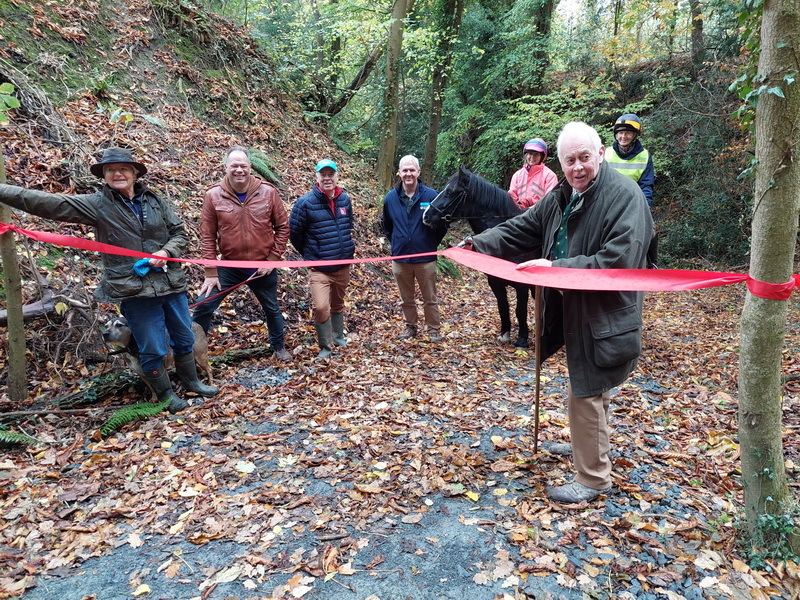
Project partners gather to officially open the new section of bridleway
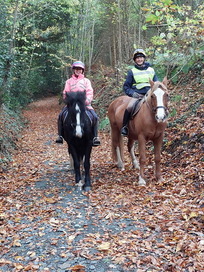
Happy horse-riders climb onto Wenlock Edge once again
Horse riders are enjoying the newly resurfaced section of bridleway along the Jack Mytton Way. This 200 metre stretch follows an old sunken lane which climbs onto Wenlock Edge from Eaton under Heywood. Heavy rainfall over the years had badly eroded this steep section to bedrock, creating a V-shaped gully, and making it impassable for horse-riders and extremely difficult for walkers and cyclists.
Funding from British Horse Society, Long Mynd and District Bridleway Association and Shropshire Hills Farming in Protected Landscapes Programme has enabled this difficult section of bridleway to be repaired and resurfaced. The work was carried out by local contractor Stephen Weaver, and overseen by Shropshire Council’s Outdoor Partnerships Team. Local stone was used to build up the path and the surface shaped to allow rainwater to flow away.
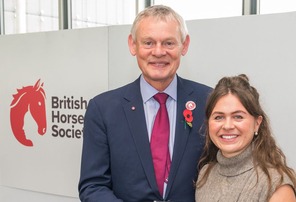
Last month, a small celebration event was held to thank all the partners involved in this project, including representatives from Long Mynd and District Bridleway Association, British Horse Society, Shropshire Hills National Landscape Team, Shropshire Council’s Outdoor Partnerships Team, the contractor Mr. Weaver, and local horse-riders, Sue Lee and Jane Kerswell. The landowner, Mr Goode, officially cut a ribbon to open the resurfaced section which is now a much easier and safer route, whether you’re on foot, horse or bike.
The Pathfinder Project in the Shropshire Hills wins award
Congratulations to Katy Mellor, who has won British Horse Society Elwyn Hartley-Edwards Award. This is given to a writer, broadcaster or publication whose work has been particularly beneficial to promoting the enjoyment of equestrianism.
With funding from the Farming in Protected Landscapes Programme, Katy has created a series of safe, circular routes for horse riders, cyclists and walkers across the Shropshire Hills. She mapped 47 riding routes and has written detailed information for each including riding time, difficulty, gates, terrain, parking and videos.
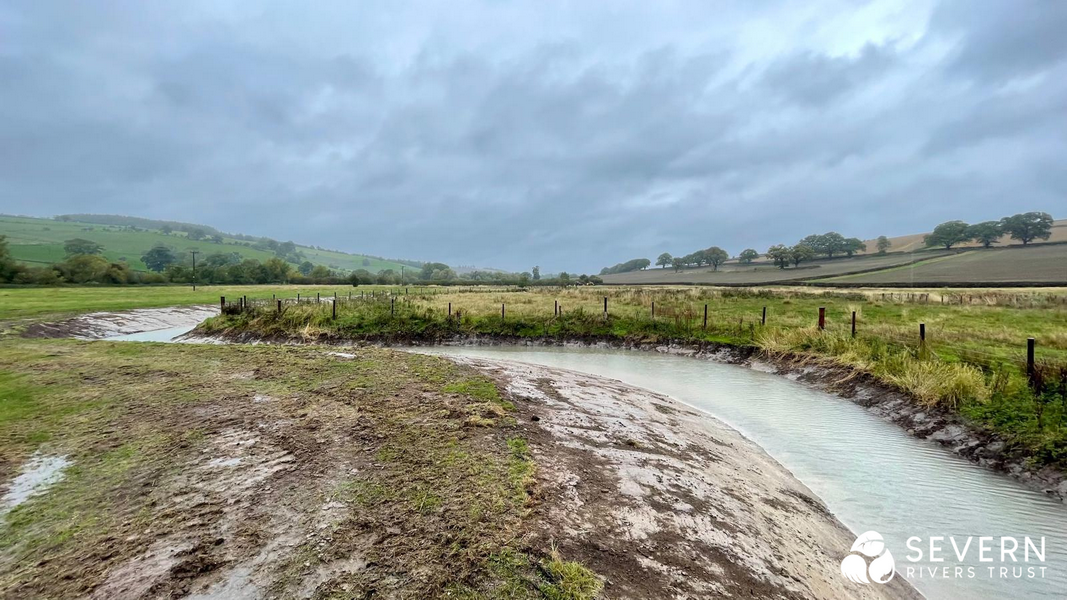
Freshly dug channel. Photograph by Severn Rivers Trust
Work has started this winter to reconnect more than a kilometre of historic river channel along the River Kemp in the Shropshire Hills.
The project sits within the headwaters of the River Clun, a Special Area of Conservation that supports internationally important freshwater species including Atlantic salmon and freshwater pearl mussel.
Severn Rivers Trust is working with the farmers along the straightened section of river to change the way the water moves through their farmland. A network of wetlands and floodplain features are being created to slow, store and clean water naturally. Restoring a more natural river system will bring benefits to both the farm and nature.
Historically, this valley formed part of a 19th-century floated water meadow system, which directed water from the Kemp across the fields to enrich the soil and produce early grass for livestock. Today, that same landscape is being reshaped to work with natural flows again and creating habitat for fish, birds and invertebrates.
This partnership project is the largest river rewiggling project in the Severn Basin. It is being delivered by Severn Rivers Trust with funding and support from Catchment Sensitive Farming, Environment Agency and Shropshire Hills National Landscape Team.
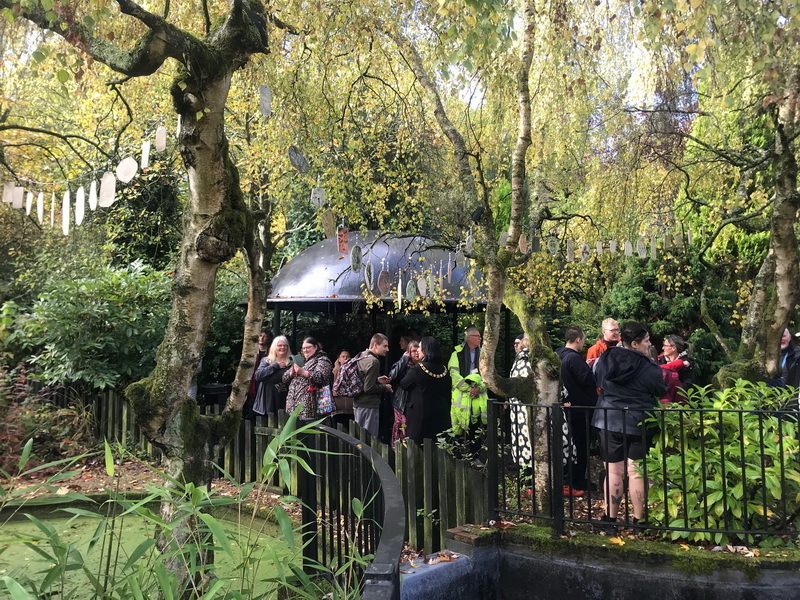
Whispers of the Hills was a creative community project that has brought together over 80 participants from My Options, Challenging Perceptions, Telford Together with Refugees, and Telford & Wrekin CVS.
Delivered by Pneuma Affinity CIC, the project has given people from very different backgrounds — adults with autism, refugees and people seeking asylum, adults with learning disabilities, and young people — the chance to explore the Shropshire Hills, connect with nature and express themselves through art.
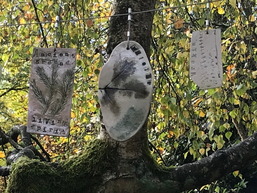
The stoneware ceramic flags, made by the participants, stand as a lasting installation in Telford Town Park, bringing the Shropshire Hills to the people of Telford and Wrekin. The overwhelmingly positive feedback, combined with the commitment from funders to continue their support, shows that the project has laid strong foundations for future creative and community work.
Whispers of the Hills is one of a number of Nature Calling art commissions by writers and artists of all disciplines, engaging new audiences across some of our unique National Landscapes.
Look out for the Nature Calling advent calendar on social media which will be sharing stories from many of the inspirational projects through December.
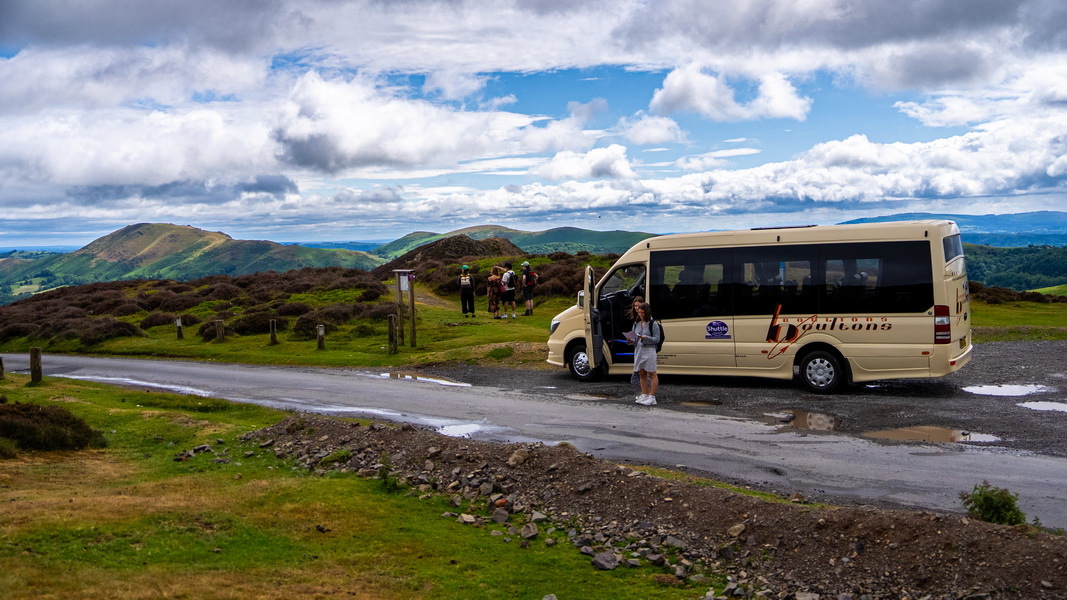
The Long Mynd & Stiperstones Shuttlebus service celebrated a record-breaking season. We welcomed over 1,600 passengers onto our weekend bus between May and September - up from 950 last year.
Increasing the frequency of Shuttlebus circuits in the 2025 timetable, introducing contactless payments and generating more social media content about the service has led to this rise in passenger numbers. We also welcomed Sue Hill, our volunteer conductor, onto the bus to issue tickets and help with passenger enquiries,.
The Shuttle remains an important rural service for residents and visitors, helping them to explore the area without the need for a car. Funding for the service is from our partners; Shropshire Council, National Trust, Natural England, Church Stretton Town Council and Visit Shropshire Hills. We are talking with local bus companies and making plans for 2026.
Working alongside the National Landscape Team, the Trust supports activities which protect the wildlife and heritage of the Shropshire Hills, and enables local people, businesses and organisations to become involved in caring for the countryside around them. Next year is the Trust's 10th anniversary and plans are underway to mark this milestone and celebrate a decade of community conservation.
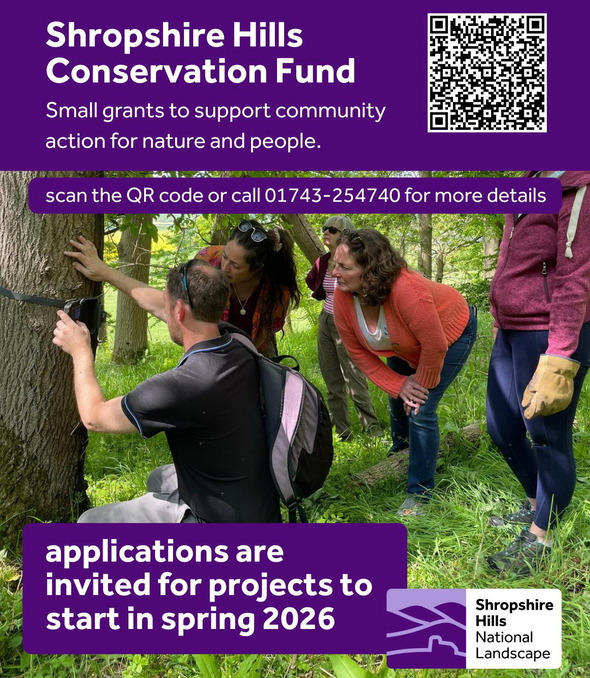
The Trust's Conservation Fund is open for applications. The deadline to make an expression of interest is 13th February 2026 - more information is on our webpage.
Protecting and regenerating the Shropshire Hills National Landscape for everyone to enjoy.