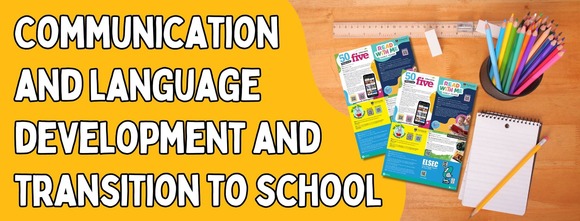
 These individual leaflets describe the different programmes and initiatives we have running in Portsmouth to support children's communication and language development and transition into school. Please feel free to print and share with parents whenever you can. Each leaflet has a description of the programme and specifies which age it supports and when in the year to share. The final leaflet has all 5 of our initiatives on. Please share with your staff teams so they too are aware of the support available for families in the city.
 Check out this amazing new rap created by Portsmouth Music Service and Portsmouth children. It describes Chat Play Read, which is the ELSEC Teams universal challenge to families. You can help families take up this challenge by sharing the rap and encouraging them to chat, play and read every day with their children.
 Battenburg Family Centre are having an open day from 12 noon - 5:00pm on 5 June. They have toys, furniture and resources for babies available for free so do pop along and see if there is anything that would be of use to your setting.
Battenburg Family Centre, Battenburg Ave, Portsmouth PO2 0SN
If you require further information, contact the team on adminbfc@portsmouthcc.gov.uk.
 Even though all children in infant school get free meals, schools need eligible families to register to access additional funding. Signing up also means eligible children may continue receiving free meals after infant school. Please could you encourage those starting school in September to check whether they could be eligible.
If parents sign up by Friday 20 June they will get a £50 supermarket voucher, automatically emailed to them by the school.
Signing up also unlocks extra support for eligible families! Eligible families could get:
- Supermarket vouchers to help with food costs during school holidays
- Access to free holiday clubs through Portsmouth City Council’s Holiday Activities & Food (HAF) Programme
- Extra funding for the child’s school, helping improve education and resources
 Community organisations and schools looking to make great ideas happen this year, can book a place on the Neighbourhood CIL Fund advice session on Tuesday 3 June 2025, 9:30am - 3:30pm at Portsmouth Enterprise Centre, PO3 5QT.
Recent successful funded projects include additional toddler and play equipment at Waterworks Park in Drayton and new kitchen facilities at a youth hub in Fratton.
Projects that can qualify include:
- buying new equipment for a community group
- building and open space improvements to existing community spaces
- public art
- street furniture
- safety infrastructure
- biodiversity projects
Funding awards of £500 upwards depending on where the project is located and available fund.
Their friendly informal one-to-one session is a 30-minute advice session on Neighbourhood CIL Funding opportunities for community projects located within Portsmouth.
The CIL Neighbourhood Fund comes from the Community Infrastructure Levy fund (CIL), which allows local authorities to raise funds from developers who are undertaking new building projects in their area. These funds are then allocated to community projects that improve local spaces and services, benefiting the people of Portsmouth.
 The Department for Education expects all education settings to have a climate action plan by 2025.
Our 'Creating Your Climate Action Plan' webinar is aimed at giving you the information you need to write your own bespoke Climate Action Plan. There will be a brief overview of environmental impact and how it affects us in Portsmouth. We will share with you the Sustainability Support for Education website which is a useful tool for finding early years specific ideas to include in your Climate Action Plan. Once you have some ideas about the intent for your plan, we will move on to the implementation of your plan; how to write your plan and where you could look for support and potential funding. We'll round off the session with a look at the impact your Climate Action Plan could have on your children and families.
Creating Your Climate Action Plan - 18 September, 9:30am - 11:30am, Microsoft Teams - £70
Or we can support you in producing an action plan specific to your setting during a 2 hour onsite visit for £265.
Book a DfE run workshop using the link below.
 If you would like to nominate members of your team to attend PEEP training to be trained as a PEEP Practitioner, please complete this booking form and send to the Business Support Manager at Home-Start Portsmouth: hannahc@hsportsmouth.org.uk.
Training will take place on 15 and 16 July 2025 at Home-Start Portsmouth HQ, PO1 4HA. Training is typically 9.30am - 4.30pm and delegates will be required to attend both days. More information, including confirmation of times will be given to delegates nearer to the training date. The deadline to submit the booking form is Friday 20 June 2025.
The PEEP Learning Together programme is about practitioners running sessions for parents to learn how to play and support their child in a range of areas supporting the EYFS. We have a number of trained PEEP practitioners in Portsmouth who will be running PEEP or PEEP informed groups in Family Hubs and through 1:1 work in family homes, e.g. Home-Start Portsmouth.
As an Early Years setting, why not join our Portsmouth PEEP community and access free 2 day training and then have the license to run your own family sessions within your setting? Take a look at the website for more information.
Once trained as a PEEP Practitioner, you will be able to access ongoing support through a Portsmouth PEEP forum and members of the Early Years team who have also been trained will be able to answer questions about how you can deliver PEEP to your families. So if one of your setting priorities is to support families to understand how to play and learn together with their children, this is the training and opportunity for you!

The Department for Education (DfE) is expanding the number of funded childcare places available in England. They estimate that an additional 40,000 staff are required to meet the increasing demand for childcare places. To address this, they conducted a pilot in some parts of England which provided a £1,000 financial incentive to eligible staff recruited into early years roles. They have commissioned IFF Research to conduct an evaluation of the pilot.
Invitation to participate in a research interview
The DfE is keen to hear from early years job applicants. If you have applied for a new role between April 2024 and March 2025 working with children aged up to five, they would like to learn more about your job search experience.
They are also interested in hearing from staff who have been working in an early years setting for longer to understand more about your experiences and the challenges you face.
To express your interest in taking part in an interview, please email eyfiqueries@iffresearch.com with your name, contact details and the names of any local authorities you have applied for early years roles in since April 2024. If you are currently working in an early years role, please provide the name of the local authority you are working in.
If selected, you will receive a £35 voucher as a thank you for your time.
Your feedback will help DfE to learn more about what attracts people like you to work in early education. They will use this information to make decisions about working conditions and pay.
If you would like to contact DfE directly for confirmation of the validity of this research, you can reach them at EY.analysisandresearch@education.gov.uk.
 As we get more children ready for school at age 5, the DfE are exploring new ways to help providers offer more high-quality childcare places for families, that include access to outdoor space. Evidence shows the huge benefits of outdoor play to children from improved problem solving to mental and physical health. Yet currently, the government’s early years framework requires provision of outdoor play but only formally recognises indoor space in its requirements for how many children nurseries and childcare providers can take on at any one time.
On 12 May, the government launched its space requirements in early years childcare settings consultation, which runs until 11 July.
The consultation is seeking views on whether to introduce flexibility into the EYFS that will allow free-flow outdoor space to be included in the indoor space requirements, with a possible cap on the number of additional places that can be offered. The government is also seeking feedback on the proposed definition of “free-flow”.
This consultation has been launched because early years providers expressed a desire for these rules to be updated. To meet forecasted demands for the expanded entitlements, it is estimated that an additional 60,000 new places are required between September 2024 and September 2025, and one of the barriers to expanding childcare is physical space. In the department’s Pulse surveys of childcare and early years providers, November 2023, 70% of providers who responded said they would make better use of their outdoor space if more flexibility was introduced.
They want to hear from as many people as possible to inform a decision on what to do next. Please complete the online consultation survey and encourage parents in your local area to complete the survey too.
 The Education Endowment Foundation is looking for early years settings to take part in a new research project that aims to find out how effective Early Talk Boost is at improving young children’s speech, language, and communication skills.
Developed by Speech and Language UK, Early Talk Boost is a nine-week, small-group programme designed for children who need extra help to develop these vital skills, so they can catch up with their peers and thrive.
By taking part, your setting could receive fully funded professional development for staff, along with support to deliver the intervention with groups of six to eight children.
 Sensory food education is a way for educators to help children engage with food in a healthy and positive way. It involves exploring food using all 5 senses and allows children to understand their own food preferences and experience new foods. This can lead to them trying and enjoying more healthy foods and encouraging lifelong healthy eating habits.
The charity TastEd provides free lesson plans and a training video for early years settings to get you started.
For more information on how to run sensory food education in your early years setting, visit the Help for early years providers : Sensory food education page and the TastEd website.
 Nursery packed lunches require careful thought to ensure meals are safe, nutritious, and enjoyable.
NDNA experts have produced a packed lunch checklist that covers everything you need to think about to make packed lunches a positive and safe mealtime experience for your children whilst considering the risks and reducing these.
 Children’s physical development is critical to their success through life. Physical activity helps children develop coordination and control of their large and small movements. Our understanding of its importance has increased in recent years along with our understanding of its impact on children’s all-round well-being.
NDNA’s free factsheet on outdoor play looks at supporting physical development through outdoor play, planning outdoor spaces, supporting risks in play and ways that you can expand children’s physical activity and time in nature, outside of your own provision when outdoor space is limited.
 Early years managers can now use the new check an early years qualification digital service to quickly verify whether staff qualifications meet the requirements for staff:child ratios in England.
This free GOV.UK tool allows managers to check a qualification’s approval status by entering key details such as:
- course start date
- level
- awarding organisation
At the end of the process, a clear outcome is provided, which can be printed for your records.
Why use the new service?
Using the new check an early years qualification service:
The service is tailored specifically for early years managers. All other user groups (for example practitioners) should continue to use the Early Years Qualifications List (EYQL) to check qualifications, and contact the supplier Ecctis if they are unable to find the qualification on the EYQL.
The Check an early years qualification service is for qualifications achieved in the UK. Holders of non-UK qualifications should continue to contact the supplier Ecctis for an assessment.
If you need help using the service you can contact DfE.
Complete this form to give your feedback.
 On 11 June from 4:00pm - 5:00pm, 50 things to do before you're five are hosting a free virtual webinar on how 50 things can support children's speech, language & communication development.
Their Language and Communication expert, Chloe Storr, will take a deeper dive into how 50 things can support:
- Supporting the development of key skills such as listening, attention, turn taking and understanding through playful activities.
- Providing/sharing language rich experiences that expose children to new vocabulary.
- Working collaboratively with parents to create a language rich home learning environment.
- Suggesting words that can be used during each activity and build upon these to encourage the natural development of language.
|