 Pineapple Tots Childcare hosted a street party to celebrate 80 years of Victory in Europe. They brought together their parents, carers, and local childminders with their childminded children for a fun morning of arts and crafts, singing and dancing to songs from the war era. Everyone participated in a 2 minute silence and shared a delicious lunch. In preparation for the street party, the children at Pineapple Tots Childcare learned about what VE Day is and visited The D-Day Story.
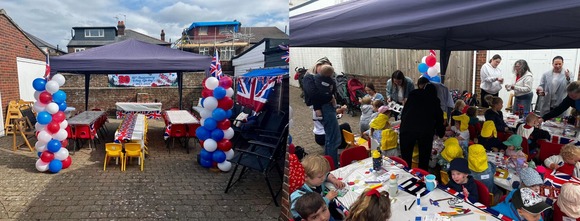 Childminder Claire Cleaver, owner of Pineapple Tots Childcare, set up the event because she considered, 'VE Day is a unique opportunity to teach children that we are a city to be proud of, a country that values peace, respect, and kindness. A celebration teaches the children they are part of something larger, a family and recognise values of community. This social gathering will support children's understanding of the world, the British Values and provide social interactions with new children'.
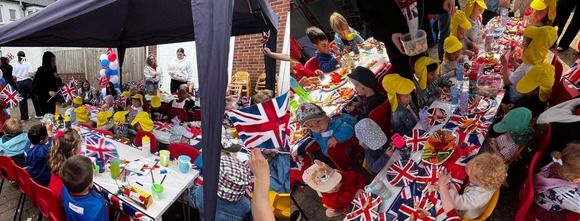 Pineapple Tots Childcare hosted their special celebration free of charge to other childminders and their childminded children but asked for a voluntary cash donation for the British Red Cross Pour A Cup of Kindness appeal which helps people in crisis. Together they raised £200!
A wonderful time was had by all!
 Isos Partnership are doing some research for the Local Government Association (LGA) on rising needs in the early years, and have put together a survey to understand the impact of changing needs from the perspective of frontline professionals and setting leaders. The deadline for completion is 14 May and we would encourage you to share your views.
 Please note that unfortunately an error has been found in the copy of the revised thresholds document. In the section relating to children with special educational needs on page 16, the statement that 'a Family Support Plan is required to be considered as part of a request for an assessment to consider if a child is eligible for an EHCP' has been removed as this is no longer required for an Education Health and Care Needs Assessment to be submitted.
 A new post, “How we look at the use of Early Years Pupil Premium (EYPP) in our inspections of early years settings” has been published on the Ofsted: early years blog.
 New research and learning from Ofsted regarding best practice when it comes to working with babies and toddlers (under 2s). The 'key findings' are useful when reflecting on practitioners' interactions, the key person role, environments and how our youngest children are supported across the prime areas.
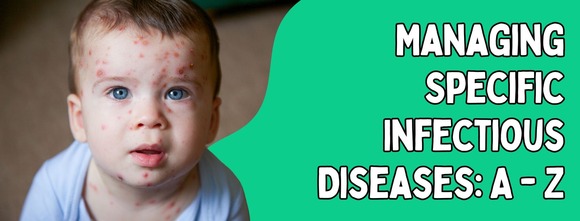 This guidance was updated on 5 March. You may want to check their policies in case there have been changes to treatment and exclusion periods.
 Are you looking for food themed resources for early years? Take a look at the FREE, Six early years packs from Food – a fact of life!
Each pack is based on a food theme, combining learning about healthy eating (and activity), cooking or where food comes from, with an early years’ curriculum area, such as numeracy, literacy or physical development.
A guide to running the session and a presentation containing colourful images, games and an activity to try at home, is available for each of the six packs:
- Amazing allotments
- Awesome activity
- Beautiful bread
- Delicious dairy
- Marvellous meals
- Perfect picnic
 The Department for Education is committed to ensuring that all children in early years settings have the best possible start in life. As part of this, they are introducing new nutrition guidance in the EYFS statutory framework, which will replace the ‘Examples menus for early years settings in England’ guidance from September 2025.
The new guidance has been developed with nutrition and sector experts. It will help early years providers understand how to meet the existing EYFS requirement: ‘Where children are provided with meals, snacks and drinks, these must be healthy, balanced and nutritious’.
Good nutrition in the early years is crucial for setting the foundations for a lifetime of good health. From September 2025, providers will be required to have regard to the new nutrition guidance, meaning they must take it into account and should follow it unless there is good reason not to.
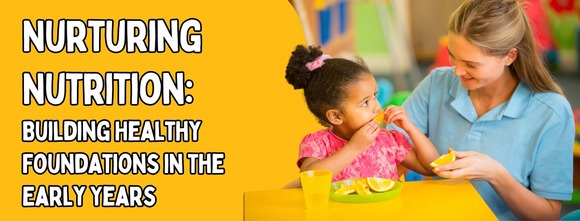 This free event is your chance to hear from inspiring speakers and discover fresh ideas to enhance nutrition practices in your early years setting.
Thursday 22 May, Microsoft Teams, 4:30pm – 6:00pm
 Food Standards Agency has a free poster giving advice on avoiding choking hazards which can be displayed where food is prepared and served to young children. This information may also be shared with parents and carers.
 As part of the SENDAP strategy, the extensive training that is currently available to support professionals working with Children and Young People with SEND has been mapped.
A new page on the Portsmouth Local Offer has been launched: SEND workforce training in Portsmouth.
 Training dates
Please see information about their training offer for the summer term here. Please email the team on Neurodiversity0-19Enquiries@portsmouthcc.gov.uk to book on.
Advice clinics for parents/carers
Please share this leaflet with parents. Parents/carers can contact the team to book an appointment.
Insight Hub
All ND profiles should now be being completed on the Insight Hub. If you don’t have a log in, please contact the neurodiversity team to arrange this. They can also provide you with training on how to use the hub if needed.
 A member of the ELSEC (Early Language Support for Every Child) team will be dropping into the following stay and play groups to offer speech and language support and signpost to relevant services. Please share this information with parents.
Buckland Family Hub, Tuesday 20 May, 12:45pm - 2:15pm
Buckland Family Hub, Friday 20 June, 10:00am - 11:30am
Paulsgrove Family Hub, every 1st Tuesday of the month, 10:00am - 11:30am
Northern Parade Family Hub, every 4th Wednesday of the month, 10:00am - 11:30am
Somerstown Family Hub, every 1st Thursday of the month, 9:30am - 11:00am
 Monday 2 June, 9:30am - 1:30pm, Hove Town Hall
Tuesday 8 July, 9:30am - 1:30pm, Chichester College
 Family life isn’t always easy — sometimes challenges can build up before you know it. The Dragonfly Project, in Portsmouth, is there to help. They support families with children aged pre-birth to 11 years to resolve challenges before they become bigger problems.
 The Education Endowment Foundation (EEF) is offering free access to Maths Champions, a professional development programme that has demonstrated positive impact on children’s mathematical attainment.
Delivered by the National Day Nurseries Association, Maths Champions builds the knowledge of nursery practitioners to support children’s early mathematical development. A senior member of staff will receive one-to-one support to drive improvement in maths practice across their setting, in addition to bespoke online training and resources.
Two EEF-funded trials have shown that Maths Champions has a positive impact on children’s outcomes. Through the Department for Education’s Accelerator Fund, PVI, maintained and school-based nurseries can register to receive the programme for free.
Sign-up now to take advantage of this fully funded evidence-backed offer.
 Part of growing up is about expanding your horizons beyond your own home – travelling to other places like school, the houses of friends, or to parks and the outdoors.
Children need to learn how to get there: about distance, directions and the new sensations they’ll encounter along the way. Good starting points are how we measure distances, how we might use directions to find the way, and the five senses of touch, smell, taste, sight and hearing.
 Parents and carers are invited to join an engaging and informative cyber security training presentation from the Thames Valley Police Cyber Protect team. The sessions will share easy-to-implement tips for parents/carers regarding theirs and their family's online behaviours and internet-enabled device usage.
This session covers key topics, including:
-
Emails and mobile phones: The art of spotting a scam – lots of hints and tips to share with your children around phishing and other scams.
-
Social media safety: The risks around social engineering, disinformation, AI, privacy and hacked accounts.
-
Gaming: Understand what the risks are to young people when gaming, particularly online, and discover ways to monitor and restrict usage.
-
Password mastery and Two-Factor Authentication (2FA): Helping you and your family to secure your accounts following best practice.
 Take a look at this brilliant activity from ABC Does.
 Child Safety Week
 is taking place from 2 - 8 June. Get the latest version of Child Accident Prevention Trust's parent pack with top tips to share with your communities. It includes their freshly updated fact sheet on burns prevention and first aid. Bring your Child Safety Week displays to life with their colourful posters, including their brand new Child Safety Week poster for 2025. Add the We support Child Safety Week logo to your website and emails. Share their posts throughout the week. This information pack is your guide to the theme, what’s available and why your involvement is so important. It includes simple ways you can share this Child Safety Week.
Blind cord safety
It can take just 15 seconds for a toddler to lose consciousness if a blind cord is caught around their neck – and they can die in just two to three minutes. But many are unaware of the dangers.
Are your windows open?
As the weather starts to get warmer it will be great to open windows and let the fresh air in. But toddlers and young children are at greatest risk of falling out and suffering serious injuries. Partly because their heads are heavy compared with their body so they can easily topple. Fortunately, it doesn’t take much to keep them safe.
Is your garden child-friendly?
Outdoor play is a great way to burn off energy but there are some things to watch out for to keep children safe from serious injury. So, here are some top tips to make your garden a safer place to play.
Watch out in water
It’s scary to think about but drowning doesn’t happen like it does in the movies. A drowning child doesn’t splash about or cry for help. They slip quietly under the water, often unnoticed. But, once you understand how and where drowning happens, there are things you can do to prevent it.
|