|
 Supporting Victims of Crime in Cambridgeshire and Peterborough
As Police and Crime Commissioner (PCC) for Cambridgeshire and Peterborough, I am committed to providing and supporting high-quality services that support victims of crime across the county. My goal is to ensure that victims receive the care, support, and justice they deserve, while ensuring any support offered is tailored effectively to meet their needs.
|
|
The Victim and Witness Hub
This year, the Cambridgeshire and Peterborough Victim and Witness Hub celebrates its 10th anniversary, marking a decade of emotional and practical support for those affected by crime. Funded by the Police and Crime Commissioner (PCC), the Hub offers accessible services to all victims and witnesses, regardless of whether the crime has been reported.
 Anyone living in the county who has been affected by a crime is eligible to access the service, this includes victims, bereaved relatives, parents or guardians of victims under 18, staff who are employed by a business that has been a victim of crime and witnesses of crime. Referrals to the Hub can come from the police, other agencies, or through self-referral. This year, the Hub supported 628 people across Cambridgeshire and Peterborough in July alone.
The Hub offers a wide range of practical and emotional support services, including:
-
Emotional Support: Advice and guidance from Victim and Witness Care Co-ordinators via the telephone and in certain circumstances access to specially trained Community Volunteers who may provide both face-to-face and telephone support.
-
Practical Support: Referral to additional relevant external organisations and services provided by partners, voluntary and community organisations including The Bobby Scheme and mental health care providers. Referral to the Court-based Witness Service who provide free and independent support for victims and witnesses attending court. They can arrange pre-trial visits to the court and their volunteer staff at the court building provide information, support and a quiet place in which to wait during the trial itself.
-
Restorative Justice (RJ): A voluntary, victim-led service supported by RJ facilitators, providing victims with the opportunity to communicate with an offender, where there may not have been an opportunity to do so before.
-
CPSL Mind: Co-located within the Victim and Witness Hub, Cambridge, Peterborough and South Lincolnshire Mind provide mental health well-being support to victims affected by crime. They also provide well-being support, reflective practice sessions and training to staff within the Hub and other services in the county that we fund.
-
Specialist Support: The Victim and Witness Hub is also supported by a number of commissioned services to assist in providing the best support for victims and witnesses including Embrace Child Victims of Crime who can offer specialist support to young people and their families who have been affected by crime.
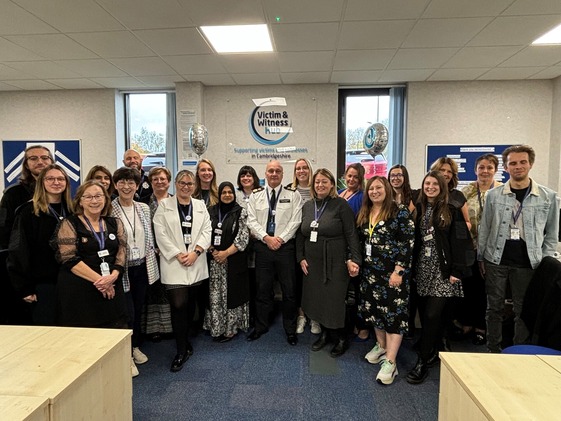 “The criminal justice process can be daunting and overwhelming, however, our team of co-ordinators are here to offer support throughout. Every effort is made to ensure that all victims and witnesses understand what is happening and feel understood to enable them to make informed choices” said Samantha Severn, Head of the Victim and Witness Hub.
“We appreciate that the effects of crime aren’t always apparent at the time and some people experience the effects later on. For this reason, we proactively contact victims of crime (where safe to do so) not referred into the service by email or letter to make them aware of the services available to them at any time.”
To learn more about the Victim and Witness Hub, click the button below.
|
|
The Bobby Scheme
The Bobby Scheme, operated by the Cambridgeshire Police Shrievalty Trust, is a vital initiative dedicated to crime prevention, particularly for vulnerable members of the community. The scheme primarily focuses on enhancing safety for elderly victims of dwelling-related crime by providing essential safety and security measures, with an aim to empower residents by reducing their risk and fear of crime.
Individuals can be referred to The Bobby Scheme by the police, other agencies, or self-referral. An officer, or “Bobby”, will then visit the property and assess what is needed which could include things like lighting, window and door chimes, locks and ring doorbells. The officer will then support with fitting these devices as well as providing crime prevention advice around home and IT security, as well as personal safety. These visits and additional security measures help to improve security and prevent re-victimisation, allowing individuals to regain their sense of safety.
In summary, the Bobby Scheme takes a proactive approach to crime prevention and community support, to protect and empower the most vulnerable members of society. By investing in security and safety, the Bobby Scheme plays a crucial role in building safer communities for everyone.
For details on how to contact the Bobby Scheme, please visit the Cambridgeshire Police Shrievalty Trust Bobby Scheme website by clicking the button below.
|
|
  Cambridgeshire Deaf Association (CDA)
The Cambridgeshire Deaf Association (CDA) is dedicated to supporting deaf and hard-of-hearing individuals in the region. The majority of staff are deaf or hard of hearing themselves, meaning that they have a deep understanding of how to support deaf people. Offering a variety of services including advocacy, social activities and communication support, to help improve quality of life for their members, no other organisation offers the support and expertise that CDA does across Peterborough and Cambridgeshire.
Compared to hearing women, deaf women are twice as likely to suffer from domestic abuse. Recognising this, the Police and Crime Commissioner (PCC) supports the CDA by funding Freedom programmes that offer support to deaf victims of domestic abuse, in addition to overseeing the work of a specialist Independent Domestic Violence Advocate (IDVA), funded by the local authority.
The association helps protect deaf women from domestic violence, hold hundreds of deaf drop-in events to provide support and combat isolation, provides opportunities for deaf Christians to worship and focuses on the training and development of expert staff to support deaf people in a huge variety of situations. Additionally, CDA proudly continue to grow their online library of British Sign Language videos, in response to the challenges faced by those from the deaf community.
Services through the CDA are available to a variety of individuals, including:
-
Deaf and Hard-of-Hearing Individuals: People of all ages who are deaf or have hearing impairments can access services designed to meet their needs.
-
Families and Caregivers: Family members or caregivers of deaf individuals can benefit from support, information, and resources.
-
Professionals: Those working with deaf individuals, such as educators or healthcare providers, may also access training and resources to improve communication and support.
-
Community Organisations: Groups seeking to enhance their services for the deaf community can collaborate with CDA for guidance and support.
The CDA aims to promote inclusivity and provide resources that cater to the diverse needs of the deaf community.
To find out more, click the button below.
|
|
Road Victims Trust (RVT)
This year the Roads Victim Trust’s (RVT) celebrate their 30th anniversary, highlighting their long-standing commitment to supporting victims of road traffic collisions and their families. RVT focuses on providing emotional and practical support to people bereaved or affected by fatal or life changing injury as a result of road traffic collisions.
Working in partnership with roads policing and force liaison officers across the tri-force, a team of paid and volunteer counsellors support victims to enable them to begin to cope and recover. The Police and Crime Commissioner (PCC) plays a significant role in supporting the RVT by providing funding towards their services and collaborating with them to raise awareness about the impact of road traffic collisions and ensure the matter is addressed within the broader context of public safety and crime prevention strategies.
The RVT offer a range of services, including emotional and practical support, information on other available support networks and advocacy for victims to ensure their voices are heard. One client described their experience after receiving support from the RVT: “My counsellor was wonderful. She was kind, supportive and I felt able to talk freely about what had happened, which was actually very liberating as I had been unable to do so for many months. The counselling sessions have definitely helped me to process the trauma I was experiencing and has equipped me to deal with it going forward. Talking with (counsellor) made an awful situation become bearable and I will always be grateful to her and the RVT. Thank you.”
To access support or for more information, please visit the RVT website, by clicking the button below.
|
|
|
|
|