News 25 June to 1 July
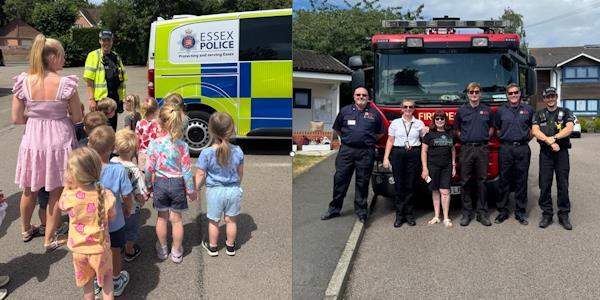 Community Engagement in Thaxted
Last week, PC Souel Sampson and Tri-Services Officer Andrea Adams spent a productive day in Thaxted, engaging with local residents and supporting community initiatives. The day began with a visit to Pam’s Place, where they spoke with residents and listened to local concerns. The local fire crew also stopped by, offering valuable home safety advice and fire prevention tips. Later, they joined members of the Thaxted Parish Council for a community foot patrol, helping to identify local issues and strengthen ties between residents and services. They also lent their support to the Thaxted Community Speed Watch, promoting road safety and raising awareness about speeding in the area, two drivers were spoken to as a result of the check.
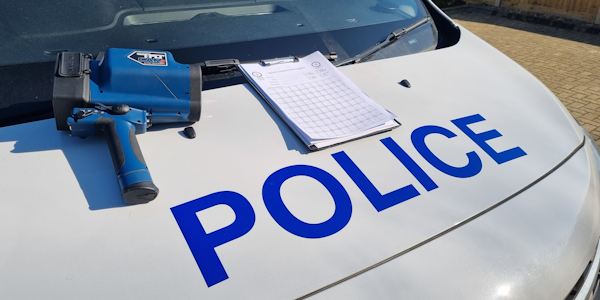 Uttlesford speed checks
We know that drivers speeding on our roads is a concern in our communities.
And we understand why. Speed is a major factor involved in road deaths and serious injury collisions. We therefore continue to work alongside the local community, including our speed watch volunteers and local partners, to conduct speed checks in areas where you tell us speeding is an issue.
The team have carried out checks in Little Hallingbury, Takeley, Great Dunmow, Ugley and Stansted Mountfichet.
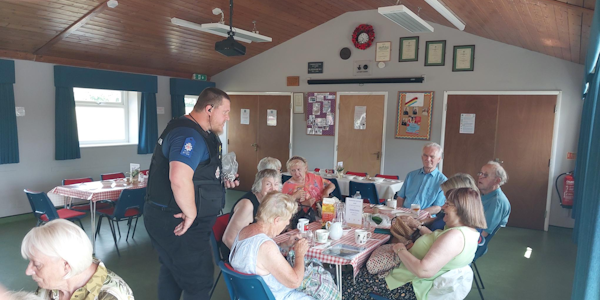 On Patrol - Elsenham
On Tuesday, PC Steve Sharma and PCSO Alex Stewart conducted a patrol in Elsenham in response to reports of antisocial behaviour. Following the patrol, they visited the Memorial Hall to attend the community coffee morning which was a great opportunity to catch up with local residents and hear their concerns. Steve and Alex are the dedicated team covering various areas including Elsenham, Stansted, and Henham. If you see them on patrol, please don’t hesitate to stop and have a chat!
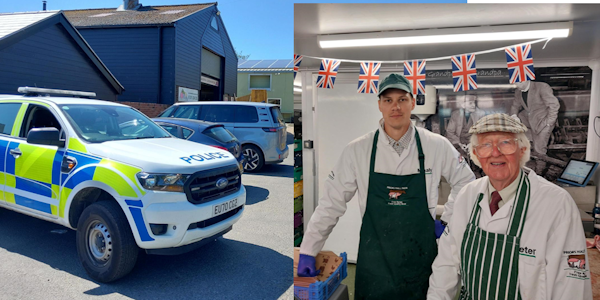 PCSO Mike O'Donnell-Smith hosts 'Let's Talk' Event in Lindsell
Local residents in Lindsell had the opportunity to meet with PCSO Mike O'Donnell-Smith during a recent Let's Talk event. These regular sessions, hosted by the neighbourhood policing team, provide a valuable chance for the community to raise concerns, ask questions, and engage directly with local officers. Check out our event section to find out where the team will be next.
 Let's talk
Upcoming community police events
Thursday 3 July 5pm - 6pm
Co-op, Lower Street, Stansted
Thursday 3rd July 6pm -7pm
Stansted Library, Chapel Hill, Stansted
Tuesday 8th July 10am - 11am
Coffee Pot, Canfield
Tuesday 8th July 10am - 11am
Memorial Hall, Elsenham
Wednesday 9th July 10am - 11am
Kappa House, Newport
Thursday 10th July 11am - 12pm
Wood Cottage Team Room, Felsted
Thursday 10th July 10am - 12pm
Touchpoint, Stansted
Friday 11th July 6pm - 7pm
Royal British Legion, Felsted
 Crime prevention advice
Keeping your child safe online is not always an easy task. New technology, regular updates or upgrades can change how things work, sometimes making it difficult to keep up.
So, to help, we have put together some simple things you can do to make your child’s online devices safer.
Top tips
1. Protect your identity. Do not share personal information.
2. Think before you post. Once posted its no longer yours.
3. Check your privacy settings.
4. Games and Apps have age ratings for a reason.
5. Make use of the parental controls.
Be fraud smart
Be aware of spoofed websites: these are fake sites made to look like real ones to steal your personal or banking details when you submit them to the site.
Check the website address at the top of the web address bar to make sure no characters are incorrect. Look for ‘https’ at the beginning of the web address and the padlock symbol.
 What is the definition of an offensive weapon?
There are three categories of offensive weapons:
1. Items that are made for the purpose of causing injury and have no other practical purpose in the normal world (and are offensive weapons per se) - Examples are flick knives, daggers, knuckledusters , butterfly knives, sword sticks, truncheons , and bayonets.
2. Items that are adapted or altered in some way for the purpose of causing injury - Examples are sharpened screwdrivers, smashing a bottle to make the broken end into a weapon for causing injury, or stout dowelling with Stanley blades in the end.
3. Items that are not specifically made or adapted to cause injury but are carried for that purpose - Examples are a hammer, cricket ball, baseball bat, scissors, razor, a stone, pick axe handle etc.
Almost any item can be considered to be an offensive weapon if the person carrying the item intends to use it to cause injury.
Whether an item is an offensive weapon is a question of facts for a jury, based on the full facts of the case.
It is an offence for any person who without lawful authority or reasonable excuse has with them in any public place, any offensive weapon. It is also an offence to possess (including in private) any offensive weapon as outlined in category 1, i.e. those that are made for the purpose of causing injury.
Where a particular knife is not deemed to be an offensive weapon, be aware that there is also a specific offence of having a bladed article in a public place.
|