News 25 June to 1 July
 Leonna Ruka
The family of a seven-year-old girl who died following the partial collapse of a tree in Southend have described her as "the light in their lives".
Leonna Ruka, from Dagenham, was visiting family in the area on Saturday 28 June.
They had travelled to Chalkwell Park and, like many other members of the public that day, were enjoying the warm summer weather.
Shortly before 3pm, a tree in the park partially collapsed. Several children were caught beneath it, including Leonna.
Many members of the public immediately rushed to help the children. They were swiftly joined by first responders from all emergency services.
Leonna was taken on to hospital but very sadly died.
We continue to provide support to her family.
A six-year-old girl remains in hospital in a critical condition. Three other children received minor injuries.
'She had a heart full of love'
Essex Police will once again play a leading role in supporting a national surrender scheme ahead of a change in the law to ban ‘ninja-style’ swords.
Police forces across England and Wales will be participating in the Home Office-led amnesty, which runs from 1 July until 31 July.
The change to the legislation is expected to close a loophole around the possession of certain varieties of bladed weapons, assisting us in removing these weapons from our streets and prosecuting those who would use them to cause harm.
The amnesty allows current owners of such items to hand them in ahead of this change in the law.
It will follow a similar track to a zombie knife and machete surrender scheme held in summer 2024.
During last year’s amnesty, helpful members of the public, together with businesses and sellers, handed in more than 200 knives at police station front counters across Essex.
Hundreds more were deposited in our many knife bins, located outside police stations across the county.
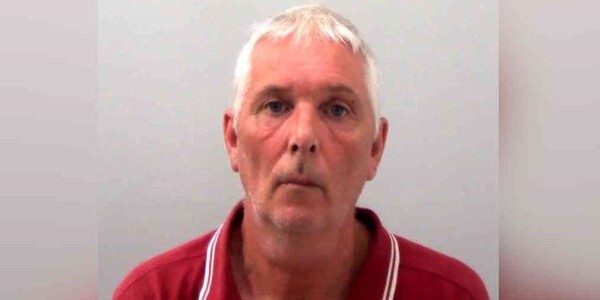 Jailed: Christopher Stuckey
A Southend man has been jailed after he was caught trying to engage in child sexual communications with a child by undercover police officers.
Christopher Stuckey thought he was chatting online to a 13-year-old girl over a four-day period in June last year.
He also thought he was talking to the aunt of a second child.
During this three-month interaction he planned to sexually assault an eight-year-old girl.
But on both occasions he was talking to an undercover officers.
Fast-paced investigation
Basildon Crown Court heard that the 59-year-old sent the vile messages and images to the officer, who was posing as the child’s aunt, saying that he wanted to commit serious sexual offences.
And when he thought he was talking to the 13-year-old child he sent sexually explicit messages and asked her to send him photos. He sent a photo of himself.
Following a fast-paced investigation officers from Essex Police Online Investigation Team (POLIT) arrested Stuckey at his Prospect Road home in July.
They seized numerous mobile phones, linking him to the offences.
He made no comment throughout interview, but admitted the offences when he appeared at court.

To coincide with Armed Forces Day, Essex Police is launching a faster way to find and safeguard former serving military personnel who are lost, missing or in need of support.
Starting on Saturday 28 June a new initiative to support veterans and their families will be available in the county.
Former personnel can often find it difficult to reintegrate into civilian life after leaving military service.
If they then go missing while vulnerable, swift access to information about them can be critical in finding them safely before they come to harm.
Officers now have access to a portal through which they can find personal specific details already submitted by either the military veteran or their families, carers or friends, using a digital form in anticipation of them going missing.
The portal is run by charity, Safe and Found Online, to help police provide help more quickly.
The scheme – ‘The Forcer Protocol’ - is named after Lance Corporal Alan Forcer who suffered with complex PTSD and debilitating depression following service in Northern Ireland and Kosovo during the height of the conflicts, he sadly took his own life.
 Let's talk
Upcoming community police events
Thursday 3 July between 12pm - 1pm
Tesco, Broadway, Leigh on Sea
Friday 4 July between 7pm-8pm
Local Community Meeting (East Wards) Ferndale Baptist Church, North Avenue, Southend
Saturday 5 July between 12pm - 3pm
Hamstel School Fete, Hamstel Road, Southend
Monday 7 July between 6:30-7:30pm
Local Community Meeting (West Wards) Belfairs Woodland Centre, Eastwood Road North, Leigh
Friday 11 July between 11am -12:30pm
Waitrose, London Rd, Leigh
 Crime prevention advice
A good night out starts with a safe way home
Whether you're heading to a BBQ, a night out, or an evening with friends, make your journey part of the plan.
- Book a licensed taxi ahead of time
- Use public transport
- Arrange a lift with a sober friend
It’s not about spoiling the fun, it’s about making sure everyone gets home safely.
Be fraud smart
Book smart
Scammers are trying to cash in on our need for a getaway by posting fake holiday homes and hotel listings - even on trusted websites.
Book Smart
- Use a credit card or one with online purchase protection
- Always pay through the site’s secure system—never direct to the host
- Be cautious about social media offers
After Booking
- If you get a message asking for more money, don’t click any links. Contact the site directly.
 What type of dogs are illegal and what could happen if I own one?
Under the Dangerous Dogs Act, it is illegal to own certain types of dog. These are - a pit bull terrier type, an XL Bully type, a Japanese Tosa type, Dogo Argentino type and a Fila Braziliero type. Whether a dog is banned depends on its appearance rather than its breed or name.
For example, if you owned a dog that had many characteristics of a Pit Bull Terrier, it may be a banned type. It is also against the law to sell, abandon, give away or breed from a banned dog.
The police, with the permission of a court, may seize a banned dog even if a complaint hasn't been made and the dog isn't acting dangerously. If a banned type of dog is in:
• a public place the police don't need a warrant to seize it
• a private place, the police must get a warrant to seize it
• a private place and the police have a warrant for something else (like a drugs search), they can seize it
When a banned dog is seized, a police dog expert will then judge what type of dog you have and whether it is, or could be, a danger to the public. Depending on their decision your dog will either be released or kept in kennels before the case goes to court. If it goes to court, you cannot visit your dog until a decision has been made.
If it does go to court, it will be your responsibility to prove your dog is not a banned type. If you are successful, your dog will be released to you. If you are not, you will be found guilty of owning a banned type of dog. You can choose to give up ownership of your dog but you can’t be forced. Should you choose to give up ownership of your dog, the would mean it could be destroyed before even going to court.
If the courts do not consider a banned type to be a danger to the public, you may be allowed to keep it. You will be given a Certificate of Exemption and your dog must be:
• neutered
• microchipped
• kept on a lead and muzzled at all times when in public
• kept in a secure place so it can't escape
As an owner of a banned type of dog with a Certificate of Exemption, you must:
• take out insurance against your dog injuring other people
• be aged over 16
• show the Certificate of Exemption when asked by a police officer or council dog warden, either at the time or within 5 days
• let the Index of Exempted Dogs know if you change your address, or your dog dies.
|