News 16 April to 22 April
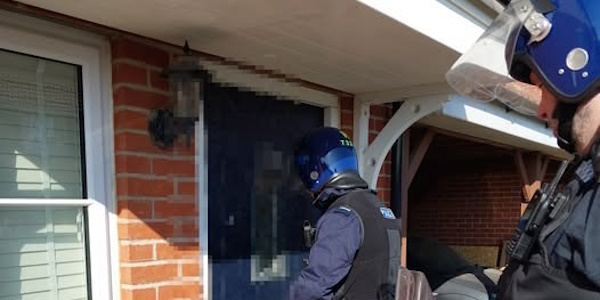 Warrant results in arrest of man and dogs seized
Last week, our officers from Colchester's policing teams executed a warrant in Mile End following reports of dangerous dogs on the loose.
During the operation, two dogs, suspected to be of a banned breed, were safely seized. A 28-year-old man from Colchester was arrested on suspicion of possessing a banned breed, having a dog dangerously out of control in public, and performing a prohibited procedure on an animal.
The individual has been released under investigation as our enquiries continue.
Man admits 34 shop thefts across the city
A Colchester man has pleaded guilty to committing 34 shop thefts in the city.
Ivan Alexander admitted to stealing from stores across Colchester and in West Bergholt between 22 October 2024 and 13 April 2025.
Chelmsford magistrates heard on 15 April that the 37-year-old mainly targeted Co-op stores but he also stole from Hotel Chocolat and HMV in Culver Square.
Senior officer dismissed
A senior officer who abused his position for sexual purposes, has been dismissed this week following a gross misconduct hearing.
An independent hearing chaired by Assistant Chief Constable John Murphy of Bedfordshire Police took place after an investigation led by the Independent Office of Police Conduct.
Essex Police had referred the case to the IOPC to investigate in March 2022 following multiple allegations, at which time the officer was suspended.
The IOPC conducted a full criminal investigation. This resulted in a referral by them to the Crown Prosecution Service in January 2024.
Marine patrols to help keep you safe on the water
Our marine officers have begun their regular spring and summer patrols to tackle and deter anti-social behaviour along the Essex coastline.
Operation Wave-Breaker was launched in 2021 by our Marine Unit in response to anti-social behaviour caused by personal watercraft.
Since the patrols started, reported incidents have dropped by two-thirds, from 99 in 202 to 33 in 2024.
Key locations for our officers, along the shoreline and on the water, include Point Clear on the River Colne, West Mersea and Steeple Bay on the River Blackwater and Southend sea front, where the city council has a public spaces protection order in place.
 Essex millionaire murders
An Essex Police murder investigation is the focus of a prime-time documentary on ITV.
Essex Millionaire Murders tells the tragic story around Carol and Stephen Baxter’s deaths on 9 April 2023, at their home on Mersea Island. The investigation remains one of the most complex ever undertaken by the force.
Watch the team unravel the Baxter murder case in the two part true crime documentary series on ITV1.
Part 1: Monday 28 April at 9pm
Part 2: Tuesday 29 April at 9pm
 Let's talk
Upcoming community police events
Tuesday 22 April 11am to 12pm
Waitrose & Partners, Saint Andrews Gardens
Thursday 24 April 10:30am to 11:30am
Zest cafe, University of Essex
Friday 25 April 5pm to 6pm
Esquires ,Chesterwell Mews, Leda Way
Monday 28 April 10am to 11am
Coffee Hog, 48a William harris way
Wednesday 29 April 10am-12am
St Stephens Church, Canterbury Road
Friday 2 May 10:30am to 11:30am
TOAST, Culver Walk
Thursday 8 May 10:30am to 12pm
Cessac Cafe Fallowfield Road, Colchester
Wednesday 14 May 10am to 11am
Wimpole Road Church
Monday 19 May 12pm to 1pm
St Helena Hospice Cafe, Unit 4 Angora Business Park, Colchester
 Crime prevention advice
Crime prevention doesn't always require high-tech solutions or imposing barriers. Sometimes, nature itself can be your best ally. Defensive gardening is a strategy that uses specific plants to create natural barriers, making it harder for intruders to access your property. This approach not only enhances security but also adds beauty to your garden. Here’s how you can incorporate defensive gardening into your home security plan, along with some great-looking plants that offer crime prevention advantages.
Defensive Gardening Tips
Low Front Boundaries: Keep hedges and walls at the front of your house low (under one meter) so burglars have nowhere to hide.
Secure Side Gates: Always keep side gates locked to prevent easy access.
High Rear Boundaries: Use high hedges, walls, and fences (over 1.8 meters) with trellis and spiky plants to deter climbing.
Gravel Paths: Gravel driveways and paths make it harder for burglars to move undetected.
Security Lighting: Install outdoor security lights to illuminate potential entry points.
Recommended Plants for Crime Prevention
Rose Bushes: Known for their beautiful blooms and thorny stems, rose bushes can deter intruders while adding a touch of elegance to your garden.
Common Holly: These evergreen bushes have dense, prickly leaves that discourage anyone from sneaking through.
Bougainvillea: With vibrant flowers and sharp thorns, bougainvillea is both attractive and effective at deterring trespassers.
Agave: These succulents require little water and have sharp-edged leaves that can serve as a natural barrier.
Barberry Shrubs: Producing bright flowers and berries, barberry shrubs have sharp leaves that make them difficult to navigate through.
Pyracantha (Firethorn): This plant features clusters of bright berries and thorny branches, making it a formidable barrier.
Berberis: Known for its colorful foliage and spiny stems, Berberis is both decorative and defensive.
Mahonia: With its holly-like leaves and yellow flowers, Mahonia provides year-round interest and security.
Conclusion
Defensive gardening is a practical and aesthetically pleasing way to enhance your home security. By choosing the right plants, you can create natural barriers that deter intruders while beautifying your garden. Incorporate these tips and plant recommendations to make your home safer and more attractive.
Be fraud smart
Phishing scams trick individuals into providing sensitive information through deceptive emails, texts, or websites. Recognize phishing by looking for suspicious emails, urgent language, generic greetings, and mismatched URLs.
Protect Yourself:
Verify the Source: Check the sender's email address and contact the organization directly if in doubt.
Avoid Clicking on Links: Visit official websites directly by typing the URL into your browser.
Use Security Software: Install and update antivirus and anti-malware software.
Enable Two-Factor Authentication (2FA): Adds an extra layer of security to your accounts.
Educate Yourself and Others: Stay informed about phishing tactics and share knowledge with others.
If You Suspect Phishing:
Report It: Notify your email provider and organizations like the Anti-Phishing Working Group (APWG).
Do Not Respond: Avoid replying or providing personal information.
Delete the Email: Remove suspicious emails to prevent accidental clicks.
Stay vigilant and follow these tips to protect yourself from phishing scams. When in doubt, err on the side of caution.
Would you like more information on any specific aspect of phishing or other types of fraud?
 Question
Can you tell me about sexting?
Answer
Sexting is the sending of sexually explicit messages and pictures via mobile phones. By way of example, sexting may involve the consensual sharing of an image between two adults or two similar aged children in a relationship, to instances of children being exploited, groomed, and bullied into sharing images, which in turn may be shared with peers or adults without their consent.
The law
It is an offence to possess/send/make/take/distribute/show indecent photos of children (person under the age of 18). That means that the child who takes the photo commits an offence as does any person who it gets sent to. This is the case regardless of whether they forward it on to other people and also applies to anyone who simply shows the image to other people.
However, the position of the National Police Chief's Council (NPCC) and the Child Exploitation Online Protection Centre (CEOP) with regards to the consensual sharing of an image between two children of a similar age in a relationship is that 'prosecution options are avoided, in particular the use of legislation that would attract sex offender registration'.
It is advised that the wider safeguarding issues are looked at rather than the criminal justice element. Placing a child on the sex offenders register could cause serious damage to their future.
The images
Once an image is on the internet, it is potentially there forever. Even if the child sending the image had no intention for it to end up on there in many cases they do and this can be potentially very harmful to a child now and in the future. Many of the images end up in chat rooms used by paedophiles and sexual predators, even those that were not taken as a result of child exploitation or grooming.
Sexual exploitation
Paedophiles may try to frighten their victims into sending further indecent images of themselves by saying that unless the child continues, it will be reported to the police and the child will be arrested and face prosecution. Safeguarding the victim should be at the centre of any police involvement in not only these types of incidents but also non exploitation scenarios.
If you or anyone you know are being sexually exploited then contact your local police by dialling 101 or 999 in an emergency. Police forces have specially trained officers to deal with these types of incidents.
Additionally, the Internet Watch Foundation (IWF) is the UK internet Hotline for anyone to report online child sexual abuse imagery and non-photographic child sexual abuse images anonymously.
IWF works internationally to make the internet safer. They help victims of child sexual abuse worldwide by identifying and removing online images and videos of their abuse.
For further information and for a link to this, along with other websites, please see links in related information.
|