News 13 November to 19 November
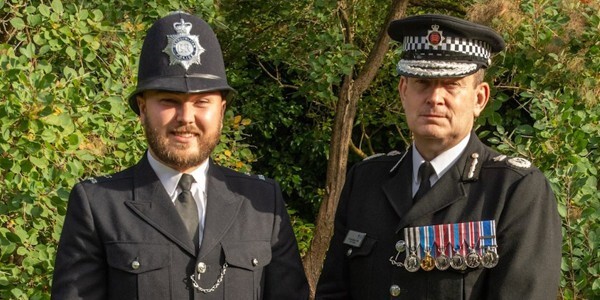 Bravery Commendation for off-duty police officer who arrested man with knife
An off-duty police officer arrested a man wanted for attempted murder while on a day out in Southend with his family.
He pursued the man, who had a knife, and single-handedly arrested and detained him shortly after lunch on 28 June 2024.
And now PC Harry Lavell has been commended by Essex Chief Constable Ben-Julian Harrington for his bravery.
Harry was leaving a cafe with his partner, their young daughter and his father-in-law when he spotted two groups of youths who seemed to be antagonising each other.
A fight quickly broke out and, to diffuse the situation, Harry ran towards it, shouting ‘Police!’ loudly. Some of the youths ran off but one of them ran towards Harry and his family.
Harry, a Metropolitan Police officer, made sure his family were at a safe distance and then tackled the man to the ground.
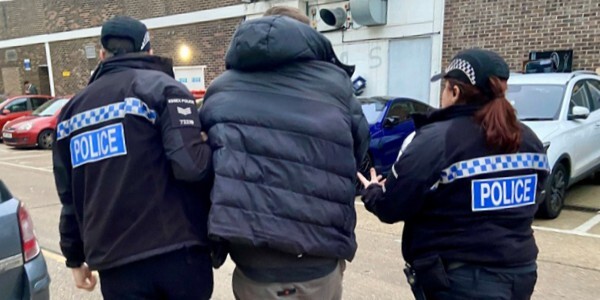 How hotspot patrols are tackling serious violence across the county
Targeted patrols in areas that have a higher probability of a violent incident have led to 66 arrests, 103 stop searches and the seizure of 11 weapons in the past three months.
In the same time period, there has been a 20% reduction in knife-related serious violence and incidents involving knives are down by 10.6% across the county.
There are 15 Operation Grip hotspot areas in Essex: four in Southend, three in Basildon, two in Colchester, and one in each of Chelmsford, Harlow, Clacton, Braintree, Grays and Brentwood.
The patrols see uniformed officers go out on short, sharp foot patrols to prevent violent crime, deter offending and catch people carrying weapons.
The officers also proactively engage with the community and identify areas where improvements could be made with issues like street lighting and CCTV coverage to reduce the possibility of crime and help people feel safer.
Grip is funded by the Home Office and has led to the purchase of a state-of-the-art OpenGate weapons detection system.
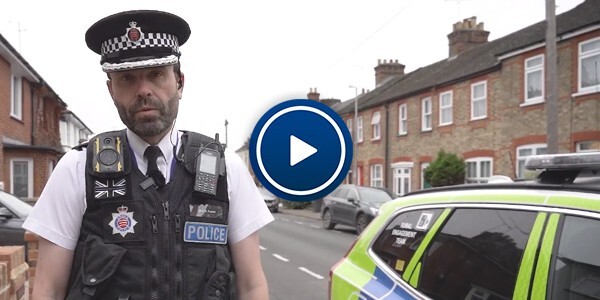
Reported incidents of anti-social behaviour (ASB) in Essex have decreased by 65% in five years but Deputy Chief Constable Andy Prophet said the issue remains an “absolute priority” for the force.
DCC Prophet is the national lead for ASB and despite the positive progress that has been made, he said police and partner organisations would continue to work “tirelessly” to tackle the underlying causes of a problem that “wrecks lives and wrecks communities”.
As part of Anti-Social Behaviour Awareness Week (18-24 November), community policing teams across the county will be holding community engagement events alongside their usual targeted work and high-visibility patrols.
There were more than 42,000 incidents of ASB reported in the year to the end of October 2019. Five years on, this figure has fallen to 14,490.
City shoplifter jailed for 32 shop thefts
A Southend man who targeted a city garage, stealing more than £4,000 of food and other groceries, has been jailed.
David Hill, 36, of no fixed address, was spotted and arrested on suspicion of shop theft by a keen-eyed officer from Southend Local Policing Team on 4 November 2024. He was also wanted on recall to prison.
The following day, at the city’s magistrates’ court, he admitted 32 counts of shop theft.
Magistrates were told Hill had targeted the BP garage in West Road between between 15 July and 28 October 2024, often twice a day.
 Let's talk
Upcoming community police events
Friday 22 November 11am to 12pm
Havens, Hamlet Court Road, Westcliff
Friday 22 November 5pm to 6pm
Friars Park, Shoebury
Sunday 24 November 5pm to 6pm
Sainsburys Local, New Garrison Road, Shoeburyness
Sunday 24 November 5pm to 6pm
Tesco Express, The Broadway, Leigh on sea
Tuesday 26 November 3pm to 4pm
Havens, Hamlet Court Road, Westcliff
 Don’t let thieves get an easy ride
Keep your motorcycle safe by using a chain lock through the back wheel and securing it to something immovable like a ground anchor.
This makes it much harder for thieves to wheel your bike away and less attractive for opportunists.
Be fraud smart
We are aware fraudsters are adding fake QR codes to car parking signs in Essex, offering it as a method of payment.
Fraudsters use QR codes that direct people to duplicate fake website to gain your details and take your money.
If you see a QR code on a sign, always check before scanning it. There should be a list of recommended payment methods so you can check that it is authentic.
Please share this message and help make others aware.
If you think you may have added your card details on a scam website, contact your bank immediately, block further payments and report it to Action Fraud.
 What is a postal scam?
A postal scam is a letter sent with the sole intention of gaining money through deception. Scam mail is mass produced and made to look like a personal letter or important document, to trick the recipient into sending cash, making money transfers or disclosing personal information.
Here are common types of postal scams to be aware of:
Lotteries and prize draws
These are two of the most common scams. Victims are told they have won a fantastic prize or large amount of cash but are asked to send some sort of fee to release it. A genuine lottery won't ever ask you to pay a fee to collect your winnings.
Psychics and clairvoyants
Scammers claiming to be able to see into the future, say they have information about your impending fate and you must pay them to find out what it is.
Parcel delivery scam
A card is posted through the victim's door stating that a delivery service was unable to deliver a parcel and that they need to contact the service by phone on the number provided on the card. This is usually a premium rate number with a long recorded message, causing the victim to receive an expensive phone bill.
Pyramid schemes
A scammer advertises an investment scheme and claims it offers extraordinary profits for little or no risk. You are required to pay a fee to enter the scheme and get financial rewards for recruiting friends or family to also enter the scheme. In reality the product you are investing in is usually worthless or non-existent and your money is not invested but simply passed on to the scammers.
Here are some steps to prevent you from falling victim to postal scams:
- Never respond to scam letters, as you are likely to get more if you do.
- Be wary of anyone who writes to you out of the blue, claiming that you have won something or can earn high rewards for a low investment.
- Does the letter contain bad spelling or grammar? If so, it's likely to be a scam.
- If a letter claims to be from a genuine source, contact the relevant organisation using details from their website and not those provided in the correspondence.
- Are they asking you for money? Always start from the position that any request for money is suspicious unless proven otherwise. Don't send any money.
- If you have received scam post and you are worried, talk to someone you trust, such as a friend or family member.
Although many people feel embarrassed about falling for a scam, it is nothing to be ashamed of, and you should not be worried about reporting it. Many people fall victim to scams, and fraudsters have a range of techniques to trick people and are trying new scams all the time.
If you believe you have fallen victim to a postal scam you can report the incident to Action Fraud, please see the link in related information.
Postal scams can also be reported to Royal Mail, who run a joint initiative with Trading Standards to investigate reports of scam mail.
|