News 25 September to 1 October
 Chief Inspector Dave Browning
Southend’s new District Commander, Chief Inspector Dave Browning, has revealed his four top priorities as he begins his new role.
Ch Insp Browning, who took on the position following the retirement of Ch Insp Jo Collins, said he was committed to increasing police visibility, continuing to reduce violence, improving the solved rate for crimes, and doing more to let the public know what officers are working on.
Crime in the district is down by 6.3% in the last 12 months with 1,215 fewer offences reported. Anti-social behaviour has reduced by 13.9% in the same period.
Ch Insp Browning has been with Essex Police for 27 years, almost all of which has been spent in the south of the county. For the past 14 years, he’s worked as a detective, mainly in public protection in Southend and Basildon with a proven record in bringing offenders to justice.
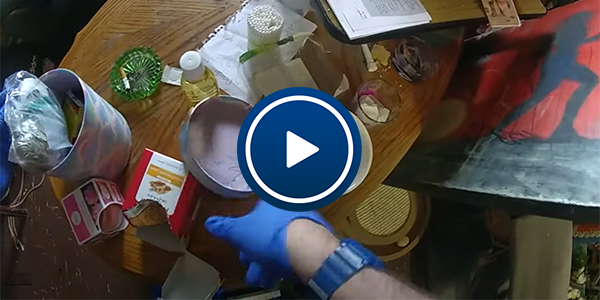
A drug dealer who supplied cocaine from his flat in Southend has been jailed after officers responded to concerns raised by the community.
Officers with Southend’s Community Policing Team had been working with partners to crack down on drug dealing and associated anti-social behaviour at a block of flats in Sutton Road.

Officers from Essex Police took part in a targeted week of action as part of a crackdown on spiking across the county.
From licensee checks and night-time patrols to education events and engagement opportunities, we were out and about across our towns and cities to raise awareness of the issue and offer support and advice.
The second National Spiking Intensification Week ran from September 16-22, with a focus on Freshers’ Week and equipping students with information to keep them safe on a night out.
Alongside our crime prevention work, we’re also reminding those committing such offences that we will take action against them and, together with businesses, we’ll continue to target predatory behaviour and safeguard victims.
Chief Inspector Paul Hogben, our tactical lead on Spiking, said:
“Spiking is a terrifying crime that can often have a significant and traumatic impact on victims.
"Our officers continue to work closely with pubs and clubs to tackle the issue by raising awareness and ensure people enjoy nights out in Essex.
"The vast majority of people do, but if you have been a victim of spiking, or think you might have been, we're here to help you.
Every single incident which is reported to us is fully investigated so please contact us if something has happened.”
 Jailed: (Left) Deviston Francis and (Right) Justice Oyedokun
Drug runners who used a Southend guest house as a base for selling heroin and crack cocaine have been jailed.
Officers with our Operation Raptor unit, which is dedicated to tackling county lines drug dealing, secured the sentences against 22-year-old Justice Oyedokun and 21-year-old Deviston Francis.
The pair were runners for the ‘Shadow’ drug line, which brought Class A drugs from London to Southend.
Dozens of suspected zombie-style knives or machetes were handed in at police station front counters across Essex as part of a national surrender scheme.
Police forces across England and Wales, including Essex Police, participated in the Home Office-led amnesty, which ran from 26 August until 23 September.
Zombie-style knives and machetes are now outlawed by new legislation as of 24 September.
The law covers the manufacture, supply, sale, possession and importation of these weapons.
Ahead of the new law, previous owners of specified zombie knives and machetes were able to submit a claim for compensation while surrendering the weapons at police station front counters.
Throughout the scheme, we saw more than 200 knives of many varieties presented at our front counters for surrender.
 Former PC Eric Birkin and his wife Jo with Chief Superintendent Claire Talbot and Detective Chief Inspector Rob Huddleston
A former Essex Police officer has spent his 100th birthday surrounded by family and friends in Frinton.
Retired PC Eric Birkin turned 100 on 19 September and celebrated last weekend.
Chief Superintendent Claire Talbot and Detective Chief Inspector Rob Huddleston, from his Essex Police family, also attended to present Eric with a special award from the force to mark his centenary.
Eric joined the then Essex County Constabulary 70 years ago on 23 September 1954, four days after his 30th birthday. This followed a seven-year spell in the Army – serving in the Essex and Suffolk Regiments – and five years as a storeman.
Eric was transferred to the Essex and Southend-on-Sea Joint Constabulary on 1 April 1969, which became Essex Police five years later. He retired in September 1983, aged 59.
 Let's talk
Upcoming community police events
Saturday 5 October between 11am-11:30am
Outside Co Op, Rochford Road, Southend
Monday 7 October between 12pm-1pm
Waitrose, Fossetts Way, Southend
Saturday 12 October between 2pm-3pm
The Range, Short Street, Southend
Saturday 12 October between 3pm - 4pm
Tesco, Southchurch Avenue, Southend
 Crime prevention advice
Checklist for securing your home when you leave it
It’s vital to leave your home secure whenever you leave it. Getting into an ‘exit routine’ can help ensure that you don’t forget obvious, important things, like not leaving your valuables near windows, or no lights on if it will be dark before you get home. Here’s what you should do just before you go out.
Become a creature of habit
Try to get into the habit of following your own course of action when you lock up your home. This will ensure that you don’t forget anything.
Here’s what we recommend you do before you go out:
- close and lock all your doors and windows, even if you’re only going out for a few minutes
- double-lock any door
- make sure that any valuables are out of sight
- keep handbags away from the letterbox or cat flap and hide all keys including car keys, as a thief could hook keys or valuables through even a small opening
- never leave car documents or ID in obvious places such as kitchens or hallways
- in the evening, shut the curtains and leave lights on
- if you’re out all day, then it’s advisable to use a timer device to automatically turn lights and a radio on at night
- set your burglar alarm
- make sure the side gate is locked
- lock your shed or garage
- lock your bike inside a secure shed or garage, to a robust fitting bolted to the ground or wall, like a ground anchor
Going away?
Here are five tips to help you keep your home and belongings stay safe while you’re away:
- if you’re off on holiday and wish to post anything on social media, make sure your posts aren’t public and that they’re only seen by your friends
- leave lights and a radio on a timer to make the property appear occupied
- get a trusted neighbour to keep an eye on your property or join a Neighbourhood or resident Watch Scheme
- consider asking your neighbours to close curtains after dark and to park on your drive
- remember to cancel newspaper and milk deliveries
Be fraud smart
Buying online
Shopping online can save time and effort and gives you a wide choice of goods from around the world. Unfortunately, while most buyers and sellers are genuine, fraudsters use online shopping scams because they can hide their identity and target many victims at the same time.
What you can do to protect yourself
Do some research to find out what a fair or competitive price is for similar goods in the same condition; if the offer sounds too good to miss out on, it might not really exist, be fake or of inferior quality.
Fraudsters often use stock images or other people’s images, or use the same image on multiple websites/adverts. You can check if images appear elsewhere on the internet through websites like TinEye or reverse.photos.
Check the seller or buyer’s review history and feedback from other reviewers. Beware of accounts that may have been set up very recently with lots of favourable feedback that sounds similar, this could be an indication of fake reviews.
Always use the site’s recommended payment site, if they have one, and read the terms and conditions to understand what you are protected for. If you pay any other way than via a recommended payment site, you may not be able to recover your money.
Where there’s no recommended payment site, paying via credit card or known third party payment providers is preferable to direct bank transfers. Check your bank statements or online account regularly.
Make sure that the website you’re buying from is genuine – and not a fake or copycat site – by typing in the address yourself and checking the spelling. Fake addresses usually vary from authentic ones with just one or two incorrect letters.
Research sellers’ and other bidders’ selling history. And bear in mind that a website ending ‘.co.uk’ doesn’t necessarily mean it’s based in the UK. Check the address of the company and the phone number.
Don’t make payment over insecure WiFi (a public WiFi or one with no password to access).
Make sure you’re making payments on a secure site. You can check the link is secure in two ways:
- there should be a padlock symbol in the browser window where you can see the site address / URL when you log in or register (beware on unfamiliar sites as this can be faked); if you’re not sure the webpage is genuine, don't use it.; be sure that the padlock is within the address bar at the top of the screen, not on the page itself
- the web address should begin with ‘https://’; the ‘s’ stands for ‘secure’
 I am getting anonymous calls / text messages and I want the police to trace the offender
If a person sends threatening or abusive messages/phone calls, they could be committing an offence. The most relevant offences are 'harassment' and 'malicious communications'
The first thing to do is report the matter to your telephone company, regardless of whether it is a landline or mobile network. If necessary, they will put a trace on your line and instruct you to keep a diary of the calls, the time of the calls and also the type, for example, silent or heavy breathing etc. This will enable the telephone company to gather information and contact you again when they feel they have sufficient evidence.
The police need details of the offending number and evidence of calls made to pursue a prosecution. Once this is obtained, you may be required to attend your local police station to complete a form that will enable the police to have access to your telephone records.
This process can take some time and it is not unusual for weeks to pass before the police re-contact you about the complaint. In this time they will be aiming to identify the offender and where possible to make a prosecution. The process is the same if you think you know who the offender is; the police still require the evidence to prosecute.
If the calls/text messages are of a threatening nature and there is a serious threat to your safety, you should report this to your local policing team who will treat the matter as a higher priority.
|