News 11 September to 17 September
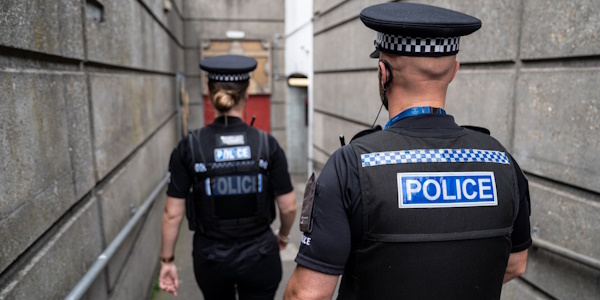
Colchester’s Community Policing Team are again inviting local residents to join them on foot patrols this year.
Following the success of previous years , the people of Colchester will get the opportunity to Stroll with a Patrol in every ward in the district.
The one-hour walks will be a chance for members of the public to get to know their local officers, point out any places they feel unsafe or highlight problems they feel need bringing to police attention.
This year, they are running every Sunday mornings for the foreseeable future.
There will be an officer at every event and once again they will be joined by partners from the local council, housing associations, the NHS and neighbourhood wardens.
Even if the problems raised aren’t the direct responsibility of the police - such as overgrown trees or lack of street lighting - the team will help by using their links within the Community Safety Partnership.
The events start this Sunday 22nd September at 11am outside Prettygate Library and future events will be advertised here on Dispatch and also on our Social Media Platforms.
We have arrested a man on suspicion of common assault after we received reports of girls being approached and followed by a man in Colchester.
Two incidents of a man trying to speak to the victims – one at about 10pm on Friday 6 September, another at 10pm on Saturday 7 September – were reported to police.
The suspect was seen in Monkwick Avenue, Queen Elizabeth Way and Prince Phillip Road during these incidents. In one of these incidents, the victim reported being pinched on the arm by the suspect.
Working with our partner agencies and through proactive patrolling in the area, we have identified a suspect and arrested a 27-year-old man on suspicion of common assault. He remains in custody while our enquiries continue.
District Commander Colin Cox said:
“We fully understand how intimidating these experiences were for the victims, and our officers have been working hard to identify and locate whoever may be responsible.
“This has been possible thanks to the members of the public who have come forward to help us, our partners in Colchester City Council, and the diligence and response of my officers.
“Our investigation is ongoing. Please get in touch of you have any information that may help us.”
If you have any information regarding these incidents, or similar incidents in the Monkwick area of Colchester, please contact us quoting incident 1430 of Friday 6 September.
Officers will be proactively engaging with residents in high harm hotspots across the county in the next 12 days to encourage them to surrender any potentially illegal knives.
On the first morning of deployments in Southend, more than 20 knives were voluntarily handed over to officers from our Op Grip team and Operational Support Group (OSG).
Op Grip hotspot patrolling zones are areas data analysis shows have a higher probability of a serious violent incident. Knife crime in Essex has fallen by 7% since the pandemic.
There are 15 Grip zone in Essex and officers will be out encouraging people to surrender knives on the following days in September:
- Southend – 12th and 13th
- Chelmsford – 17th
- Harlow – 18th
- Braintree – 18th
- Basildon – 19th
- Colchester – 23rd
- Clacton – 23rd
- Grays – 24th
- Brentwood – 24th
From 24 September this year, zombie-style knives and machetes will be outlawed by new legislation. The law will cover the manufacture, supply, sale, possession and importation of these weapons.
A national surrender and compensation scheme was launched by the Home Office in August. It runs until 23 September, and we are urging the owners of specific varieties of knives and machetes to hand them in to us in exchange for compensation ahead of the legislation change.
Further details of the surrender scheme, a list of items covered, their definition and guidance on how to transport them safely can be found on our website or by visiting the Home Office's dedicated web page.
Other varieties of knives not specified under the new legislation can still be deposited in designated amnesty bins across Essex, however these will not be covered by the government’s compensation scheme.
Detective Inspector Karen Miller of Operation Grip said:
“We’re raising awareness of the legislation change and engaging with members of the public. So far, the reaction has been really positive.
“If people have knives they want to get rid of, we can take them away and destroy them, or they can safely take them to their nearest amnesty bin. This prevents them from potentially ending up in the wrong hands.
“Weapons like machetes and zombie-type knives have always been illegal to possess in public, but this change in the law will give us more powers to stop them being sold, kept or used.
“People may not be aware of the law change, but ignorance is not an excuse. Just because you can order something online does not mean it is legal for you to possess.”
 Let's talk
Upcoming community police events
Lets Talk Friday 20 September 8am-8:30am
Kingsland Church 86 London Road CO3 9DW
Stroll with a patrol Sunday 22 September 11am-12pm
0/S Prettygate Library
Stroll with a patrol Sunday 29 September 11am-12pm
0/S West Mersea Library
Lets Talk Thursday 3 September 10:30am- 11:30am
Community 360 Hub, Long Wyre stree
 Crime prevention advice
With online shopping on the rise, there are more delivery vehicles on our roads. Here are some tips for courier drivers and courier companies on how to prevent thefts from or of a delivery vehicle.
Courier drivers
- Make sure your vehicle’s windows are closed and doors are locked when you leave your vehicle.
- Some criminals can use devices to block the signal from a key fob, so always double check your doors. If you have a keyless van, consider investing in a signal blocker.
- Park under a streetlight if possible and avoid areas that are not well lit. Consider using a torch to light up dark areas like alleyways or dark paths.
- Make sure that no valuables are left on display when you get out of your van, no matter how long you’re out the vehicle.
- Ensure that your mobile phone (work or personal) is fully charged should you need to call someone.
If you see something suspicious such as another vehicle following you, do not get out of your van. Continue driving until it is safe to stop and call your employer or the police on 101.
Courier companies
- Consider installing a security alarm or camera to the van if it doesn’t already have one. These can act as a deterrent but also help identify if your vehicle is being targeted.
- Consider installing a tracker on the vehicle so should the worst happen, you’ll be able to see where it’s gone.
- If your vehicles have rear-view or back windows, consider darkening them to obstruct the view through them and stop people from seeing inside.
Be fraud smart
Action Fraud
If you’ve been the victim of a scam, fraud or online crime (cybercrime) you can report it to Action Fraud:
Action Fraud is the national reporting centre for fraud and cybercrime. It collects reports about fraud on behalf of the police in England, Wales and Northern Ireland. For fraud in Scotland please report it directly to Police Scotland.
Registering with Action Fraud
You can make a report as a guest, without registering and creating an account.
But we recommend you create an account first, because then you’ll be able to:
- save and come back to a report you haven’t finished
- see updates on what’s happened to your report
- add information to your report
- phone Action Fraud to discuss your report
- get updates by email
What you can report to Action Fraud
You can report scams, fraud and online crime (cybercrime) to Action Fraud, except you should report:
To report one of these please follow the links above.
What happens after you report something to Action Fraud
After you’ve reported something to Action Fraud, your report will be sent to the National Fraud Intelligence Bureau (NFIB), which is part of the City of London police. They’ll decide what to do next.
If the NFIB decide there might be enough information in your report for the police to investigate, they'll send it to the local police force for the place the crime happened. That police force will look at the information and decide whether to investigate the case. They should tell you what they’re going to do.
Whether or not the NFIB decide to send your report on to local police to investigate, you’ll be told what the NFIB have done within 28 days of when you made your report (or whenever you last sent an update).
The NFIB might also take other action, for example to take down websites or phone numbers that are used to commit fraud.
Getting an update on your report
To be able to get an update on your report, you need to register with Action Fraud before you make your report. Then you can track the progress of your report by logging into your account.
After logging in, to check your report’s status click ‘My account’ in the top-right hand corner then click ‘My reports’.
Once a case has been passed to a local police force, they’re responsible for keeping you updated.
Other options if you’ve been scammed or defrauded (civil redress)
If the police decide not to investigate your case as a crime, you might still be able to get compensation or money back by bringing a civil case yourself.
Talk to a solicitor or asset recovery agent to find out more.
 There is some graffiti/Fly posters all over a wall on my street. Who should I contact to get it removed?
You should contact the local council for the area where the graffiti or fly posting has taken place.
If the person/organisation is known, then it may be possible for the council to issue penalty notices and a 'defacement removal notice' (in Wales this is a 'graffiti removal notice' and applies only to graffiti).
If it is on council-owned property, or if it is offensive/racially abusive, the council may be responsible for removing it. If not, then the council may be able to advise you who to contact or remove the graffiti at a charge
|