News 20 March to 26 March

A “cold and calculated” murderer who poisoned a couple with fentanyl after posing as a doctor and creating a fake Will to ensure he benefitted financially from their deaths has been convicted after his web of lies were uncovered by our specialist teams.
Luke D’Wit has been convicted of the murders of Carol and Stephen Baxter, on Mersea Island, in Essex.
The investigation is among the most complex ever undertaken by our serious crime directorate.
 Highwoods: three bikes taken in burglary
Officers investigating a burglary in Colchester are asking the public to review the picture to see if they can help us find this bike after it was stolen during a burglary reported to have taken place at a property in Hillridge, Highwoods, Colchester, shortly before 4am on Thursday 7 March.
During the burglary three bikes, valued at £5,000 in total, and accessories were taken as follows:
- Giant LIV NV women’s road bike, size small with fitted Garmin power pedals, two pink water bottle holders, a water bottle holder between the handlebars and an iron man sticker located below the seat.
- Silver-coloured Trek FX2 Hybrid ladies mountain bike which had a Lemego mobile phone holder on the handlebars, MUD OFF mud guards and Niterider front and rear lights fitted.
In addition, a black Specialized Sirrus2.0 hybrid bike was also taken.
Please quote crime reference 42/36653/24 when providing any information to make sure it gets to the right person as quickly as possible.
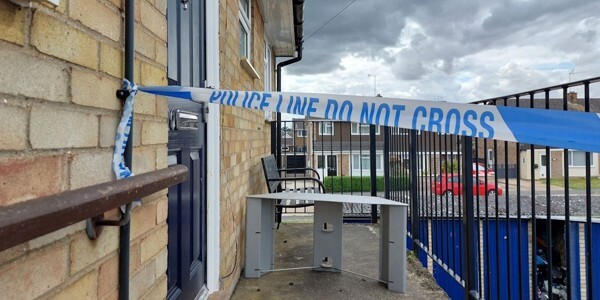 Man pleads guilty to GBH and robbery after daylight attack
A violent offender has pleaded guilty to causing grievous bodily harm and robbery after stabbing a man in the neck in broad daylight.
At around 3.15pm on Tuesday 11 July 2023, John Garrett entered the Shell garage in Tiptree’s Maypole Road.
He took two bottles of alcohol from the shelf of the shop and threatened the staff before leaving and heading towards a bus stop in the village, next to Windmill Green.
There, 54-year-old Garrett approached two men and a woman at the bus stop.
He was seen arguing with one of the men in the group, before he stabbed them in the neck three times and left him in a life-threatening condition as paramedics rushed to the scene.
 Let's talk
Upcoming community police events
Thursday 28 March 10:30am to 11:30am
Zest Cafe, University of Essex
Thursday 28 March 4pm to 6:30pm
Bike marking at Lakelands Community Centre, Stanway
Saturday 30 March 3om to 4pm
21 Trinity Square, Colchester, CO1 1JB
Sunday 31 March 4pm to 7pm
Bike marking at Leisure World Colchester, Cowdray Avenue, Colchester, CO1 1YH
Thursday 4 April 10:30am to 11:30am
Community 360, Long Wyre Street
Saturday 6 April 10am to 12pm
Marks Tey Community Centre
Saturday 6 April 3pm to 4pm
Colchester Library, 21 Trinity Square, Colchester, CO1 1JB
Monday 8 April 9am to 4.30pm
Premier league Kicks Football tournament, Shrub end community Centre
Monday 8 April 10am to 11am
St Cedd’s Coffee morning, Church Hall, Iceni Way, Colchester, CO2 9EH
Saturday 13 April 11am to 12pm
Tesco’s, Highwoods
 Door Security
Your home is only as secure as its weakest point of entry. That’s why it’s so important to have doors and windows that are as secure as possible. Follow our advice and help keep potential burglars out.
Whether you live in a flat or a house, your front door will always tell a thief the levels of security surrounding your home. If it looks really secure and burglar-resistant, then they’ll think twice about trying to gain entry.
A locksmith belonging to the Master Locksmiths Association will check to see if your door is secure and made of solid timber or a robust composite. The locksmith can also reinforce the frame and check if the locks and hinges are British Standard approved.
Sliding patio doors are vulnerable to forced entry, so do check that yours have an anti-lift device fitted so they can’t be lifted out of the frame.
Some uPVC doors are fitted with locks that protrude from the frame on the outside (euro profile locks for those in the know). If yours do, then consider getting a locksmith to change the lock to a shorter one that can't be snapped off.
- If your door has a letterbox, a guard fitted to the rear of the door will prevent someone reaching in with a stick and a hook to fish for any nearby items such as a handbag or keys – which should never be kept near exterior doors. Consider cat flaps and dog flaps too.
- Windows can be reinforced by using special film or by installing laminated panels.
- Spy holes and security chains are recommended so that anyone visiting can be identified before you open the door.
- Always remember to use both locks and check to make sure that the mortice lock is double-locked every time you leave your home.
- A simple turn of a double-locking nightlatch gives you added security and peace of mind.
- Door bars, such as a London Bar or Birmingham Bar greatly reinforce the doorframe and provide excellent protection against anyone trying to force a door open or kicking it down.
- A lockguard does exactly that; it protects the keyhole and lock from being tampered with and is a great deterrent.
Be fraud smart
Internet scams
Many internet scams take place without the victim even noticing. Scammers put programs on your computer that can steal, wipe or lock your data. To prevent this, have antivirus software and a firewall installed on your computer, and keep it up to date.
Take the precautions below and use common sense to avoid becoming a victim.
What you should know
Scammers defraud people using spam emails. Simply delete the email without opening or replying to it, otherwise the scammer will send you more and more emails from lots of different addresses.
Any email you get from someone you don’t know is likely to be spam, especially if it’s not addressed to you personally and promises you some kind of gain.
If you get an email with an attachment, apparently from someone you know, but it’s not the usual sort of message you get from them, don’t open the attachment. Contact the person who’s supposed to have sent it and confirm it’s genuine. The email may have been infected with a virus and forwarded through their address book.
Online marketplaces can be a lot of fun and can save you money but they’re also used by scammers. Scammers will try to steer you away from online sites and get you to use unusual payment methods, such as money transfer agents or e-money, a digital equivalent of cash.
The most common scams at the moment are for:
- concert and event tickets
- apartments, residential and holiday lettings
- dating and romance
- vehicles for sale or hire (especially if they deliver the hire vehicles to you)
Adverts and websites can be very sophisticated so do some research to make sure everything makes sense. Always think about your personal safety when meeting anyone you’ve only talked to on the internet.
Be careful of official-looking but bogus websites that claim to help you apply for passports, visas and driving licences.
There are lots of ways scammers gain personal or financial information from their victims, such as:
- phishing, where an email that seems to be from a legitimate company asks you to give your personal details
- vishing, where either an automated phone message or a cold-caller who seems to be from a legitimate company asks you for personal details
- spear phishing, which focuses on an individual or department in an organisation; the email appears to come from a legitimate organisation
Using these methods, scammers ask for information such as login details and passwords, or install malware on your computer.
As a general rule, never give your personal or financial details to anyone unless you know and trust them.
 What is cyberbullying?
Cyberbullying is any form of bullying that takes place online. This could be blackmail/threats, abusive comments, spreading rumours, sharing embarrassing pictures or creating fake profiles on social networking sites.
Though there is no specific offence of cyberbullying, you could be found guilty under an existing offence. For example, sending someone threatening, abusive messages can lead to an offence of harassment and posting sexual photographs of someone without their consent could be a criminal offence under the revenge porn law.
Victims of Cyberbullying may be unaware as to what help is available to them. If the bullying is taking place on a social networking site (Facebook, Twitter etc.) you should contact them directly as they have policies in place to remove inappropriate material and if necessary, the bully's account, see link in related information.
If you are a child/young person then contact Childline for more help and guidance, see link in related information.
The behaviour could potentially amount to a criminal offence, we would suggest that you contact your local policing team via the non-emergency 101 number and report the matter.
|