News 31 January to 6 February
 Community Policing Team Blog
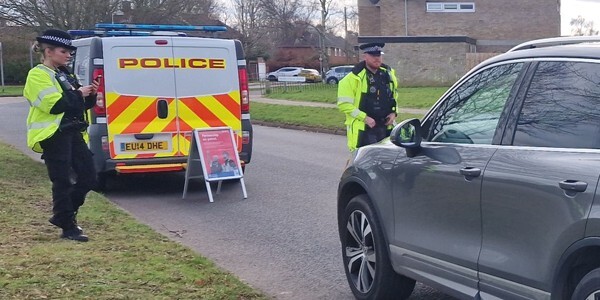
Another busy couple of weeks for the local community policing team and a plethora of activity across the city. Crime continues to fall across the district with a 8% decline year to date, however I know there is still work to be done to reduce this further and ensure we are focussing in the right areas. We have seen an increase in bike thefts across the district and we continue to work with the Colchester safety partnership on the Bikewise campaign to prevent this crime type as well as pro-actively targeting the intelligence and those we suspect are involved. The team arrested one male this week whilst out on patrol for theft of bicycle and we also seized an electric bike suspected of being stolen.
Shoplifting continues to increase, but at a much lower rate than the other cities of Essex and the officers in Colchester have the highest percentage of shopliftings solved in Essex with 32.4% of shopliftings solved. It continues to be a focus for the community policing team and the hi-visibility patrols and crime prevention work across the city centre and other retail parks has continued. In the last 24 hours 4 persons were arrested for thefts from Stanes Retail Park and a further two arrested for a business robbery.
Robbery offences have increased slightly, including business robbery offences. A robbery occurs when a theft has taken place and immediately before or at the time of the theft and in order to complete the theft, force is used or any person is put in fear of force being used against them. This means that a person who shoplifts and then verbally threatens to harm a staff member or does harm them, in order to execute the theft, would be committing a business robbery. We work very closely with our criminal investigation department (CID) on investigating and catching those responsible for these type of offences. Being a victim of a robbery can be very impactive on a person and especially when it is in their workplace, where they have to return daily and continue working. The Essex Police business crime team and Colchester BID support businesses locally and offer training and support for local businesses. All victims of crimes can be support by the victim support service who assist victims to get the right support for their own needs.
The team have been out this week giving out crime prevention advice around moped thefts. During the teams patrols they arrested two males, one for theft and another for drug related offences. They also conducted a number of stop and search under section 1 of PACE for going equipped to steal, which is one of the offences for which we can utilise our stop and search powers.
We work closely with neighbourhood watch and the Colchester district co-ordinator is looking for new members.
He has described what NHW is all about “Neighbourhood Watch in Colchester is focussed on preventing Opportunity Crime. Crime that would not happen if the victims had been street wise and behaved differently. Help us to help you by joining NhW. You will be advised by email of the crime happening in Colchester and how you can prevent yourself from being another victim. Do not assume that living in a safe area means you are safe. That is only true if you never leave your home.
You can join Colchester NHW here by following this link – https://colchesternhw.org.uk/contact-or-join-nhw/.”
Inspector Jenna Mirrington-French
 Arson incident in Tiptree
Officers are appealing for witnesses following an arson incident in Tiptree on Saturday 3 February.
We were called around 9pm with reports that a vehicle had been dumped in Tiptree Heath Car Park and it was later set on fire. Officers are appealing for any information regarding a white low loader vehicle in the area at the time.
If you have any information, CCTV or dashcam footage, please use the Read more button below and select the 'Live Chat' button at the bottom right of the page.
Alternatively, you can submit an online report or call 101.Information can also be given to independent charity Crimestoppers completely anonymously.
Please reference incident 42/18538/24 when providing any information to ensure it gets to the correct person
Arrests for Shoplifting
Thirty-nine people have been arrested on suspicion of shoplifting in the past seven days across Essex as we continue to tackle retail theft.
Nine people were arrested in Southend and Basildon, with six detained in Colchester, five in Thurrock and three in each of Chelmsford, Tendring and Harlow.
So far, 19 of those arrested have been charged with a total of 30 offences. Eight tested positive for class A drugs.
Under our drug test on arrest scheme, adults accused of acquisitive crimes such as shoplifting are required to take a saliva test that will reveal whether they’ve taken cocaine, heroin or crack.
A positive test leads to an automatic referral to a specialist drug treatment programme with one of the three charities we work with.
Our Business Crime Team review every shoplifting arrest and encourage retailers to report all thefts and assaults of shop staff.
The team then work with local officers to apply to court for Criminal Behaviour Orders (CBO) to tackle persistent offenders.
CBOs also tackle the underlying causes of offending and may require offenders to engage in treatment services, such as drug and alcohol addiction support.
It is an offence to breach the terms of a CBO and courts can impose a maximum sentence of up to five years’ imprisonment or a fine, or both, for an adult convicted of a breach.
Sergeant Christian Denning of the Business Crime Team said:
“The proceeds of shoplifting can fund other forms of criminality. It is not a low-level crime.
“We want our retail areas to be safe for visitors and shop workers, which is why we’re encouraging staff to report thefts, anti-social behaviour and assaults.
“We are targeting the individuals who are repeatedly committing theft, and by collating evidence of patterns of offending, we can apply for criminal behaviour orders that will limit their ability to reoffend.
“Alongside this, we are helping those who have issues with drugs to combat their addictions by entering treatment programmes as this can be the root of their offending.
“Our officers are also working with businesses by providing specialist crime prevention advice and information about staff security.”
 Keep your vehicle safe
When you park your vehicle, just follow these simple tips:
- close your sunroof
- check you haven’t left your keys in the ignition
- don’t keep your log book in the car
- double-check your central locking has actually locked – listen for the clunk/click noise (if you’ve got keyless then look through the window to check)
- don't leave your car with the engine running
- don't leave anything of value in the car
Be fraud smart
Ten golden rules to prevent fraud
Remember these ten golden rules to help you prevent fraud and beat the scammers.
- Be suspicious of all ‘too good to be true’ offers and deals. There are no guaranteed get-rich-quick schemes.
- Don’t agree to offers or deals immediately. Insist on time to get independent or legal advice before making a decision.
- Don’t hand over money or sign anything until you’ve checked someone’s credentials and their company’s.
- Never send money to anyone you don’t know or trust, whether in the UK or abroad, or use methods of payment you’re not comfortable with.
- Never give banking or personal details to anyone you don’t know or trust. This information is valuable so make sure you protect it.
- Always log on to a website directly rather than clicking on links in an email.
- Don’t just rely on glowing testimonials. Find solid, independent evidence of a company’s success.
- Always get independent or legal advice if an offer involves money, time or commitment.
- If you spot a scam or have been scammed, report it and get help.
- Don’t be embarrassed about reporting a scam. Because the scammers are cunning and clever there’s no shame in being deceived. By reporting it, you'll make it more difficult for them to deceive others.
.
 My neighbour is harassing me , what can i do?
For harassment to have been committed there must be a 'course of conduct' (i.e. two or more related occurrences). The behaviour does not necessarily have to be violent in nature, but would need to have caused some alarm or distress with an element of oppression required. The further apart the incidents are, the less likely that an offence of harassment has occurred. However, all the circumstances of the incident(s) will be taken into account when determining whether or not an offence has been committed.
The law takes into account the "reasonable person" test. Basically, this means that if it was felt that a typical person (i.e. the average person on the street) would have acted in the same scenario under the same circumstances. , and would have been alarmed or distressed by the behaviour, then it may be considered that an offence has been committed. The offender knows or ought to know that their behaviour would cause the victim to be alarmed or distressed.
- Example : A lives at number 2 and B lives at number 4, there is a dispute over a fence. A keeps going round to B's house to complain, enters into a verbal argument and refuses to leave until B agrees to consider his request. This happens every night for a fortnight. B is fed up and has told A not to visit any more, B is feeling distressed about A's constant visits. A is aware that his behaviour will cause distress to B as he is hoping to wear him down into removing the fence.
The above is an example of the type of behaviour that could be considered harassment without fear of violence. Harassment with fear of violence is when a person whose course of conduct causes another to fear on at least two occasions, that violence will be used against him/her, and who knows or ought to know that his/her behaviour will cause fear of violence on each of the occasions is guilty of an offence.
The law still takes into account the "reasonable person" test when making a decision as to whether harassment with fear of violence has occurred. If your average person would not have feared violence, it may not be considered an offence.
- Example : A and B are neighbours and A is upset over a fence. A goes round to B's house every night for a week threatening violence to B and damage to the fence if B does not take the fence down. B fears violence, as A is very aggressive in manner. A is aware that his behaviour is aggressive and is hoping to intimidate B into taking the fence down.
There are two ways you can deal with this situation; through the police or the civil courts. If you decide to start civil proceedings, you can contact the Citizens Advice (please see the link in Related Information to find your nearest one), or alternatively, inform your local policing team via their non-emergency 101 number. Where there are threats of violence you should always inform the police and they will treat the matter as a high priority.
|