|
GSS international newsletter |
|
A monthly look at statistics for the global good
Celebrating 10 years of international development
September 2026
|
|
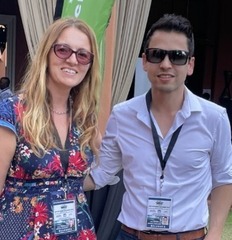
Foreword from Emily Poskett and Adil Deedat,
co-leads of ONS’ International Development Team
 |
|
We are delighted to welcome you to this very special edition of the GSS international newsletter, celebrating 10 years of the ONS international development programme. This work was launched, with support from the then Department for International Development (now FCDO), to respond to growing demands for ONS to share its expertise in the modernisation of official statistics, as the Sustainable Development Goals agenda, and the opportunities of new technologies, put increased pressure on national statistical systems around the world. |
It has been our pleasure to drive this work forwards, working with countries across Africa, the Middle East and beyond. We have covered areas ranging from censuses and vital statistics to prices and national accounts, the adoption of data science, and the policies and frameworks that are required for effective data sharing. Our biggest strength is that we can match practitioners with their equivalents in the UK, to facilitate effective lesson sharing. We hope you enjoy reading some of the highlights from the past 10 years in this edition.
|
|
Modernising census delivery
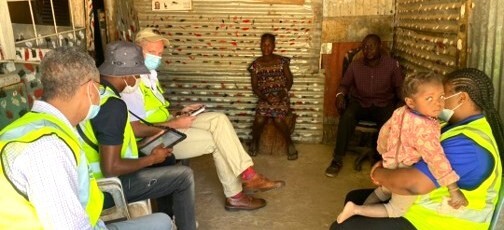 ONS's Garnett Compton observing census work with colleagues from Namibia Statistics Agency.
The International Development Team (IDT) attended the United Nations Economic Commission for Africa regional launch of the 2030 census round, in Togo in June, contributing ONS input to discussions on international standards and innovative approaches. This work continues IDT’s involvement in the modernisation and digitalisation of censuses across the African continent, having supported more than 10 countries directly, plus many more through regional workshops and guidance during IDT’s lifespan.
For example, from 2021 to 2023, IDT provided technical assistance to Namibia’s Population and Housing Census. ONS played an important role during the planning, enumeration, post-enumeration and analysis stages, including staff observing two weeks of census operations to support the collection of high-quality, useful data. Namibia Statistics Agency is releasing their final census reports in September 2026 and is holding a launch event on 30 September to celebrate this achievement.
IDT has maintained its commitment to supporting censuses across Africa through the development and publication of the UNECA e-census handbook, which summarises approaches to digital technologies and their implementation in censuses across the continent. At a time when many countries face funding constraints for census delivery, the handbook aims to support greater efficiency, quality, trustworthiness and sustainability within statistical organisations.
|
|
Strengthening trust in official statistics
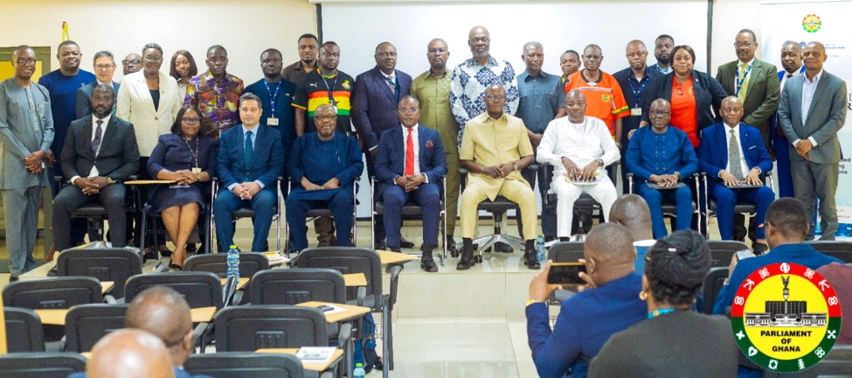 ONS delegates Tim Harris, Angelica Allotey and William Barnes with parliamentarians and participants at the Ghana Data Masterclass.
ONS supported and coordinated the first two cohorts of parliamentarians and senior leaders undertaking the International Data Masterclass in Ghana in June. The masterclass was developed by ONS, FCDO and the UN Statistics Division, and is based on a similar version rolled out to senior leaders in the UK. Its roll out in Ghana is aimed at strengthening MPs’ data literacy and supporting greater use of analysis and evidence in decision-making. ONS is also planning to support a roll out of the masterclass in Nigeria, continuing its work to champion evidence-informed decision-making and strengthen trust in statistics.
This reflects ONS’s continued commitment to strengthening trust in data, statistics and statistical organisations. Over its history, ONS has provided support on national strategies for the development of statistics to several national statistics offices, including in Jordan, Rwanda and Palestine. This support has helped organisations communicate more transparently about how data are used and build confidence in the statistics produced.
The ONS has also been working with South Africa’s National Treasury, to embed The Five Safes framework for safe data access, to implement international good practice. As a result of the ongoing support, the National Treasury’s data lab now has data access policies, disclosure control procedures, breach management processes and secure data lab protocols. These arrangements are now embedded within a data lab that supports hundreds of databases, projects, and outputs. By strengthening governance and safeguards around sensitive data, the partnership has helped build confidence among users and stakeholders that data are being managed responsibly and securely.
|
|
Making inclusive data count
ONS delegates attended an expert group meeting in July at the Pacific Islands Forum Secretariat Headquarters, organised by UNESCAP and the Pacific Community to share challenges and explore solutions for reporting data across multiple frameworks. The meeting allowed a range of development partners to hear directly from five Pacific Small Island Developing States (SIDS) and acted as a catalyst for future work with these nations and potentially SIDS in other regions to strengthen reporting on the Sustainable Development Goals (SDGs) and beyond.
IDT has also provided ongoing support to countries using Open SDG, a free-to-use platform for monitoring and visualising SDG statistics. IDT support focused on disseminating SDG data and participating in SDG working groups. Throughout IDT’s lifespan, this support has helped organisations report transparently against SDG indicators and share data for decision making. One example is Ghana, where disability data was reported through the Open SDG platform. The government reviewed the data and increased the allocation of resources to improve the lives of persons living with disabilities from 3% to 5%, with an estimated GHS238.5 million allocated.
In Kenya, long-term work has begun to include disability indicators in routine surveys, helping to embed inclusion into everyday statistical practice. Future work with Kenya will explore better disaggregated data on gender and age. This continues IDT’s commitment to supporting inclusive data and SDG reporting across national statistical offices and government ministries.
Improving efficiency through tools and training
ONS provided R training to the Institut National de la Statistique (INS) of Democratic Republic of the Congo in April and introduced reproducible workflows for data analysis, supporting more efficient analysis of health data. This continues ONS’s commitment to improving efficiency within national statistical offices.
In Namibia, coding industry information from the census previously required three to four months of manual processing and significant staff resource. ONS worked with Namibia Statistics Agency (NSA) to introduce an automated coding tool, reducing processing time to three to four weeks while improving consistency and quality. In Ghana, ONS supported efficiency improvements by helping to modernise the production of Consumer Price Index reports. Using an analytical pipeline, work that previously took around a week with three members of staff can now be completed by one person in a single day. Knowledge from both NSA and Ghana Statistical Service has been shared with other international colleagues and census programmes, supporting sustainability and further improvements across national statistical systems worldwide.
|
|
Opportunities to get involved
Calls for abstracts, papers or sessions:
Learning opportunities:
Upcoming international meetings:
|
|
If you have any questions, or would like to highlight an element of your international work in this bulletin, please get in touch with international@statistics.gov.uk |
|
|
|
|