|
Welcome.
We are pleased to bring you the latest update from the Standards for Official Statistics on Climate Health Interactions (SOSCHI) project team. The team is part of the Climate and Global Health, International Division at the Office for National Statistics (ONS).
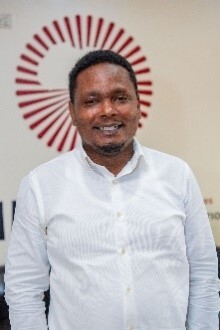
In this publication, we are featuring images of the AIMS Rwanda project members. In the December issue, we will introduce our colleagues from the Regional Institute for Population Studies (RIPS), Ghana.
We are delighted to share news from this project with you and appreciate your interest and support.
|
|
|
Indicators to support how climate impacts health
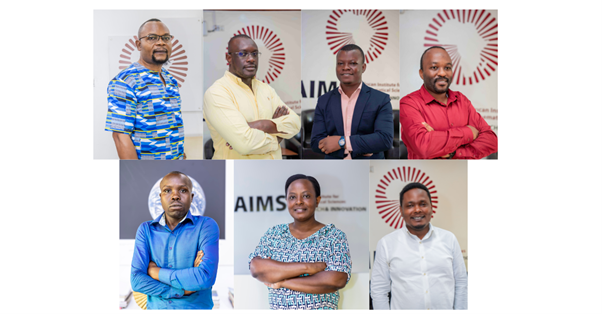 AIMS project members: top row: Prof Wilfred Ndifon, Dr Bamba Sylla, Dr Dzakpa Etse Yawo, Dr Cassien Habyarimana, second row: Dr Venuste Nyagahakwa, Dr Beatrice Byukusenge, Prof Joseph Ndiritu
The standards for the SOSCHI project at the AIMS Research and Innovation Centre (AIMS RIC) is making significant strides in transforming climate and health data into tools that can safeguard public health. With a focus on waterborne diseases (diarrhoea), vector-borne diseases (malaria), and air pollution, the team has developed a set of indicators to help countries understand how climate impacts health and what actions can be taken.
These tools are currently being tested with real data from countries such as India, Ghana, Mozambique, and Kenya to evaluate their performance in various environments. This includes utilising air pollution data (PM2.5) to more accurately track exposure levels. The testing is guided by international experts to ensure that the tools are useful, reliable, and ready for real-world decision-making.
In addition to the technical work, AIMS RIC is sharing insights and gathering feedback through the following key findings.
- In Ghana, AIMS participated in a malaria stakeholder meeting to refine its indicator approach.
- At the Data Science for Health Discovery and Innovation in Africa (DS-I Africa) consortium meeting, AIMS presented progress on diarrheal diseases.
- AIMS is preparing for major global forums: the Planetary health annual meeting 2025 in Rotterdam, Netherlands and the Connecting health and climate change conference (ENBEL 2025), in Tallinn, Estonia.
Back in Rwanda, good progress is being made on implementing the project's outputs. The team is collaborating with the National Institute of Statistics of Rwanda (NISR), to support the integration of climate-health indicators into the national data system. This includes training and building local capacity to ensure long-term use and ownership.
Step by step, the SOSCHI project is making data work more effectively for people, by developing tools and partnerships that connect climate and health in meaningful ways.
|
|
Establishing indicators for strengthening Ghana’s health statistics and systems
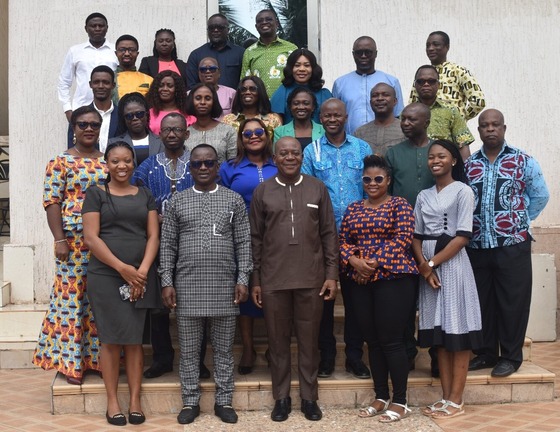 Ghana Regional Institute for Population Studies (RIPS) project team
The Ghana team have over the past few months, convened high-level stakeholder engagements. These have brought together researchers and health managers.
Cerebrospinal Meningitis (CSM)
The CSM team, hosted a topic engagement workshop. Stakeholders from the World Health Organisation (WHO), leading health research centres, and technical experts, came together to validate the indicators and methods related to the topic area.
Malnutrition
This multi-disciplinary gathering of academics, public health stakeholders, and scientists from Ghanaian health research centres, focused on how mathematical modelling can support the measurement of climate impacts on malnutrition.
Malaria
The Malaria team hosted a dynamic session to explore innovative approaches to malaria-climate research. The discussion focused on evaluating the robustness of methods and techniques developed to measure malaria-climate indicators.
Healthcare systems and infrastructure
A three-day validation meeting in Kumasi, highlighted urgent reforms in Ghana’s healthcare systems. Experts and Ghana Health Service directors stressed the need for robust health data, resilient infrastructure, and science-policy collaboration to tackle climate change’s impact on national health outcomes.
|
|
UNECE expert forum for climate change-related statistics
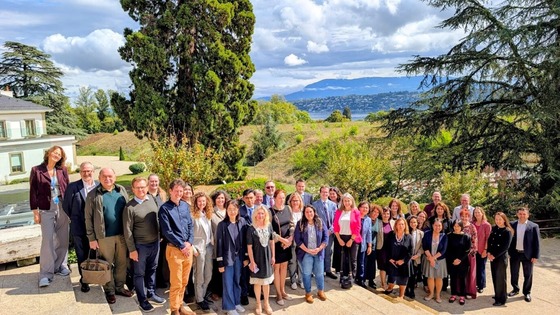 Attendees at the UNECE forum
The annual UNECE expert forum for climate change-related statistics in Geneva, held between 1 and 3 September, included a dedicated session on climate and health for the first time. The event was chaired by Myer Glickman, Head of Climate and Global Health, from the ONS SOSCHI team.
The team presented an update and discussion, focusing on the key role of National Statistical Organisations (NSOs) in this field.
An example given was supporting data integration challenges and providing leadership on standards and coherence. Climate and health is still an emerging topic area, so this was a good opportunity to highlight the work of the project to an expert international audience.
|
|
UN expert group on environment and climate change meeting
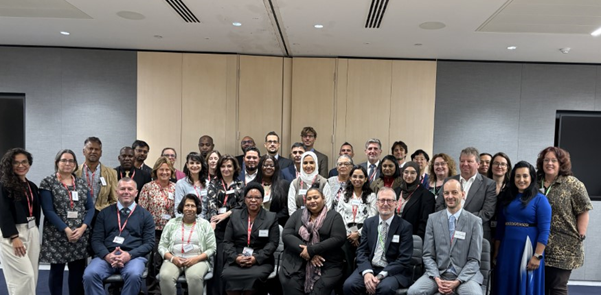 Attendees of the Expert Group on Group on Environment and Climate Change Statistics
The Standards for Official Statistics on Climate and Health Interactions (SOSCHI) project hosted the twelfth meeting of the Expert Group on Environment and Climate Change Statistics (EG-ECCS) in London, between 23 and 25 September 2025.
Other topics discussed included:
- streamlining environment and climate change statistics
- climate change statistics and indicators
- methodology for environment and climate change statistics
- environment statistics data collection
- environment statistics toolbox
- capacity development in environment and climate change statistics
See all the presentations from this event.
|
|
British Society for Population Studies conference
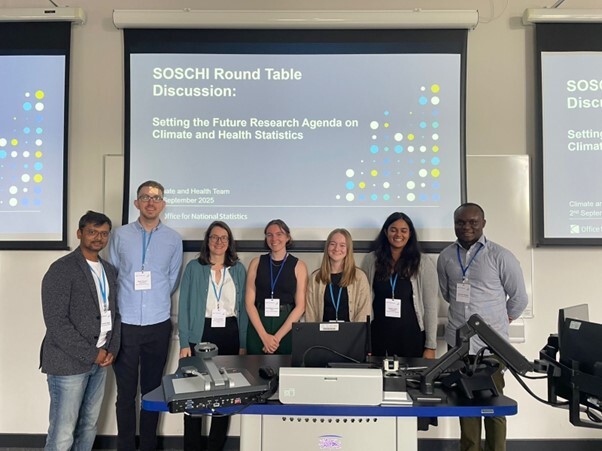 From left to right: Vijendra Ingole, Matt Pearce, Anna Rom, Ellie Watkins, Milly Powell, Gladin Jose and Kenechi Omeke.
SOSCHI project team members attended the British Society for Population Studies (BSPS) conference in Swansea, Wales on 2 September.
The ONS co-hosted a roundtable session with its project partner, UK Health Security Agency (UKHSA), and a guest speaker from Public Health Wales, Dr Behrooz Behbod.
The 90-minute session gave attendees an overview of how a changing climate is threatening human health, and the ongoing research in the UK to monitor the situation. Valuable discussions took place, which will inform future development of the SOSCHI framework.
Suicides in England and Wales: 2024 registrations
On 3 October, the ONS released the latest statistics on annual suicide registrations for 2024.
As part of this publication, we also included some experimental analysis on suicides attributed to extreme heat. These statistics were developed as part of the SOSCHI project, led by the ONS and funded by Wellcome.
Between 2001 and 2023, there is evidence of an increased relative risk of suicide with higher mean temperatures in England and Wales. This research is based on the date the death occurred, not when the death was registered, which means that figures for all years are subject to change.
New climate-health webinar series: registration now open
Join the SOSCHI Ghana team for a series of expert led webinars, which began on 30 September.
The sessions explore key intersections between climate and health, focusing on:
- malnutrition (under-nutrition)
- malaria
- healthcare systems and infrastructure
Register now
Related links
|
|
Contact
If you have any questions about any elements of this newsletter, please get in touch with the team at: climate.health@ons.gov.uk
|
|
|
|
|





