|
 As another summer draws to a close, we’re taking stock of what’s been happening across the Upper Wye Catchment. August also marked one year since our project was launched. From hands-on restoration work with farmers to invasive species control, riverside planting and new science-led trials, it’s been a busy season on the Upper Wye.
This newsletter brings you a flavour of it all - practical projects, big-picture thinking and a few inspiring stories from the riverbanks. Each article has been written by one of the project team, so you’ll hear directly from the people delivering the work on the ground.
Riverbank erosion is part of a river’s natural cycle, but in intensively farmed landscapes it can accelerate, leading to soil loss, nutrient runoff and degraded habitats. Our 2024 Fluvial Geomorphology Walkover survey assessed the form and condition of long lengths of the river and its tributaries, identifying the areas that could do with some help. We’re now preparing to tackle priority erosion sites across the Upper Wye.
Instead of hard engineering, we’ll be using green bank protection - nature-based solutions such as large root wads set into the banks and woven live willow rods and stakes - to absorb the river’s energy, stabilise banks and create habitats. Fencing will also be installed to protect new shoots and allow buffer vegetation to establish.
We’re initially working with four farms at priority erosion sites, aiming to reduce sediment inputs, improve water quality, support long-term farm resilience and restore more natural flows.
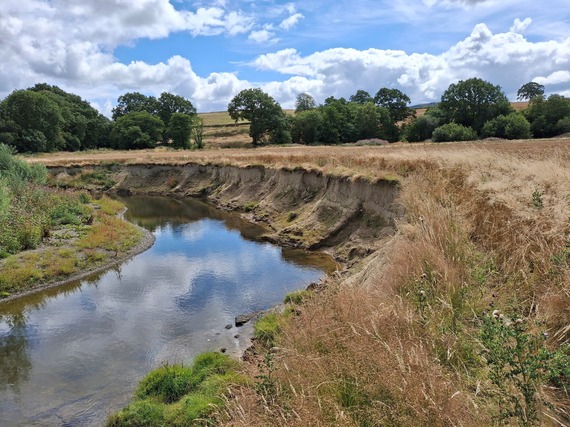 Photo: Upper River Wye bank erosion
|
|
|
Tall, pink and deceptively pretty, as we are only too aware, Himalayan Balsam is one of the UK’s most aggressive invasive plants. Once established, it quickly shades out native plants, damages riverbanks and causes dramatic declines in insect numbers. When it dies back in winter, bare banks are left prone to erosion, impacting species like kingfisher, otter and salmon.
The good news is that balsam can be controlled with persistence. Communities are showing that, over 3-4 years, it’s possible to clear local rivers of balsam. This summer we have been surveying the uppermost reaches of the Wye to try and identify where the problem starts. Next summer we will start to implement a long-term plan of removal, tackling this invasive plant from the top down. Watch this space for further information and potential volunteering opportunities next year.
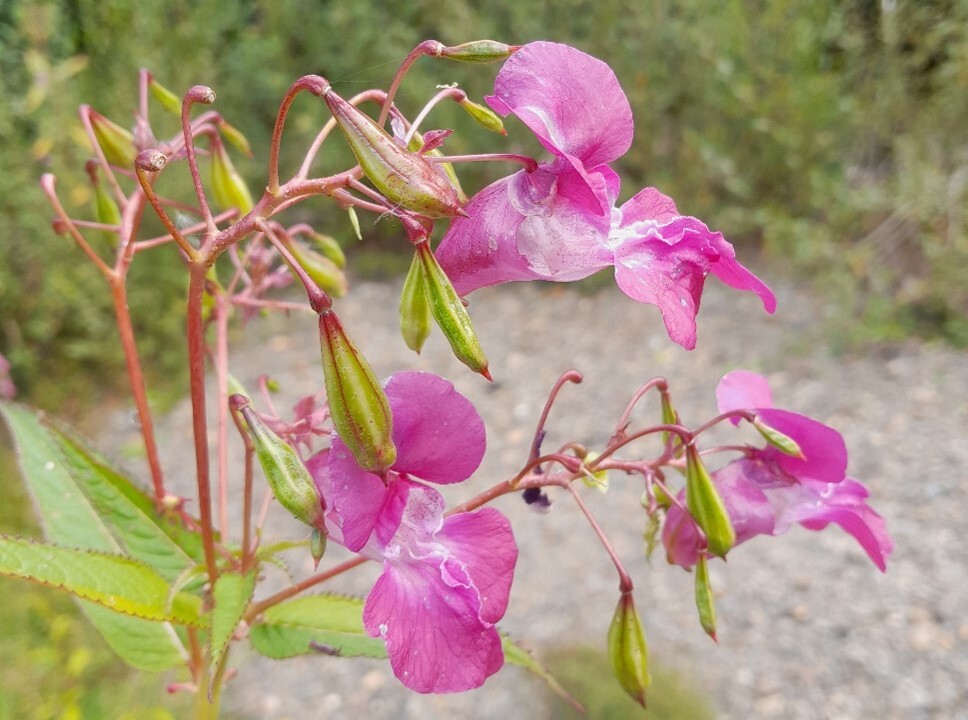 Photo: Himalayan balsam, native to the Himalayas, thrives in damp soil and is found alongside waterways
You can help by:
- Learning to identify balsam (and not confusing it with willowherbs)
- Recording sightings on the iRecord or INNS Mapper apps
- Volunteering to pull or cut plants before seed pods mature
- Cleaning boots, tyres and tools to avoid spreading seeds
We’re also looking for trial sites for balsam rust, a natural biological control. If you’re a landowner in the Upper Wye with a site infested with balsam, please get in touch via the contact methods at the bottom of this newsletter.
|
|
|
Following the osprey news from Hafren Forest we shared in our last newsletter, we’re excited to give you an update. In this location in the headwaters of the River Wye, the new pair of ospreys successfully raised two chicks! Both young hatched in early summer, were carefully ringed (7M7 and 7M8), and went on to fledge the nest in August.
We’re delighted to share that both chicks were male. By early September, one had already begun his long migration south to Africa, while the other remained in the valley with his father, honing his fishing skills before setting off on the same incredible journey.
The return of breeding ospreys to the Upper Wye catchment is a real milestone. It shows how carefully planned conservation work, like the artificial nest built by John Williams and Rhys Jenkins in 2023, can provide the conditions for nature to recover. Each fledged chick is a hopeful step towards a stronger future for this iconic species in mid-Wales.
A huge thank you goes to John Williams for monitoring the Hafren ospreys, ringing the chicks and sharing these fantastic updates. We’ll be watching out for news of their migration and hoping the pair return again next year to raise another brood in the Upper Wye.
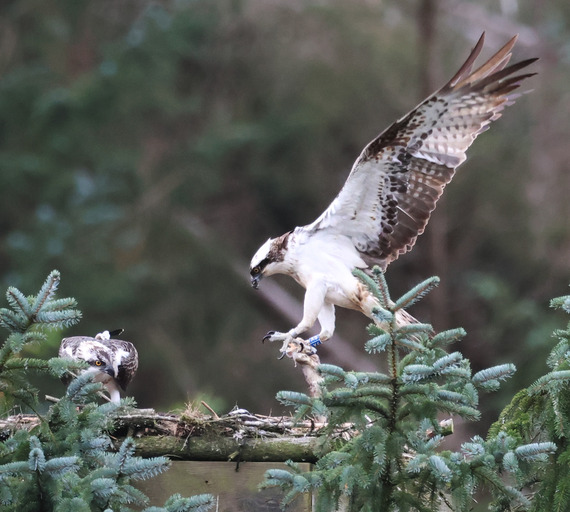 Photo: Male (‘dad’) osprey delivers a fish to the last remaining juvenile in the nest
|
|
|
The exceptionally dry spring and summer of 2025 have brought real challenges for both farmers and rivers across Wales. Poor grass growth, limited water for livestock and concerns over winter feed stocks were echoed across the catchment.
In mid-August, the Wye officially entered drought status, with rainfall figures far below average:
- Between March and May, rainfall was just 36% of the long-term average - the driest March-May period on record.
- In July, South East Wales (including the Upper Wye catchment) had only 52.5% of expected rainfall.
- By August, the picture worsened, with just 8-11% of average rainfall.
Alongside low flows, water temperatures spiked alarmingly. Data loggers recorded maximums of:
- 23°C on the Wye at Llangurig (10 July)
- 23°C on the Wye at Rhayader (12 July)
- 25°C on the Ithon near Disserth (12 July)
- 24°C on the Irfon near Cilmeri (12 July)
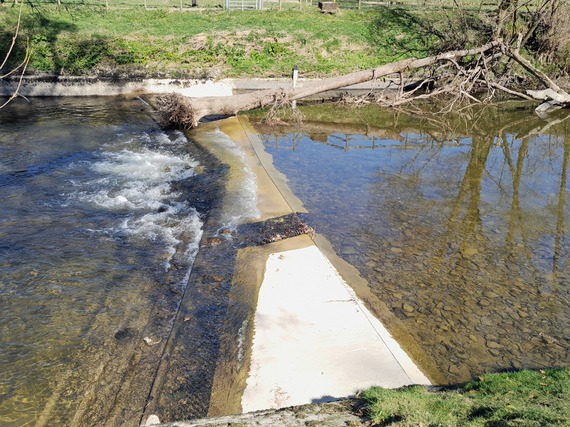 Photo: the Ithon in the Upper Wye Catchment in drought following the driest six-month period in nearly 50 years
For context, salmon and trout can become stressed once water reaches around 18°C, with risks to survival increasing sharply at higher temperatures. The Sonde data loggers installed at four Upper Wye sites this summer have given us the clearest picture yet of how prolonged hot, dry spells affect the river system. A sonde is a type of instrument that is used for water monitoring. It comprises of a set of sensors that are used to measure various parameters, such as temperature, pH, dissolved oxygen, and conductivity. By continuously tracking water temperature, they’ve shown how quickly conditions can deteriorate for fish and invertebrates when flows are low.
Beyond the direct impacts on species, the combination of warm water and low flows reduces dilution of pollutants, fuels algal growth and depletes oxygen - making the river less resilient overall.
This evidence underlines why our restoration work matters. Tree planting, in-channel habitat improvements and reducing nutrient inputs all form part of the solution - but the data is also helping us target these interventions to where they’ll have the greatest impact.
|
|
|
The Upper Wye Catchment Restoration Project has recently been asked how river-focused planting compares with wider woodland creation across Wales. While the two approaches have different drivers, they can complement each other.
Scattered tree planting of native species is one component of the work we are carrying out with farmers to improve river health, along with other actions including pleaching willows to slow flows, installing fencing and alternative water supplies and adding deadwood to create habitats. These are small, bespoke measures designed to build resilience directly into river systems.
By contrast, NRW’s Woodland Programme delivers larger-scale woodland creation across Wales, establishing blocks of new forest with clear rules on where planting is and isn’t suitable.
When both approaches work together, the potential is landscape-scale restoration: new broadleaf woodlands linked to healthy, shaded rivers, with thriving habitats for fish, invertebrates and birds.
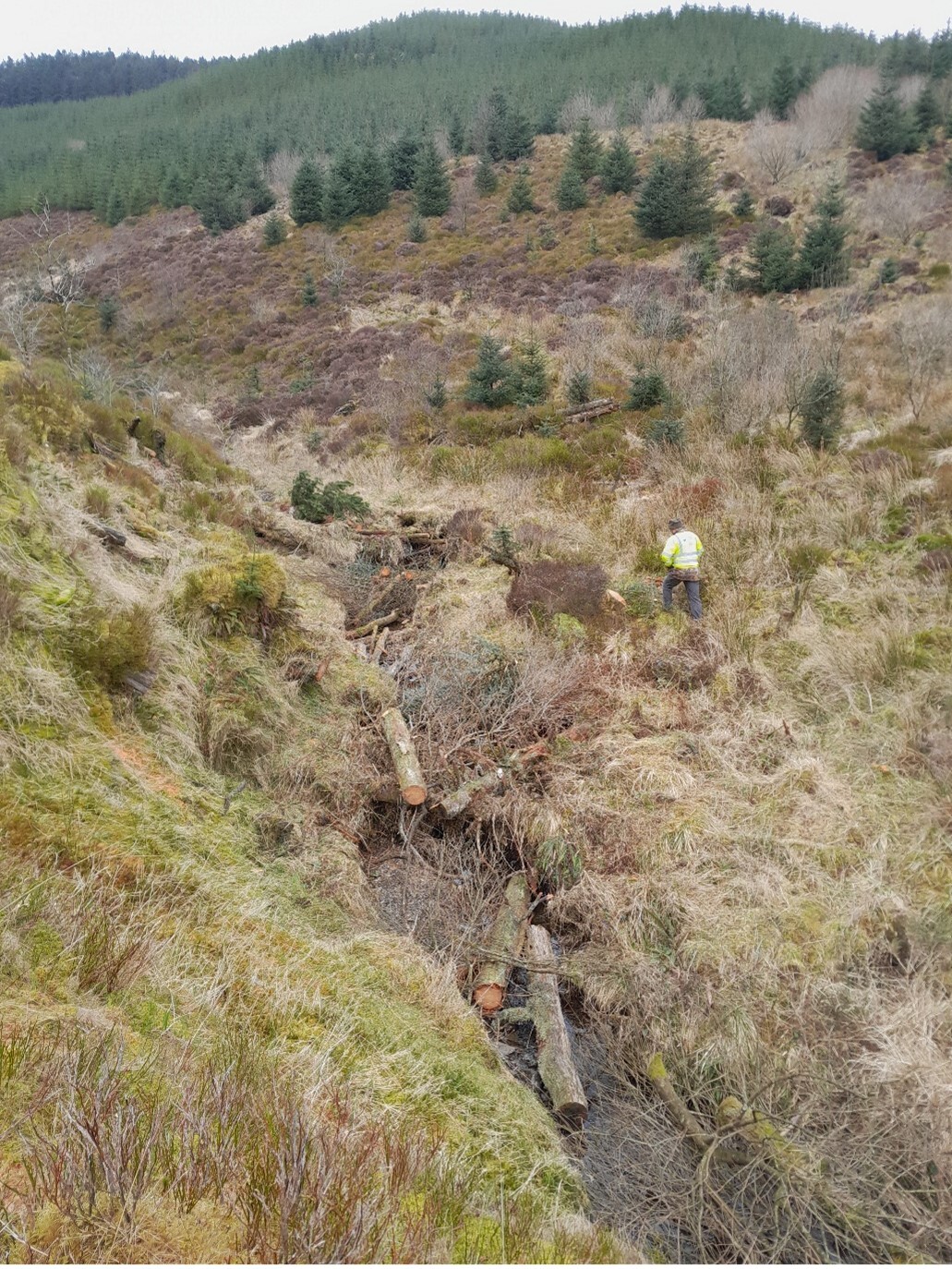 Photo: Deadwood helps secure pleached willows and creates valuable habitat as it decays
|
|
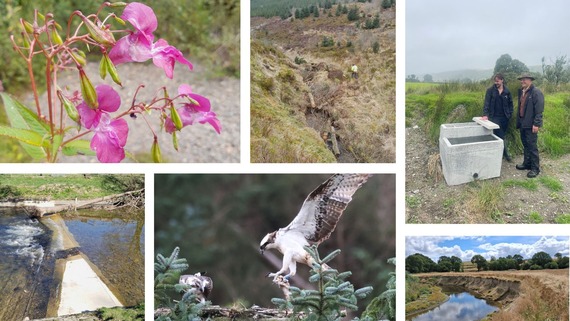
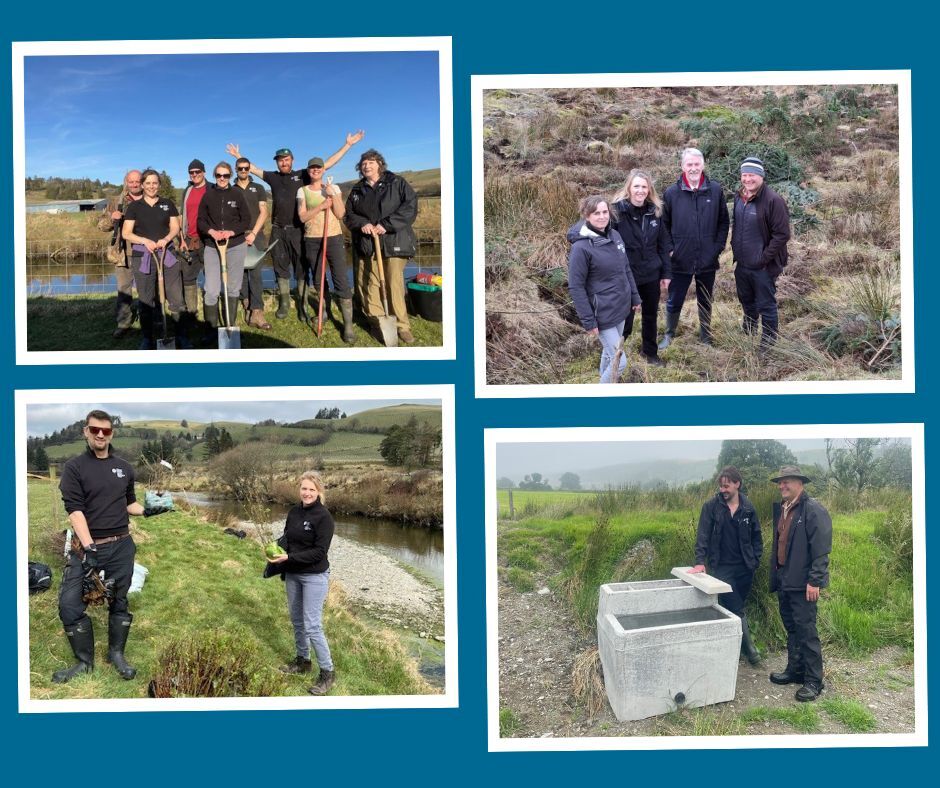 Photos (clockwise from top left): Team tree planting day • Visit from the Deputy First Minister • Installing a water trough to support river-friendly farming • Planting native trees along riverbanks
Last month at the Royal Welsh Show, we celebrated the first anniversary of the Upper Wye Catchment Restoration Project - and what a year it has been!
From tackling invasive plants to planting thousands of trees, the project has shown how people, nature and practical action can come together to make a real difference.
Big wins in our first year
-
Tackling invasive species - Surveys revealed a major infestation of American Skunk Cabbage, now under control thanks to targeted action. Himalayan balsam surveys are also underway, helping us plan long-term catchment-wide removal.
- ‘Slow the Flow’ success - In Hafren and Tarenig forests we’ve installed leaky dams, bunds and blocked drains to slow floodwaters, trap sediment and create richer habitats. Tarenig Forest is now a demonstration site, showcasing what’s possible on government land.
-
Healthier farms, healthier rivers - Two large farm projects have delivered kilometres of fencing, buffer strips, off-stream watering points and wetland creation. These reduce erosion, improve water quality and support rare species like freshwater mussels.
-
2,000 native trees planted - Providing shade for fish, stabilising banks and creating vital wildlife habitats.
-
Building partnerships - Over 50 stakeholders joined us for a workshop, including farmers, conservation groups and local organisations, building momentum for long-term restoration.
-
Eyes in the sky - Drone surveys are helping us track progress and inspire more landowners to get involved.
Looking ahead, we’ll build on this momentum with more riverside farm projects, expanded Slow the Flow measures, further tree planting and ongoing invasive species control.
You can also read about our first year of progress in our anniversary blog post.
At the same time, we’re saying a fond farewell to our Senior Officer, Nick Young. His energy, expertise and dedication have been central to our success, and he’ll be greatly missed by the whole team. Nick is moving to NRW’s National Peatland Action Programme to deliver more great restoration work for Welsh Peatlands.
|
|
|
The Upper Wye Catchment Restoration Project #RestoreUpperWye is funded by Welsh Government’s Nature and Climate Emergency Fund, part of the Water Capital Programme, to restore the condition of the upper River Wye.
The overall aim of this project is to protect species and enhance habitats by addressing a range of pressures affecting the river.
If you’d like to be added to our mailing list for future updates, please let us know via the email below.
If you’d prefer a paper copy of the newsletter, do get in touch.
Email: RestoreUpperWye@NaturalResources.Wales
Web: Upper Wye Catchment Restoration Project Website
Social Media: Facebook, Instagram, X
|
|
|
|
|