|
Smokefree cars awareness campaign
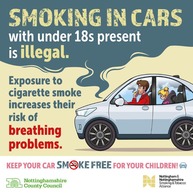
Recent survey work in Notts schools revealed that some children are still exposed to smoke inside cars, even though it’s been illegal to smoke in a vehicle with under 18s present since 2015.
Our local campaign aims to raise awareness of the law, which is there to protect children. Children breathe faster than adults and their airways are smaller, making secondhand smoke more dangerous for them.
You can protect your children by making your car smokefree, and not letting anyone else smoke in a car with them.
The very best solution is to give up smoking. You’re three times more likely to stop for good with free, local support from Your Health Notts.
|
April is Bowel Cancer Awareness Month #PassItOn
Research shows that more than nine in 10 people survive bowel cancer when it’s diagnosed at the earliest stage. That’s why this Bowel Cancer Awareness Month, Bowel Cancer UK are asking everyone to share the symptoms of the disease. Knowing the symptoms is important to help spot bowel cancer early.
Bowel cancer can affect anyone. The most important thing to know is that the earlier the disease is spotted, the more treatable it’s likely to be.
Symptoms can include:
- bleeding from your bottom
- blood in your poo
- a change in your pooing habits. You might be going more or less often, or have diarrhoea or constipation that might come and go
- losing weight but you’re not sure why
- feeling very tired all the time but you’re not sure why
- a pain or lump in your tummy.
Having these symptoms doesn’t always mean you have bowel cancer, and not everyone will have all the symptoms, but it’s still important to find out what’s causing them. Even if you have just one symptom, contact your GP about an at-home test.
|
Spring Covid-19 vaccinations
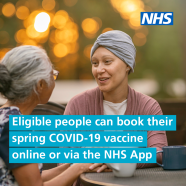
People who are eligible for a Covid-19 vaccination can now book an appointment for a spring booster. Those in eligible groups are:
- adults aged 75 years and over (including those who will turn 75 by 17 June 2025)
- residents in a care home for older adults
- people aged 6 months and over who are immunosuppressed.
Appointments can be made online or by calling 119.
|
Teenage vaccination clinics

Young people in Year 9 will have recently been offered a vaccination to protect against bacteria that cause some types of meningitis (MenACWY vaccine), and a teenage booster to top up their pre-school vaccinations that protect against tetanus, diphtheria and polio (Td/IPV vaccine).
The Human Papillomavirus (HPV) vaccine, that protects against some cancers and genital warts, will be offered to Year 8 pupils after Easter. Don’t forget to complete the consent form that is sent out by your school.
If your child has missed out on their vaccination(s) in school, catch up clinics are available during the Easter school holidays.
|
'Walk in My Shoes' Nottinghamshire Police campaign
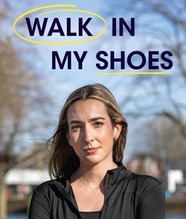
‘Walk in My Shoes’ is a campaign launched by Nottinghamshire Police which aims to tackle violence against women and girls. The campaign includes a survey to find out where women and girls feel unsafe across the county or city, and the police are asking local women and girls to take part.
More details about the campaign and a link to the survey can be found on the Nottinghamshire Police website. You can also watch a powerful video of local women talking about their experiences.
|
UKHSA Keep Antibiotics Working campaign
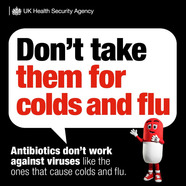
The UK Health Security Agency (UKHSA) has launched a Keep Antibiotics Working campaign. Using antibiotics incorrectly makes them less effective against bacteria. You should follow these simple tips to keep yourself and your family safe and well:
- don't take antibiotics for colds and flu - they won't help because these illnesses are caused by viruses, not bacteria
- when prescribed antibiotics, take them exactly as directed by your GP, nurse or pharmacist
- always complete the full course of antibiotics as directed by your healthcare professional
- never save antibiotics for later use - they may not work properly and could make the problem worse
- inappropriate or excessive use of antibiotics increases the risk of bacteria becoming resistant to antibiotics.
|

Stay fit on your farm visit
Spring is a great time for a farm visit with lots of baby animals. Make sure you follow the farm rules about keeping a safe distance from the animals for your safety and their wellbeing. You should also avoid germs which can be passed from animals and can cause illness like diarrhoea and vomiting.
To stay safe and avoid germs:
- wash hands thoroughly with soap and warm running water after touching animals, fences or other surfaces where animals may have been, and dry hands with paper towels. Don’t rely on hand gel or wipes, they don’t work against the types of bugs found on farms
- wash your hands thoroughly with soap and water before eating or drinking and always eat in picnic areas or cafes
- avoid wearing open-toed shoes and at the end of your visit, remove and clean boots/shoes and pushchair wheels. Then wash your hands thoroughly with soap and warm running water
- if you hold or have contact with an animal, wash your clothing on at least 40C when you return home
- don’t touch your face or mouth while you’re petting animals or walking around
- baby animals are very cute but don’t kiss or put your face close to farm animals
- don’t eat anything that has fallen on the floor.
|
|
|
|
|





