 Things are about to get spooky...!
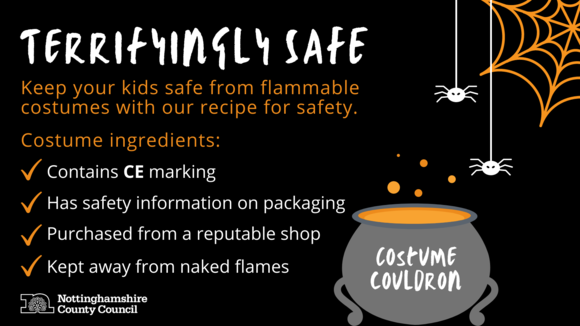
Halloween costumes are already in the shops, and whether you’re a last minute shopper or someone who is already thinking about getting a suitably spooky outfit for your children ahead of Halloween, there’s a few things you need to know about costume safety.
Firstly, it’s important to look for the CE mark as this is the closest thing to a safety guarantee that you can get. BUT, make sure to look closely as scammers often try to fake this mark. The best way to tell if it’s genuine is by looking at the ‘E.’ If the middle line of the ‘E’ is shorter than the rest of the letter, you’ll know it’s genuine.
Secondly, take some time to check the label and look out for the words: “This garment has undergone additional safety testing for flammability.” ALL parts of your costume should be flame retardant.
Also, due to Brexit the CE mark is disappearing as it is a European mark. Although companies can use it until 1 Jan 2023, some products may now be showing the UKCA mark.

Scam websites are just one of a number of ways that scammers try to take advantage of consumers.
These kinds of websites are often called 'phishing' and may download viruses onto your computer or try to steal your passwords and personal information.
So, if you've come across a scam website, would you know how to report or who to report it to?
The National Cyber Security Centre has a new service where residents can report scam websites, and by doing so, you will be helping to protect others.
|

"NHS: We've noticed you haven't applied for your COVID pass, please follow the link to complete registration to avoid fees..."
If you were sent this text message, would you click on the link?
That's just what scammers want you to do, and what's worse is that the website is made to look like a real NHS platform.
BUT, it's not real and is unfortunately just one of the ways scammers will try to get you to part with your personal details.
|

If you’re heading back from overseas, make sure you don’t fall victim to a scam when booking your #COVID19 tests.
You can compare and choose a test provider based on cost and availability in your area on the Gov.UK website.
|
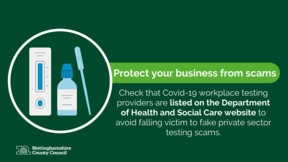
Regular Covid testing at work helps protect your workforce and customers but make sure you protect your business too.
Don’t fall foul of fake private sector testing services and test kit providers.
Remember:
Research any test provider you are considering and the products or services they supply
Check they are listed on the Department for Health and Social Care website. Private providers of COVID-19 testing: what you need to know - GOV.UK (www.gov.uk)
Be wary of contact from businesses offering private sector testing out of the blue - report any suspicious activity and/or problem private testing providers to Trading Standards through the Citizens Advice Consumer Service on 0808 223 1133.
|
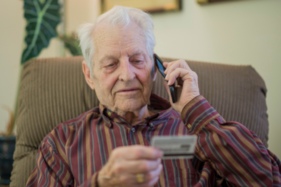
1 October is 'Older Persons Day' and 3 October is 'National Grandparents Day' so what better way to recognise these days than to take the time to check in with your elderly loved ones about staying alert to scams.
We have some key advice on how to protect loved ones from:
- pension scams
- investment scams
- doorstep and phone scams
- plus much more!
|
|