|
Powys Teaching Health Board
Falls Prevention Service
|
|
What the Falls Prevention Service is and offers
Research has shown that one in three people aged 65 or over is at risk of falling over, rising to one in two over the age of 80. People who have fallen or who are fearful of falling can feel restricted physically and socially. It is therefore important to recognise the risks early and get the right help at the right time.
Our goal at the Falls Prevention Service is to help you to identify why you might have fallen (or feel at risk of falling). This is accomplished by providing assessment and actions aimed at reducing those risk factors and improving your confidence. This aims to keep you doing the things you enjoy.
|
|
Facts about Falls
1 in 3 people over the age of 65 will suffer at least one fall in a year and 1 in 2 over 80
Worldwide there are 125 million people over the age of 80 and the number of people over the age of 65 in the UK is already higher than the number of 10 or under
As people get older, their bodies go through changes like reduced mobility, weaker muscles, trouble with balance, and less flexibility. Their bones can also get weaker.
Everyone, no matter their age, wants to live longer and stay healthy as they get older. Instead of just focusing on getting older, we should aim for "healthy aging." This means teaching people how to stay safe and prevent problems like falling, rather than just fixing things after they happen
What can you do to reduce the risk of Falling?
- Stay active- if our muscles are weak we may be at higher risk of losing balance and falling. Try to aim for 30 minutes a day of moderate activity, the type that you will feel the next day (but will not cause you lots of pain!). Resistance exercises and those that challenge your balance are most effective for preventing falls
- Understand your medications- being on lots of tablets can increase fall risks depending on what they are. Take the time to learn about what your tablets are for, how they should make you feel and make sure they are reviewed by your doctor or pharmacist at least every year.
- Keep your eye tests up to date- Vision is a vital part of our sense of balance. 50% of conditions causing vision loss can be treated if they are picked up quickly. Have your eyes checked routinely every 2 years to keep on top of any changes.
- Shoes are so important if your balance is poor- wear well fitted shoes with a rubber sole and a Velcro or lace fastening to make sure your feet are well supported when inside and outside.
- Be aware of the risks in the environment- clear clutter to remove trip hazards, may sure areas are well lit at night, take a walking aid with you if you are going out to an unfamiliar place.
Small changes can make a big difference and being aware of the risks is a great starting point.
For more information, advice and useful resources, head to the Falls Prevention Service section of the PTHB webpage. You can will also find a self referral form for a Falls risk assessment if you would like addition advice and support.
|
|
Quick Fixes to help prevent Falls |
|
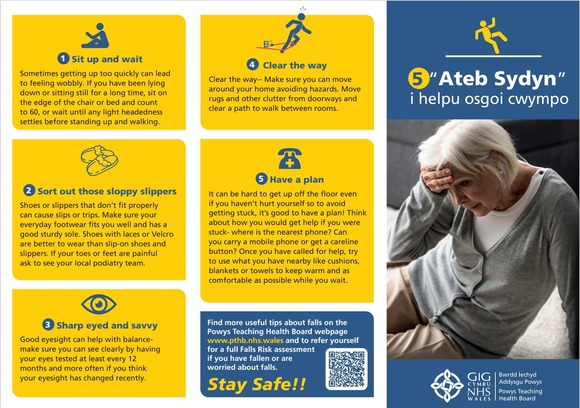
Sit up and wait
Sometimes getting up too quickly can lead to feeling wobbly. If you have been lying down or sitting still for a long time, sit on the edge of the chair or bed and count to 60, or wait until any light headedness settles before standing up and walking.
Sort out those sloppy slippers
Shoes or slippers that don't fit properly can cause slips or trips. Make sure your everyday footwear fits you well and has a good sturdy sole. Shoes with laces or Velcro are better to wear than slip-on shoes and slippers. If your toes or feed are painful ask to see your local podiatry team.
Sharp eyed and savvy
Good eye sight can help with balance - make sure you can see clearly by having your eyes tested at least every 12 months, and more often if you think your eyesight has changed recently.
Clear the way
Clear the way - make sure you can move around your home avoiding hazards. Move rugs and other clutter from doorways and clear a path to walk between rooms.
Have a plan
It can be hard to get up off he floor even if you haven't hurt ourself so to avoid getting stuck, it's good to have a plan! Think about how you would get help if you were stuck - where is he nearest phone? Can you carry a mobile phone or get a careline button? Once you have called for help, try to use what you have nearby like cushions, blankets or towels to keep warm and as comfortable as possible while you wait.
|
|
How to contact the Falls Service |
|
|
|