|
Your HRA Public Involvement Newsletter
June 2025
|
|
 Welcome
Thank to everyone that filled in our recent survey telling us more about you and your interests. Responding to what you've told us, our refreshed public involvement newsletter shares news and information for people who are interested in and planning public involvement in health and social care research.
Anyone can subscribe, just share this link.
By public involvement in research, we mean research that is done ‘with’ or ‘by’ the public, not 'to', 'for' or 'about' them. If you’re reading this, you’ll know that public involvement is important, expected and possible in all types of health and social care research. There are many ways that people with relevant experience can contribute to designing, carrying out and sharing research. And there is a wealth of information about how to do this well, so research is more inclusive, relevant and impactful.
We hope this newsletter:
- makes that information easier to find
- shares useful learning and reflections
Let us know how we’re doing! Complete this quick survey to tell us if the newsletter is useful. And email the HRA’s public involvement team if there’s something you’d like to share or know more about.
Make sure you’re also subscribed to HRA Latest for:
- invitations to get involved in the HRA’s work
- HRA news and developments
In this month's newsletter
Accessing the newsletter
To change the size of the newsletter, click on the link at the top and zoom in using the ‘Ctrl’ and the ‘+’ symbols. To listen to the content, you can use a screen reader or the ‘read aloud’ function often found within the ‘accessibility’ features of many devices.
For support with this, or if you need the newsletter in a different format, you can read our guidance, email the public involvement team at public.involvement@hra.nhs.uk or call on 0207 104 8161.
|
|
|
In this section, we share updates from the HRA, and organisations in our networks.
 We welcomed a new report ‘Achieving inclusivity in clinical research’. The report is the result of a collaboration between the Association of Medical Research Charities (AMRC) and the Association of the British Pharmaceutical Industry (ABPI).
As well as describing practical barriers to participation, the report references a lack of community engagement and trust as reasons why some people and groups may be less likely to take part in research.
Dr Andrea Manfrin from the Medicines and Healthcare products Regulatory Agency (MHRA) commented:
'Making clinical trials more inclusive means working closely with communities who haven’t always been represented in research. Building trust through listening and meaningful involvement at every stage helps ensure research can better serve everyone.'
The report recommends a UK-wide strategy and roadmap to drive greater diversity and inclusion in clinical research. Our Deputy Director of Policy and Partnerships, Naho Yamazaki, who took part in the meeting that informed the report, said:
'We look forward to continuing to work closely together to align, connect and champion this work so that more people can benefit from research findings faster.'
|
|
|
In this section, we share reflections and learning from public involvement activities.
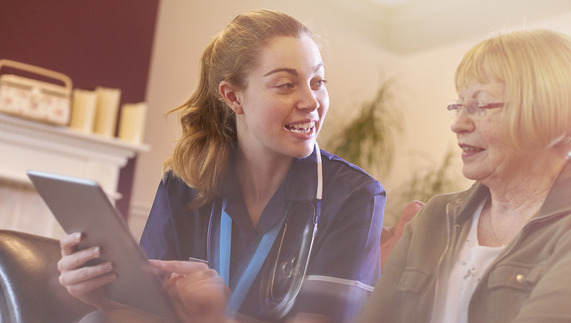
The Patient Experience Research Centre at Imperial College publish blogs to share learning, case studies and advice about involving and engaging the public in research. In a detailed blog, Research Assistant Lidia Nigrelli and colleagues reflect on how people affected by osteoarthritis helped shape and improve their research proposal.
The blog describes:
- who was involved, and how the research teams ensured that the group would be as representative as possible of the research population
- what activities took place, and how they were facilitated
- specific examples where plans needed more development, or modification and where public involvement insights reinforced aspects of trial design
Lidia Nigrelli summarises the benefits of their public involvement activities:
’It was encouraging to hear that individuals feel reassured that sessions like this one take place to shape a trial’s design – it highlights how important public involvement in research is’.
|
|
|
In this section, we aim to address frequently asked questions, and make it easier to find information that supports public involvement. You may also find the resources page of our website a helpful starting point.

Yes. Involving people with relevant experience will help make sure the participant information is relevant and understandable.
Deciding whether to take part in health and social care research can be a big decision. Clear information helps people make good decisions, and ultimately leads to more successful research.
Since December 2023:
- research ethics staff across the UK review participant information to make a yes or no decision on whether the information meets the Quality Standards
- Research Ethics Committees consider the outcome of the Quality Standards review, and refer to the Design and Review principles as part of their ethics review
Participant information developed without public involvement appropriate to the study and study population will not normally receive a favourable opinion from an NHS Research Ethics Committee. If the public involvement described in the Integrated Research Application System (IRAS) application does not meet our principles, we will normally request further involvement before a study is given a favourable opinion.
|
|
|
|