 Archaeology Live!
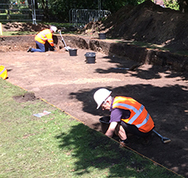
Nottingham Castle is currently hosting a major
archaeological dig which started on Monday 13 July and is now well underway in
the area between the bandstand and the curtain wall.
The excavation aims to add to knowledge and understanding of
the medieval period in Nottingham. Top layers
of soil are revealing evidence of 19th century life on site, but it is hoped
that deeper layers will reveal evidence of occupation and activities during the
Middle Ages. Nottingham Castle
was one of only a few "Royal Castles" which were controlled by the
monarchy directly rather than by local lords and so gives us an opportunity to
look at the nature of royal power and authority across a number of formative
periods in the history of this country.
Dr Paul Johnson from Trent & Peak Archaeology said: “Nottingham Castle has always been central to the
history of the city; from the Norman Conquest and the Civil Wars, through to
civil disturbances in the 19th century, this site has seen a lot of action over
the years. For an Archaeologist this means that there is the potential to
discover some very interesting evidence that will help us better understand the
heritage of the area.”
Members of staff are on hand throughout to talk about the
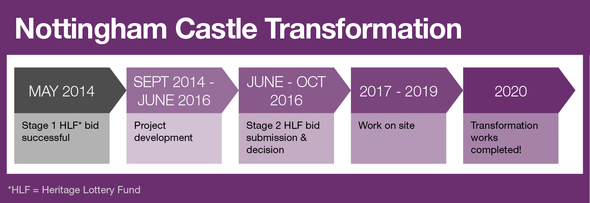
dig and how it fits with the planned £24m transformation of the Castle. This dig ends on 14 August.
|
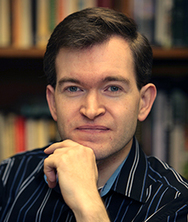
Profile – Richard
Gaunt, Associate Professor in
Modern History at the University of Nottingham,
specialising in British History c.1780-1850.
“In April, I began a three-year residency with Nottingham Castle Museums
and Galleries as their new ‘Curator of Rebellion and Social Justice’. My title
is always a cause of conversation and many of my new colleagues are envious of
the impeccably ‘cool’ credentials it bestows. The residency is part of an
ongoing partnership between the University and the Castle to develop closer
academic relationships. Alongside my normal University duties, I am working
part-time with the Castle’s established curators, including Adrian Davies, to
help develop the new ‘Rebellion Gallery’, which is at the heart of the Castle
transformation. The post itself has been funded by Arts Council England.”
|
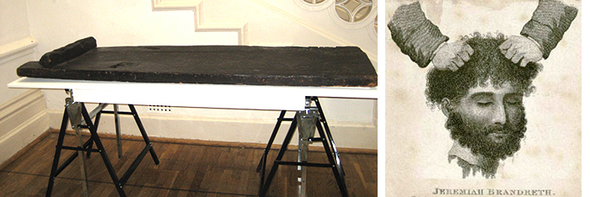 Object of the month -
Behold! The head of a traitor
Nottingham
Castle recently displayed
the block on which the head of Jeremiah Brandreth was placed, after he was
hanged for High Treason in 1817. The block
was loaned from Derby Museums and Art Gallery
and Richard Gaunt (profiled above) provided the historical context for the
display. Jeremiah Brandreth was one of the leading rebels in the Pentrich
Rebellion of 1817, a failed workers’ revolt.
He was known as ‘the Nottingham Captain’. After being hanged, Jeremiah
Brandreth’s body was laid on the block so that his head could be chopped
off. He and two of his conspirators were the last people to be beheaded with an
axe in Britain.
Objects like this are currently being selected and
researched as the basis for the new Rebellion Gallery – a key feature of the
Castle transformation - which will explore Nottingham’s
history of rebellion and social protest from medieval times through to the
present day.
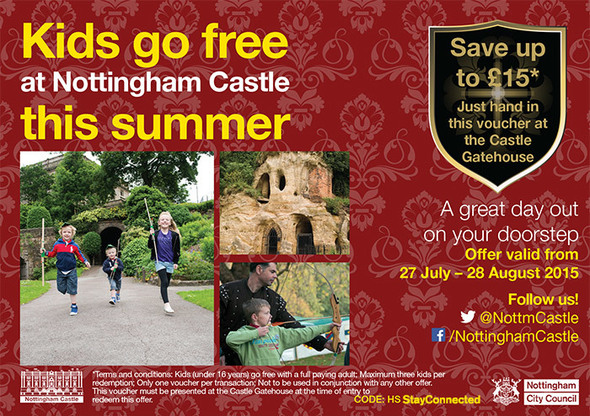
Kids Go Free at Nottingham Castle offer
Why not take advantage of our promotional offer, running
throughout the school summer holidays?
The ‘Kids Go Free’ offer entitles up to three under-16s free entry with
a full-paying adult. This can save
families up to £15 every visit!
|