|
 |
Climate newsletter |
|
|
Issue 101 | 22 October 2025 |
|
|
The second annual State of Wildfires report highlights how climate change is increasing the frequency and severity of extreme wildfires. The new report warns that more severe heatwaves and droughts are making extreme wildfires more frequent and intense worldwide, resulting in increasing threats to people’s lives – through fire and polluting smoke – as well as property, economies and the environment.
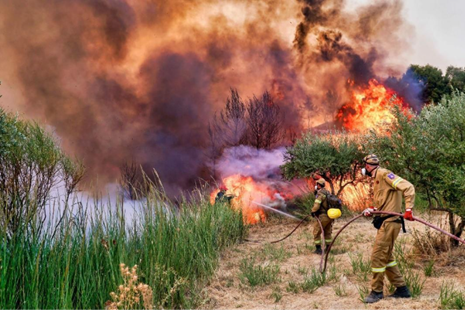
The report was co-led by the UK Centre for Ecology & Hydrology (UKCEH), the Met Office, the University of East Anglia (UEA) and the European Centre for Medium-Range Weather Forecasts (ECMWF).
“Our climate models show the trend towards more frequent and severe wildfires will continue, especially in a world where there are high greenhouse gas emissions,” said Dr Andrew Hartley of the Met Office, a co-author of the study.
|
|
The World Meteorological Organization (WMO) has published the latest Greenhouse Gas Bulletin.
“The heat trapped by CO2 and other greenhouse gases is turbo-charging our climate and leading to more extreme weather. Reducing emissions is therefore essential not just for our climate but also for our economic security and community well-being,” said WMO Deputy Secretary-General Ko Barrett.
|
|
|
In a recent blog post, we explore how marine observations provide vital data not only for weather prediction, but also for climate research. Long-term records help scientists track changes in oceanic and atmospheric conditions, contributing to our understanding of climate variability and change. You can learn more about the different ways we collect marine observations in the blog post.
|
|
On 15 October, the Chair of the Climate Change Committee’s Adaptation Committee, Baroness Brown, wrote an open letter to Emma Hardy MP, Parliamentary Under-Secretary of State (Department for Environment, Food, and Rural Affairs), setting out the Adaptation Committee’s response to a request for advice on strengthening the UK’s adaptation objectives.
The letter highlighted the urgent need to strengthen the objectives which should, at a minimum, prepare the country for the weather extremes that will be experienced if global warming levels reach 2°C above preindustrial levels by 2050.
|
|
|
Ever wondered what causes turbulence or perhaps considered whether this problem is worsening? different types of turbulence affecting aviation and share recent findings into the impact of climate change on this phenomenon.
|
|
|
We want to continue to improve the Climate Newsletter and welcome your input, so would be grateful if you could take a few minutes to let us know your thoughts.
|
|
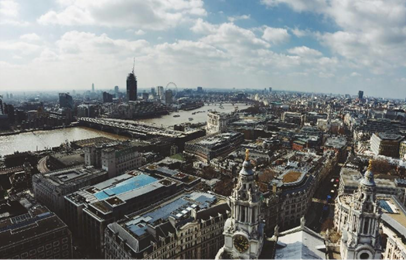 Our next UK Climate Projections (UKCP18) webinar will be tomorrow (Thursday 23 October) from 12-1pm. Laura Dawkins from the Met Office will give a talk titled ‘Integrating UKCP with Spatial Risk Frameworks to Inform Government Policy on Climate Resilience’. The following webinar on 20 November will focus on how UKCP is helping Network Rail adapt for the future. Then there will be a break for Christmas, and the webinars will resume in the New Year.
The webinars are recorded and published on YouTube afterwards, so you can catch-up later if you can’t attend.
If you would like to be added to our UKCP webinars mailing list, please email: ukcp.usernetwork@metoffice.gov.uk
|
|
 Our Climate Conversations series covers the latest research and real-world impacts of climate change. Topics have included record-breaking marine heatwaves, the future of UK sporting events and sustainable education. Stay tuned, as there are more episodes coming up. You can watch all previous episodes on our playlist and subscribe to our YouTube channel to keep up to date.
|
|
|
The wait is over – the virtual conference line-up for Wales Climate Week 2025 (3-7 November) is here!
|
|
|
Follow us on our social media channels to join the conversation. Look out for our hashtag - #GetClimateReady - on X (formerly Twitter), and follow our climate channels on TikTok and Instagram.
You might also be interested in our new Government and Industry Newsletters. Subscribe here.
|
|
|
To subscribe or unsubscribe please visit our email updates page to access your preferences.
The Met Office is not responsible for the content of external internet sites.
|
|
|
|