|
 |
Industry newsletter |
|
|
Issue 5 | 16 October 2025 |
|
As winter approaches, accurate weather information becomes critical for business operations and strategic planning.
From bridge forecasts to probabilistic forecasting, discover how our trusted weather and climate intelligence supports better decision-making when it matters most. Whether you're managing energy grids, maritime operations, or transport networks, these insights will help you stay ahead of winter weather impacts and maintain operational efficiency.
By working together, we can tackle some of the biggest challenges for UK industry, powered by weather and climate intelligence.
|
|
 |
|
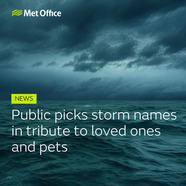
The Met Office, working with Met Éireann and KNMI, has released the public-submitted storm names for 2025–26. While naming storms serves a serious purpose, improving communication and safety, it also helps the public and industry prepare. During Storm Floris, 83% of people took action on the back of the amber weather warnings. |
|
|
 |
|
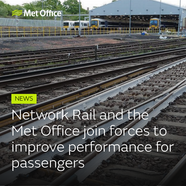
The Met Office and Network Rail have teamed up to accelerate research on weather impacts to railways, aiming to improve safety and decision-making during extreme conditions. The focus includes probabilistic forecasting and analysing earthwork failures linked to rainfall, soil moisture, and geology |
|
|
 |
|
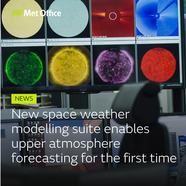
A pioneering new space weather modelling suite will, for the first time, enable operational modelling of the upper atmosphere at the Met Office. This marks a major breakthrough for UK atmospheric science.
Complementing existing models that forecast solar events, the system adds capability to predict impacts on satellites, aviation, and communications. It is especially relevant to aviation, notably polar flights dependent on high frequency communications.
|
|
|
 |
|
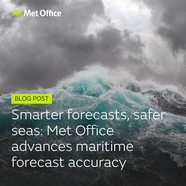
From pioneering early forecasts in the 19th century to integrating AI into today’s Shipping Forecast, the Met Office continues to blend innovation with heritage, improving accuracy, safety, and confidence at sea.
New analysis shows that the Met Office’s Shipping Forecast accuracy has steadily improved over the past decade, with enhancements in wind speed, direction, and sea state.
The Shipping Forecast remains an essential daily tool for maritime professionals making critical safety and operational decisions at sea. With greater confidence in forecasts, mariners can make smarter, safer choices at sea.
|
|
|
 |
|
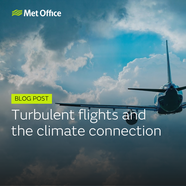
Turbulence can be caused by various factors, including atmospheric conditions, jet streams, and weather patterns. It creates challenges for the aviation industry around safety, reliability and operational efficiency, and due to climate change, it’s on the rise.
But how is climate change intensifying turbulence exactly, and where are the hotspots?
|
|
|
|
For many sectors, trusted weather and climate data is vital for safe and efficient operations as well as long-term planning. At the Met Office we provide tailored weather and climate intelligence services that address very specific challenges across transport, infrastructure, energy, and environmental safety.
|
|
|
Our Annual Report and Accounts 2024/25 showcases how we are trusted, pioneering and deliver impact to the UK. Partnerships with government and industry across the UK and around the world have been central to our success and will continue to be a key element of how we innovate for the future.
|
|
|
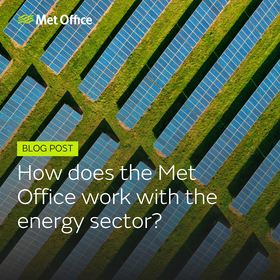
The UK’s energy sector is at the heart of keeping the nation running, powering homes, businesses, and critical infrastructure.
Behind the scenes, the Met Office plays a vital role in supporting this sector, providing the weather and climate intelligence that energy companies need to plan, operate, and innovate.
|
|
|
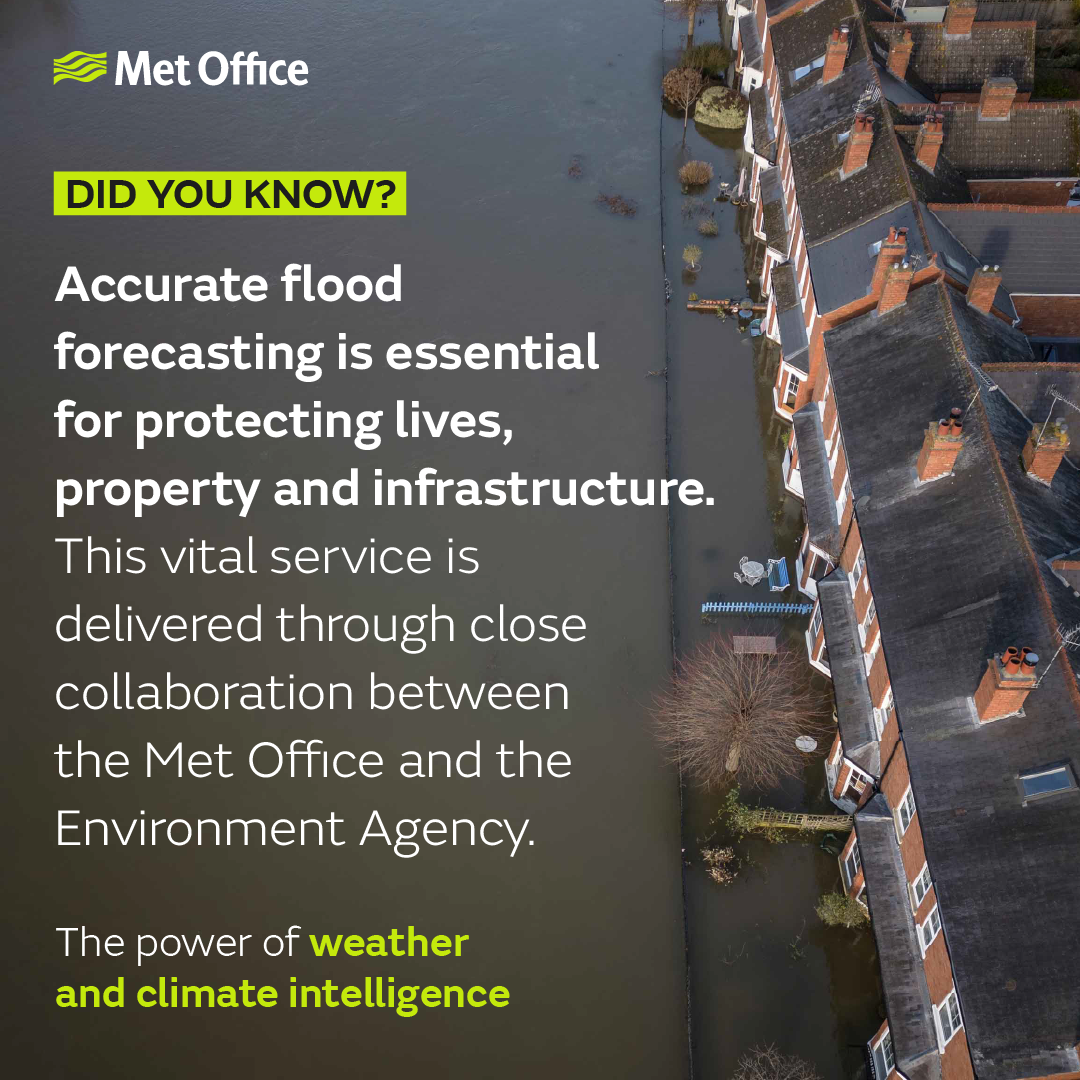
Accurate flood forecasting is essential for protecting lives, property and infrastructure. This vital service is delivered through close collaboration between the Met Office and the Environment Agency.
Flood Action Week, running this year from 13-19 October, is the Environment Agency’s annual campaign to encourage people to prepare for flooding by taking proactive steps such as knowing their flood risk, preparing a flood plan, and signing up for flood warnings.
Read more about how to prepare for flooding.
|
|
Infographics and case studies |
|
|
Text on image:
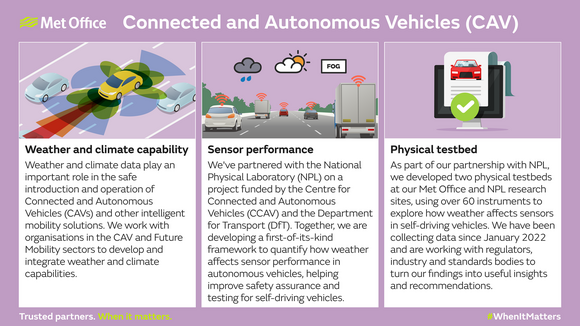
Connected and Autonomous Vehicles (CAV)
Weather and climate capability: Weather and climate data play an important role in the safe introduction and operation of Connected and Autonomous Vehicles (CAVs) and other intelligent mobility solutions. We work with organisations in the CAV and Future Mobility sectors to develop and integrate weather and climate capabilities.
Sensor performance: We've partnered with the National Physical Laboratory (NPL) on a project funded by the Centre for Connected and Autonomous Vehicles (CCAV) and the Department for Transport (DfT). Together, we are developing a first-of-its-kind framework to quantify how weather affects sensor performance in autonomous vehicles, helping improve safety assurance and testing for self-driving vehicles.
Physical testbed: As part of our partnership with NPL, we developed two physical testbeds at our Met Office and NPL research sites, using over 60 instruments to explore how weather affects sensors in self-driving vehicles. We have been collecting data since January 2022 and are working with regulators, industry and standards bodies to turn our findings into useful insights and recommendations.
More about our Connected and Autonomous Vehicles (CAV) Sector Services.
|
|
|
The fourth UK Climate Change Risk Assessment (CCRA4) is due to be laid in parliament by the UK Government in January 2027.
We are now seeking feedback on the CCRA4 Independent Assessment Technical Report from the wider community, including business and industry affected by climate change.
The Technical Report will synthesise the most up-to-date evidence on the 44 risks and opportunities the UK faces from climate change. The Community Review for the Technical Report will open on Wednesday 5 November until Tuesday 2 December.
|
|
 |
|
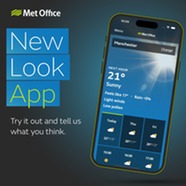
We’re giving early access to our new-look app, designed to make it quicker and easier to get our trusted forecasts and weather warnings.
Its features include enhanced real-time severe weather warnings information, and new interactive weather maps for rain, cloud and temperature.
The app should help business and industry know what weather conditions to expect, and how it may affect them and their customers.
You can try out the beta (test) version on an iOS or Android device and give feedback.
|
|
|
|
Follow us on the social media channels below to join the conversation.
#WhenItMatters
You might also be interested in our Climate Newsletter. Subscribe here.
|
|
|
To subscribe or unsubscribe please visit our email updates page to access your preferences.
The Met Office is not responsible for the content of external internet sites.
|
|
|
|
|