|
 |
Climate newsletter |
|
|
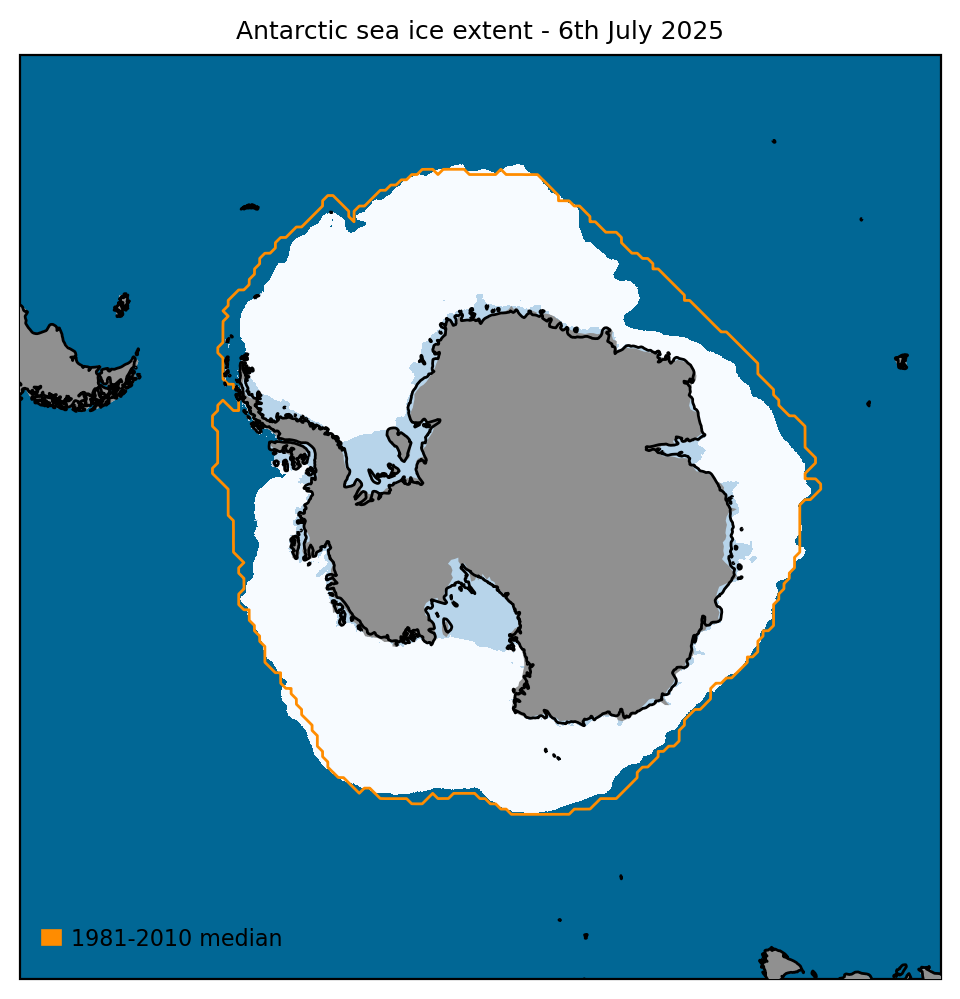 Earlier this week, we published the second sea ice briefing on the season which shows Arctic sea ice extent is the 2nd lowest on record for the time of year, with very low extend on the Atlantic side. Antarctic sea ice extent is currently 3rd lowest on record for the time of year, higher only than 2023 and 2024.
Researchers, policymakers, and business leaders gathered at the Exeter Climate Forum last week to help shape the priorities for the COP30 climate summit in Brazil later this year.
More than 1,000 people attended events across the forum, which included the Exeter Climate Conference, hosted by the University of Exeter and the Met Office, alongside dedicated events for policymakers and business leaders.
The event was widely regarded as a pivotal moment in the region’s ongoing commitment to climate action.
|
|
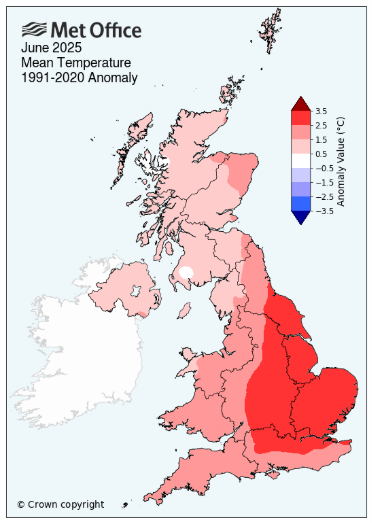
On 1 July, we published our provisional statistics for June, which indicated that England had its warmest June on record, while the UK has experienced its second warmest since the series began in 1884.
Met Office Climate Scientist, Dr Amy Doherty, said: "While we’ve not conducted formal climate attribution studies into June 2025’s two heatwaves, past studies have shown it is virtually certain that human influence has increased the occurrence and intensity of extreme heat events such as this.
"Our Met Office climate projections indicate that hot spells will become more frequent in our future climate, particularly over the southeast of the UK. Temperatures are projected to rise in all seasons, but the heat would be most intense in summer."
|
|
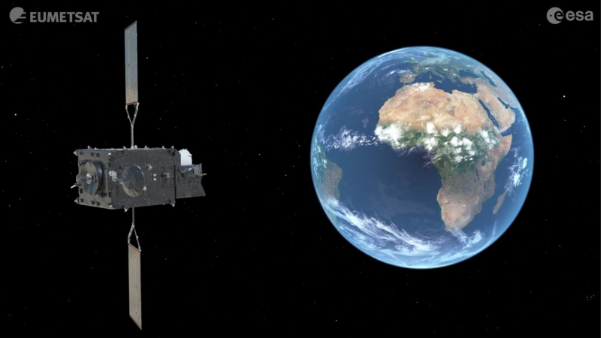 On 1 July, the first ever geostationary satellite to provide 3D profiles for temperature and humidity for Europe was launched into orbit in a launch organised by EUMETSAT. The Meteosat Third Generation Sounder (MTG-S1) is the first ever European sounding satellite in geostationary orbit, joining the imager satellite which launched in 2022, and is now the primary imaging satellite for Europe and providing data to European meteorological organisations, including the Met Office. This was the latest phase of a multi-year project to transform weather forecasting and climate monitoring.
|
|
 On Monday 14 July, we will be publishing the annual State of the UK Climate report. It will provide the latest assessment of the UK’s climate and review notable weather, sea level and phenology from 2024. Follow our social media channels and visit our webpage on Monday to learn more.
|
|
On 16 July, the UK National Climate Science Partnership will host a webinar exploring the uncertainties surrounding present-day and future sea level contributions from the ice sheets. As sea level rise presents increasing risks to the UK’s coastlines, infrastructure, and communities, understanding the science and the sources of uncertainty is critical. While the challenges are significant, it’s essential to recognise that we still have agency — reducing emissions today can slow the pace of sea level rise and buy valuable time for adaptation and resilience planning.
This webinar is designed to be both accessible and informative for a wide audience. Whether you’re a policymaker, industry professional, researcher, student, or simply interested in the impacts of climate change, you are warmly encouraged to attend and take part in this important conversation.
|
|
|
Follow us on our social media channels to join the conversation. Look out for our hashtag - #GetClimateReady - on X (formerly Twitter), and follow our climate channels on TikTok and Instagram.
You might also be interested in our new Government and Industry Newsletters. Subscribe here.
|
|
|
To subscribe or unsubscribe please visit our email updates page to access your preferences.
The Met Office is not responsible for the content of external internet sites.
|
|
|
|