|
 |
Climate newsletter |
|
|
Food Security remains an urgent global problem due to persistent issues like conflict, climate change, crop disease, economic instability and rising food prices which lead to widespread hunger and malnutrition, particularly in vulnerable populations.
This month our climate theme has been looking at how the Met Office is working with governments, farmers and the wider food chain to help them prepare for a changing climate and ensure the industry can remain resilient to the future impacts from climate change.
Earlier this month, the Government Office for Science (GO-Science) and the Department for Environment, Food and Rural Affairs (Defra) published a new report identifying the research and innovation needed to support UK climate adaptation.
The Climate Adaptation Research and Innovation Framework (CARIF) covers 11 sectors, including a section on food security. This section of the framework (Section 5.4) addresses the impacts of climate change on food production, both within the UK and in regions abroad from which the UK imports food and feed. It also considers climate hazards that affect supply chains for these resources.
The framework provides a strategic tool for the food and farming industry to guide the research and innovation agenda to ensure that the UK population has access to affordable, sustainable, high-quality food under future global climate conditions.
You can read more about how our science will inform adaptation strategies and protect the UK from the worst impacts of climate change in our recent blog post.
|
|
Food systems are a major contributor to global greenhouse gas emissions and heavily impacted by climate and weather. To achieve Net Zero food systems, consideration should be given to climate impacts, adaptation and resilience to ensure they are appropriate in a changing climate.
Solutions require systematic, interdisciplinary approaches across academia, governments, business, non-governmental organisations (NGOs), and the public. In an editorial for Climate Frontiers, find out the science and thought leadership around Net Zero, climate-resilient food systems.
|
|
The WISER Asia Pacific programme provides support to South Asia, Southeast Asia, and the Pacific islands in developing and delivering transformational change in the quality, accessibility and use of weather and climate information services to improve resilience and response preparedness to extreme weather, seasonal variability, and climate change.
Our work in partnership with the International Maize and Wheat Improvement Center (CIMMYT) in strengthening wheat disease early warning systems in South Asia aims to mitigate the threats to food security posed by transboundary fungal diseases in South Asia. The first phase of the project reached 600,000+ farmers in Bangladesh, Nepal and Bhutan.
|
|
In partnership with the World Food Programme (WFP), our work looks at the relationship between long-term climate change and future food security across a number of regions and the recommendations for adaptation measures to improve the challenges facing agricultural production.
-
Food Security and Climate Change Assessment: Sudan
In Sudan, agriculture is mostly rain-fed and is therefore sensitive to rainfall amounts and timings, making climate variability and change key factors in the future of Sudan’s economy, livelihoods and food security.
Using climate model projections for the 2040s, our work highlights plausible future climates for Sudan to inform adaptation planning.
-
Food Security and Climate Change Assessment: Nepal
In Nepal, agriculture supports the livelihoods of the majority of the population, but the country is extremely vulnerable to climate change impacts such as rising temperatures erratic rainfall, drought, flooding and wildfire which all negatively impact agricultural productivity, livelihoods and food security.
Together with the WFP, we carried out the Consolidated Livelihood Exercise for Analysing Resilience (CLEAR) study - the first of its kind in Nepal - to better understand the links between livelihoods, climate risk and food security.
|
|
|
In an article published yesterday, the Guardian reports on a new group it is part of – the 89 Percent Project – which aims to highlight the fact that the vast majority of the world’s population wants climate action. People wrongly believe, however, that only a minority share their views.
|
|
On 15 April, the Copernicus Climate Change Service (C3S) and the World Meteorological Organization (WMO) published the European State of the Climate 2024. The report provides insights into Europe’s climate, key events and their impacts.
-
Europe is the fastest-warming continent
-
2024 was the warmest year on record for Europe
-
Storms were often severe and flooding widespread
-
Striking east-west contrast in climate conditions
-
Renewable energy generation reaches new high
-
Cities make progress in climate adaptation
|
|
Climate Conversations is our monthly show that takes an in depth look at the trends and impacts of climate change by chatting to experts about their latest research and insights.
Our latest episode looks at sustainable fashion. Clare Nasir goes through some of the developments whilst Alex Burkill catches up with Professor Tamara Galloway from the University of Exeter to discuss her work to help reduce the fashion industry’s impact on the climate.
|
|
We're reaching out to people who currently use climate data in their work, as well as those interested in incorporating more climate information into their adaptation decisions but unsure where to begin.
We'd love to hear from you! Please take a moment to complete our survey.
• Your input will help shape the development of climate information, data resources and tools tailored to better support your sector’s needs.
• It takes approximately 15 minutes to complete.
Thank you for your valuable contribution.
Survey open 9-30 April 2025.
If you have any questions, feel free to contact us.
|
|
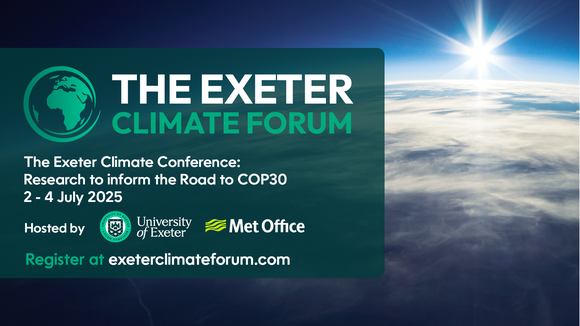
The Exeter Climate Forum takes place between Monday 30 June – Friday 4 July, bringing together world-leading climate researchers, businesses, policymakers, and young people to shape and engage with the priorities for COP30 and beyond.
As part of the Forum, The Global Systems Institute at the University of Exeter and the Met Office will jointly host the The Exeter Climate Conference. The conference will provide the opportunity to hear the latest research on the impacts of climate change and discuss innovative solutions to mitigate and adapt to the impacts of our changing climate and steer a path to a liveable, resilient and sustainable future.
Want to share your research at the conference?
Submit your abstract for a poster presentation and engage in dynamic discussions during our themed sessions. The deadline for abstracts is 30 April 2025.
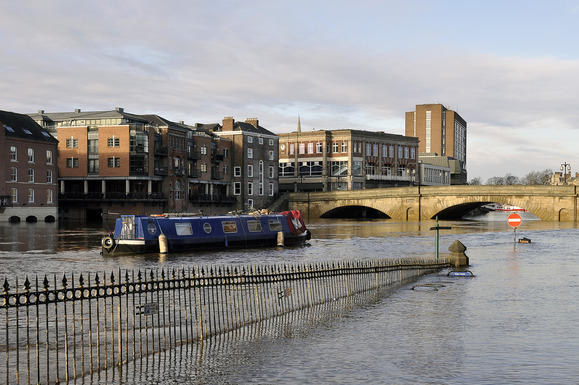
The Fourth UK Climate Change Risk Assessment (CCRA4) is due to be laid in Parliament by the UK Government in January 2027.
The Call for Evidence Round 2 deadline for The Fourth UK Climate Change Risk Assessment (CCRA4) has now been extended to Thursday 1 May 2025.
Through this Call for Evidence, the Climate Change Committee is seeking cross-sectoral evidence related to four key areas: ambition, action, enablers, monitoring.
The most useful evidence is that which is based on high-quality data and robust analytical techniques, with a preference for peer-reviewed literature. However, additional information from the grey literature e.g. a PhD or Masters thesis, conference proceedings, project reports, webinars, internal presentations or reports, blogs etc. is also be welcomed. This Call for Evidence can be used to submit evidence relevant for the whole of the UK, individual nations or more local regions.
Want to be part of the process submitting more targeted information to inform the Technical Report?
|
|
|
Follow us on our social media channels to join the conversation. Look out for our hashtag - #GetClimateReady - on X (formerly Twitter), and follow our climate channels on TikTok and Instagram.
You might also be interested in our new Government and Industry Newsletters. Subscribe here.
|
|
|
To subscribe or unsubscribe please visit our email updates page to access your preferences.
The Met Office is not responsible for the content of external internet sites.
|
|
|
|
|