|
 |
Climate newsletter |
|
|
Issue 84 | 12 February 2025 |
|
On 27 January, the Department for Energy Security and Net Zero (DESNZ) published a value-for-money analysis into the economic benefits of the Met Office Hadley Centre Climate Programme (HCCP) – the report concluded that the 2018-21 phase of the programme had a return on investment of £33 for every £1 invested.
The independent analysis, carried out by London Economics and Frazer Nash Consultancy, also showed that the work of the HCCP has significantly deepened the understanding of climate change at all levels of UK industry and government and bolstered the UK's status as a global leader in climate science. It has also fostered collaboration between universities and research institutions and improved access to climate data.
The vital work of the Climate Programme has continued since 2021. Among the programme’s many achievements, Met Office Hadley Centre scientists have pioneered work in attribution science, looking at the extent climate change is responsible for extreme weather. They have worked with partners to launch an online tool promoting the co-benefits of climate action, and provided scientifically robust and useful research, tools and guidance to help manage climate-related risks to UK plants.
A work plan has been set out for the Climate Programme through to 2027, with a focus on addressing emerging climate risks and supporting the UK’s net-zero transition.
|
|
|
A new AI Playbook was published on Monday by the Department for Science, Innovation and Technology. It sets out how AI and Machine Learning are being used to speed up decision making and improve public services. The Met Office was referenced. Through the AI for Numerical Weather Prediction project, a new Machine Learning model for weather prediction – FastNet has been developed by the Met Office and The Turing Institute.
The ultimate goal of this collaboration is to use the optimal blend of physics-based and ML-based modelling for UK weather prediction. Initial results have been encouraging and demonstrates the next step in weather prediction and the UK’s commitment to remain at the cutting-edge of weather forecasting.
Through collaborations like this, we aim to maintain the UK’s position at the cutting edge of weather prediction, generating the knowledge needed to inform decisions in infrastructure planning and weather sensitive sectors of the economy, through to emergency response.
The new AI Playbook will give public sector technical experts top tips and guiding principles on how to replicate this work and build AI to help their organisations fix services for citizens – ultimately delivering on the government’s ambition to transform public services with AI.
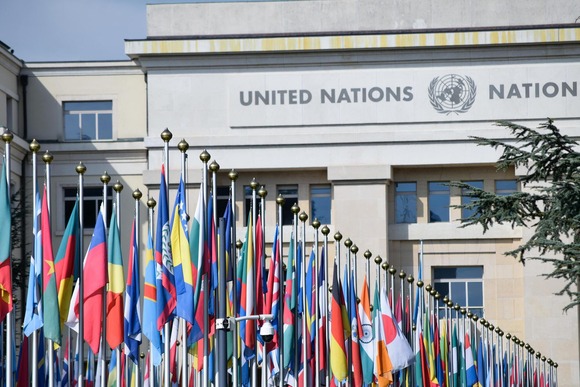 Carbon Brief published an analysis on 10 February regarding the fact that the vast majority of countries have failed to meet the deadline to submit their ‘nationally determined contributions (NDCs). NDCs are plans from each country describing how they plan to cut emissions and adapt to climate change, and they are reviewed every five years.

On 6 February, the Copernicus climate change service published global temperature data for January 2025, indicating that it was the warmest January on record.
Professor Adam Scaife, Met Office Head of Monthly to Decadal Prediction, said, “Global temperatures reached a new record last year and this January. We anticipate that global temperatures are likely to be slightly cooler during 2025 but this year is still likely to be one of the three warmest on record.”
|
|
|
Follow us on social media channels to join the conversation. Look our for our hashtag - #GetClimateReady - on X (formerly Twitter), and follow our climate channels on TikTok and Instagram.
You might also be interested in our new Government and Industry Newsletters. Subscribe here.
|
|
|
To subscribe or unsubscribe please visit our email updates page to access your preferences.
The Met Office is not responsible for the content of external internet sites.
|
|
|
|