 Ever-increasing impacts from climate change, including more frequent and intense bouts of extreme weather, are among the greatest challenges faced by mankind. In this blog post, the Met Office’s Theo McCaie explains why artificial intelligence could be our strongest ally in an ever-changing world.
Saturday 11 February was the International Day of Women and Girls in Science, an opportunity to recognise and celebrate the achievements of women in science and unite communities for sustainable and equitable development.
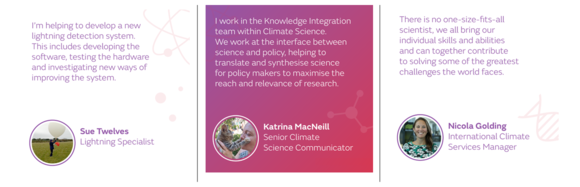
To celebrate this event, we spoke to women working in science roles at the Met Office to learn about what they do and the advice that they’d give to other’s looking to pursue a career in science. You can read some of their answers in the images below:
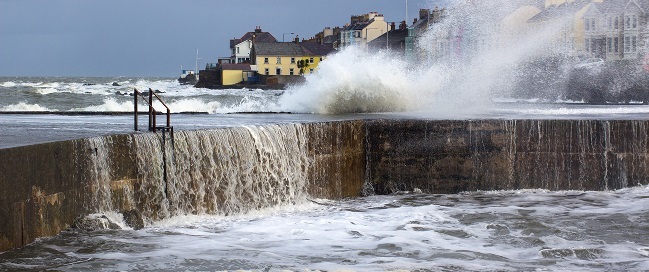 Throughout this week, the Marine Climate Change Impact Partnership (MCCIP) are releasing their latest round of reports. Featuring input from scientists from over over 50 leading research organisations, including several Met Office scientists, the MCCIP review papers examine the impacts of climate change on marine oxygen, ocean circulation, sea temperature, storms, waves & marine mammals. The papers on ‘Ocean Circulation’ and ‘Oxygen’ have already been released. Stay up to date with the latest updates on MCCIP’s social channels.
We are conducting a user consultation with Defra of our UK Climate Projections (UKCP) Service. This uses the latest data to assess how our climate may change during the rest of this century, including temperature, rainfall and sea levels. The project is designed to equip decision-makers with key information to help us adapt to climate change.
We're keen to hear from users about what climate information they're using, what barriers they face and what improvements they want.
If you use this data, the survey is open until Friday and should take no longer than 20 minutes to complete.
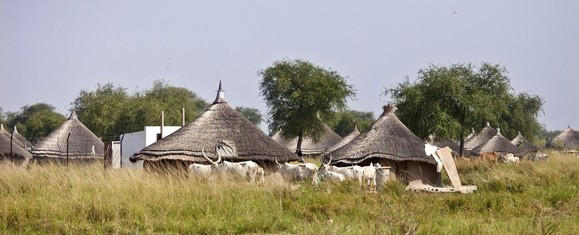 The Weather and Climate Information Services (WISER) programme has launched a Call for Proposals for the Sahelian region, seeking organisations to deliver grant activities in: Burkina Faso, Chad, Mali, Mauritania, Niger, Senegal.
The Call is organised into three lots, and bidders can submit a project for any or all of the lots. Proposals will need to clearly demonstrate how they contribute towards one or more of WISER’s five Theory of Change Output Areas.
WISER Africa expects to work with a variety of stakeholders in partnership to form a coordinated, diverse and complimentary set of projects.
The deadline for proposal submissions is 12:00noon GMT on Friday 24 March 2023.
|