|
 |
Climate newsletter |
|
|
Issue 7 | 13 October 2021 |
|
Spotlight on 'Adaptation' |
|
|
In previous issues of Climate News we have covered topics such as carbon budgets and net zero, looking at the importance of reducing or preventing the emission of greenhouse gases in order to mitigate against climate change. The world is already experiencing impacts of climate change and will continue to do so. Further urgent mitigation action will help to minimise these impacts over time, but adaptation is also important in the response to our changing climate.
Climate adaptation “refers to adjustments in ecological, social or economic systems in response to actual or expected climatic stimuli and their effects or impacts” (source: UNFCCC).
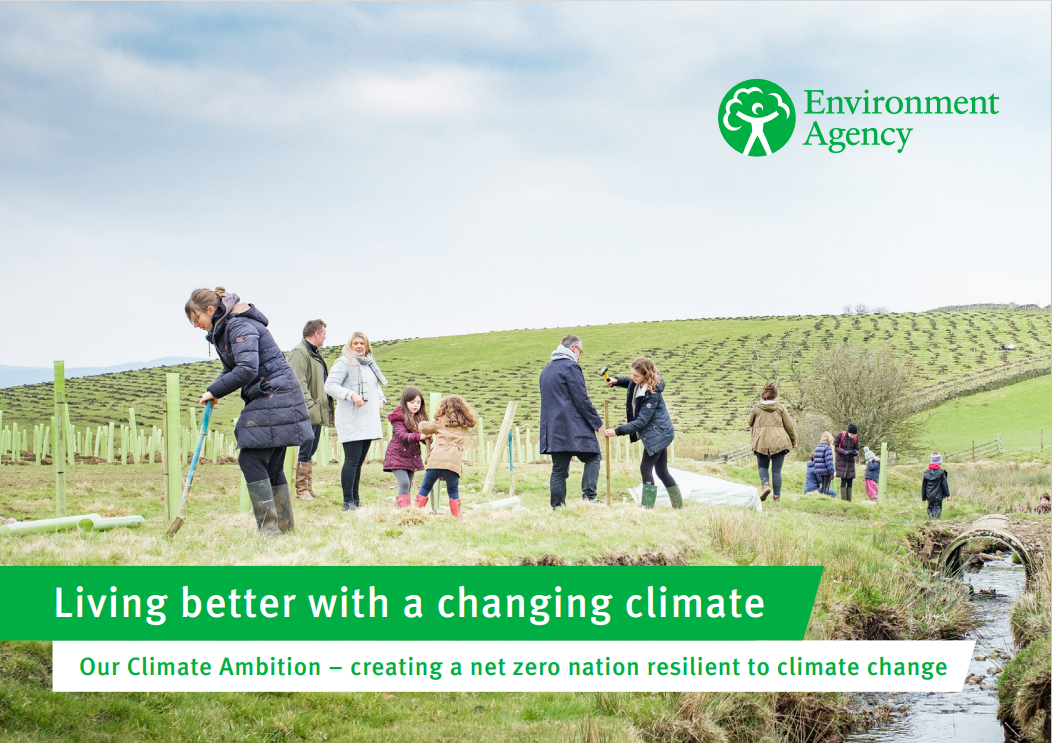
Today the Environment Agency has published its third adaptation report to the Department for Environment, Farming and Rural Affairs (Defra), which lays out the risks the organisation faces from climate change and what they are doing to prepare. The report used data from the Met Office UK Climate Projections and our State of the UK Climate 2020 report to inform their assessments.
The Met Office is also working on numerous programmes in the UK and around the globe, where our climate science can help inform climate adaptation planning. Here are some examples.
The UK Climate Resilience (UKCR) programme is undertaking climate risk and adaptation research to build UK capacity for resilience to climate variability and change. An example of one of the UKCR projects is the co-development of urban climate services for a number of UK cities. These use the latest UK Climate Projections (UKCP) to develop ‘city packs’ for each city to inform risk assessments and planning.
|
|
|
Scientific research undertaken as part of the Climate Science for Service Partnership (CSSP) China project, supported by the UK Government’s Newton Fund, is helping communities make better decisions for farming to ensure sustainable agriculture, for example by using adaptation strategies to optimise yield using crop rotation. You can find more about this and other CSSP China projects in a series of infographics.

|
|
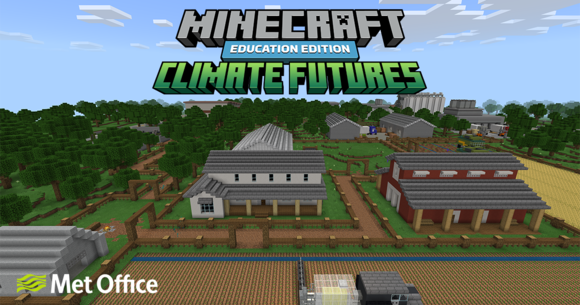 A new collaboration between the Met Office and Microsoft has seen the development of new “Climate Futures” worlds for Microsoft’s online gaming platform, Minecraft. The new worlds will form part of Minecraft’s Education Edition and will serve to improve understanding of climate change – its causes, impacts and mitigation strategies, for young people in primary and secondary education. Created by Pathways, with scientific input from the Met Office, the new educational worlds will take users through interactive, game-based learning and lesson plans. Players will travel to different environments to learn about the ways that climate change is having an impact in each scenario. They will then work to develop in-game solutions which support climate change adaptation and mitigation.
|
|
|
Following the publication of the IPCC Working Group 1 report in August, we have been taking a closer look at some of the report findings through a series of deeper dives. The latest of these focuses on the Earth's energy budget and climate sensitivity. Learn more about this in our new webpage:
|
|
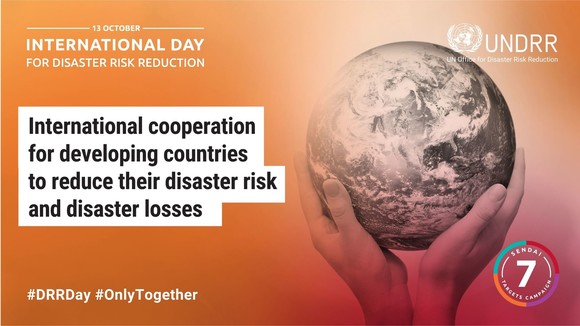 13 October 2021 is the United Nation’s International Day for Disaster Risk Reduction. This year the event focuses on the theme of “International cooperation for developing countries to reduce their disaster risk and disaster losses.” Low and middle income countries are disproportionately affected in the event of a disaster.
The International Day for Disaster Risk Prevention aims to acknowledge progress already made whilst accelerating further action through international cooperation to boost disaster resilience in developing countries, in line with the Sendai Seven Targets campaign and the Official Development Aid.
Learn more about the event and how you can get involved:
How can we best communicate climate science? Next week, the Met Office will be showcasing the importance of being creative with climate communications via @metoffice_sci. Following on from ideas and recommendations from the Met Office Climate Science Conference, we’ll share through writing, imagery, video, audio and more why creativity is vital to understanding climate and how those in creative industries can be and already are central to the climate conversation.
Follow @metoffice_sci and #MetOfficeCOP26 to learn more
|
|
|
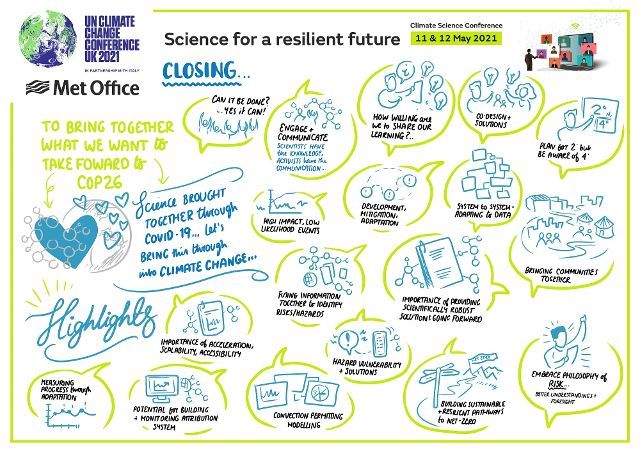
In May this year, the Met Office Hadley Centre hosted a virtual Climate Science Conference. With a theme of Net Zero and climate resilience, the aim of the conference was to bring together stakeholders from across the globe to help set the agenda for the development of science for policy over the next decade and in the lead up to COP26 in November. You can find out more about some of the successes of the conference on our webpage.
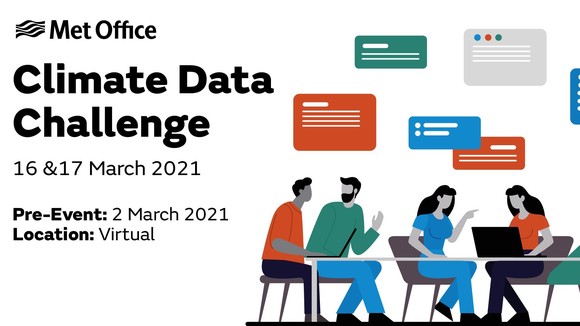
In March of this year, the Climate Data Challenge hackathon brought together participants from academia, other research establishments, Government departments, the Met Office and the private sector, and various disciplines including science, technology and policy to tackle climate challenges using climate and other data. This virtual event was followed by a series of hackathons led by Met Office Academic Partnership institutes, which again sought to tackle various challenges.
Following these events we identified some common themes and benefits to the approaches taken, which we have detailed in a new infographic.
|
|
|
Follow us on the social media channels below to join the conversation.
#GetClimateReady #MetOfficeCOP26
|
|
To subscribe or unsubscribe please visit our email updates page to access your preferences. |
|
|
|